
FORT STOCKTON, Texas – Amazon’s chief climate pledge was written in 2019. The natural gas power plant it is building in West Texas was permitted in 2026. The distance between those two documents now defines the cost of artificial intelligence.
The company is constructing an on-site combustion facility in Pecos County to power what is expected to become one of its largest artificial intelligence data center campuses. State permits reviewed by The New York Times and first reported by Distilled, a newsletter covering energy and climate, show the plant has received authorization to release 33 million metric tons of carbon dioxide annually, as confirmed by TechCrunch. No operating power plant in the United States emits at that level. The planned facility would not merely join the list of the country’s largest carbon sources. It would lead it.
Amazon’s spokesperson did not contest the figure. “The world looks different now than when we co-founded the climate pledge,” they said, before adding that the company’s commitment to reaching net-zero emissions by 2040 had not changed. It was the kind of statement that sounds reassuring while functioning as a concession.
The Climate Pledge, which Amazon launched in 2019 alongside Global Optimism, bound the company to meeting the Paris Agreement’s climate targets ten years ahead of schedule and reaching net-zero carbon across its entire business by 2040. More than 500 companies have since added their names to a document Amazon wrote. The commitments those companies made are now colliding with the energy demands of the infrastructure race Amazon is also leading.
Last year, the company’s carbon emissions rose 16 percent, the wrong direction for any organization with a 2040 net-zero target, and a reversal that Amazon attributed in part to its growing computing footprint. The AI computation driving those emissions shows no sign of slowing. Amazon Web Services posted its fastest revenue growth since 2021 in the second quarter of this year, with AI workloads alone hitting a $25 billion annual run rate. The company said it has $150 billion in infrastructure commitments outstanding.
That infrastructure has to be built somewhere, on land that must be powered. The Pecos County campus is Amazon’s answer to the problem of scale. West Texas offers cheap land, proximity to Permian Basin pipeline networks, and a regulatory environment that has historically welcomed large industrial projects with minimal friction. The natural gas plant is designed to supply the data center independently of the regional power grid, insulating Amazon from reliability concerns while creating a dedicated new source of emissions attached directly to its AI operations.
Natural gas combustion is less carbon-intensive than coal, but 33 million metric tons annually is a figure that reframes everything around it. For context, the United States emitted roughly 4.9 billion metric tons of CO2 in 2024. Amazon’s single planned plant would account for nearly one percent of that total, from one facility, for one company, to power one campus.
The project fits a pattern spreading across the technology industry. As AI has driven electricity demand beyond what most regional grids can reliably supply, companies including Microsoft, Google, and Meta have turned to on-site gas generation, nuclear power purchase agreements, and direct deals with coal-plant operators. Clean energy advocates have warned that these decisions lock in decades of fossil fuel dependence at the precise moment that new solar and wind capacity is reaching price parity with gas-fired generation.
What makes Amazon’s position more complicated is the company’s role in establishing the corporate climate framework others joined. In contrast to the Pecos County approach, Anthropic committed $10 billion to Norwegian AI data centers powered entirely by hydroelectric generation, a template that demonstrates high-volume AI computing is achievable without natural gas. Amazon has not disclosed plans for a comparable clean-energy solution for its Texas campus.
The data center infrastructure race has attracted capital well beyond the technology sector. In late July, NextEra Energy and Brookfield Asset Management committed $100 billion to build an AI campus designed around clean power, the largest infrastructure pledge of its kind from any non-technology entity. The argument that the AI age demands fossil fuel energy is increasingly contested by the projects being built around it.
Texas regulators have issued the required permits. Amazon has not disclosed when construction will begin, how many megawatts the facility will generate, or what the campus’s full build-out will eventually require. The company says the plant will not raise electricity costs for Texas residents, a claim that holds if the facility draws no power from the state grid, as its design intends.
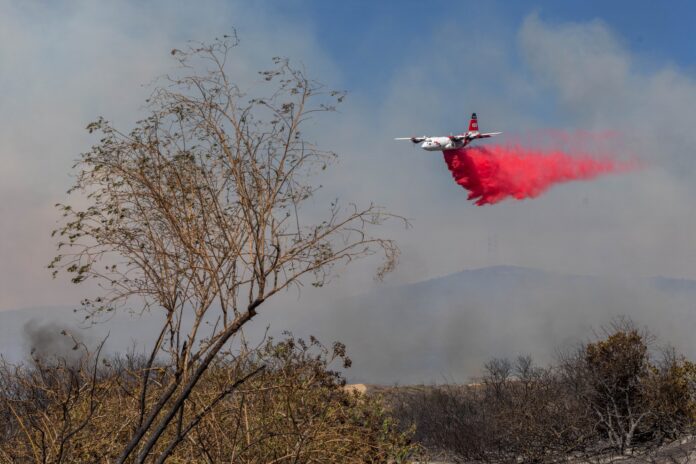
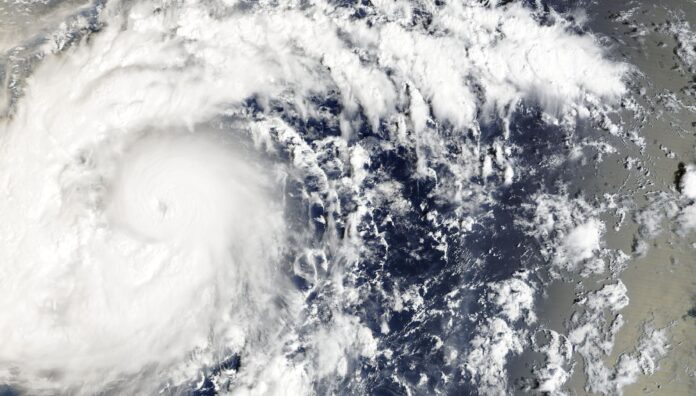
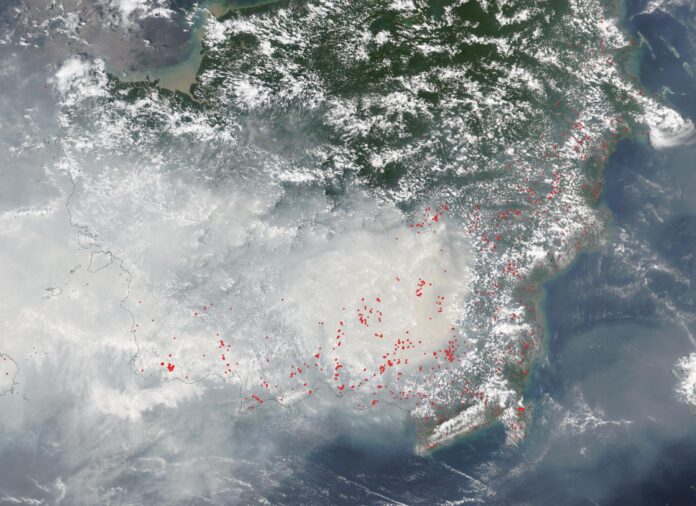
El Nino conditions pushed global average temperatures to new records in recent months, and scientists have linked the intensification of extreme weather events to cumulative industrial carbon emissions. In August, the WMO warned that Pacific temperatures were 2.9 degrees Celsius above normal, with consequences already visible in floods and wildfires across multiple continents. A single data center campus permitted to release more carbon than any existing US power plant lands in that context without apology.
Amazon has not said whether the Pecos County plant will be considered against its net-zero targets or whether it will qualify for any carbon offset program under the terms of the Climate Pledge. The company has not explained what the pledge means in a world that, as its spokesperson acknowledged, looks different than it did seven years ago.
The permits have been granted. The plant has not yet been built. That is the only gap left between what Amazon promised in 2019 and what it is doing in 2026.