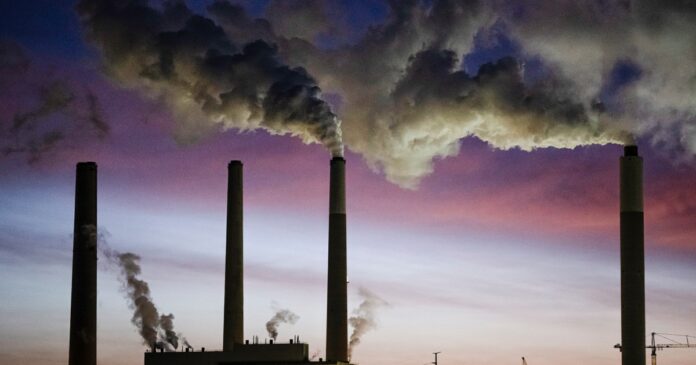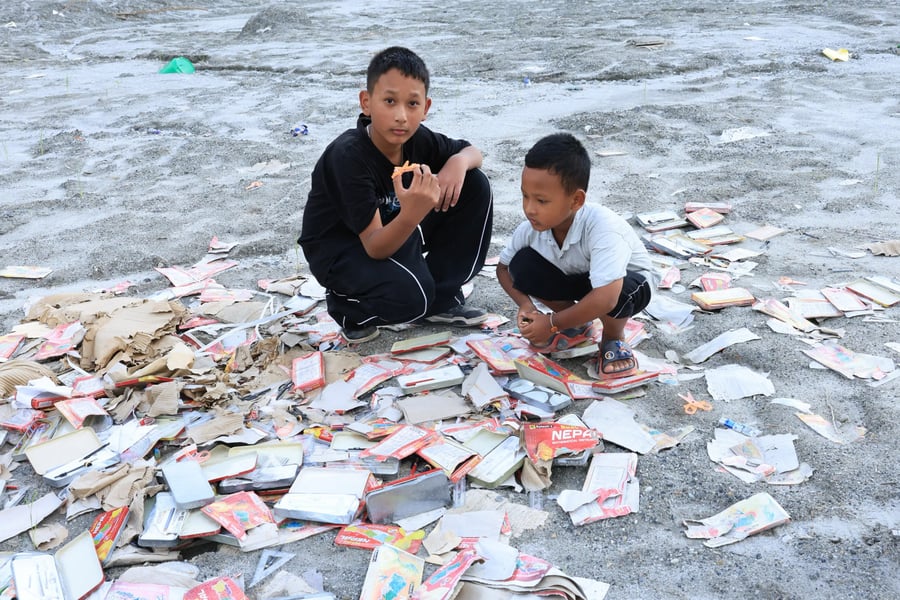

KATHMANDU — A wall of mud 20 to 25 meters high swept through a hydropower camp at Salleri, in northern Gorkha district, at about 6:30 a.m. on Sunday. By Tuesday night the people it had not reached were still being flown out by Nepal Army helicopters, and six were unaccounted for.
The numbers have moved quickly. The United Nations said on Monday that authorities counted at least five people missing and 95 rescued. In its third situation report, issued at 10 p.m. on Tuesday, Nepal’s National Disaster Risk Reduction and Management Authority counted 508 rescued, 457 Nepali nationals and 51 foreigners, and six missing, four men and two women. The report does not give a death toll.
The cause has been revised too. Early accounts, including the one the UN carried, described a landslide that blocked the Budhi Gandaki River. The authority’s technical section describes something larger and higher: a snow avalanche at about 6,000 meters and a landslide of glacier ice and debris at about 5,500 meters in the upper Ungdilung Khola, between Chamar Himal and Syerang Himal, at roughly 4:20 a.m. on October 11.
The mixed flow of snow, water and debris rose as much as 300 meters up the valley sides as it ran south, the situation report says. Near 2,000 meters, at the narrow confluence of the Ungdilung and Syar streams, debris repeatedly blocked and released the water, so the valley took a series of surges rather than one. Mud reached Salleri about 4:30. The largest surge came two hours later. About an hour before it, flow in Syar Khola had stopped, with water backed up for roughly 1.5 kilometers upstream, a lull the report records only as a field observation.
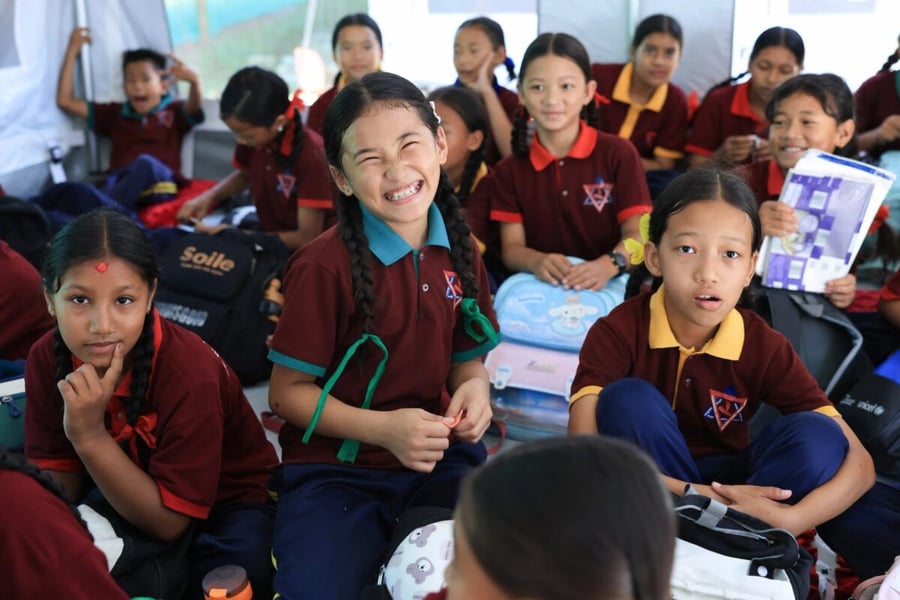
The flow carried an unusually high share of fine soil, giving it the character of a viscous mudflow rather than a typical flood. The Department of Mines and Geology made a preliminary estimate that the slide released energy equivalent to a magnitude 3.5 earthquake.
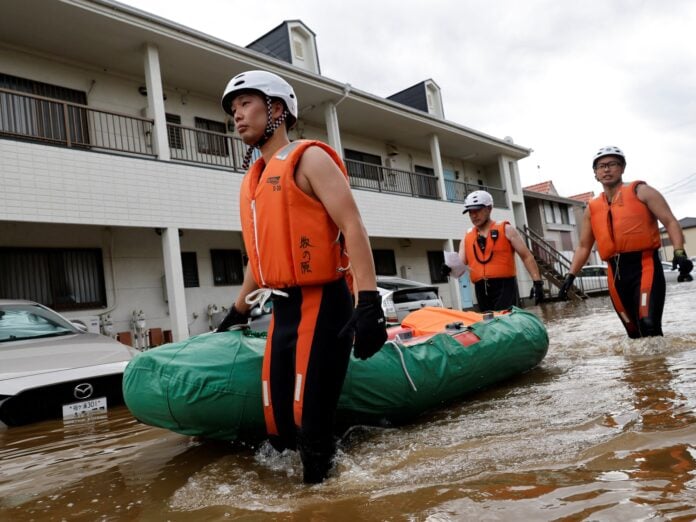
The rescue is being run by 800 security personnel, 171 from the Nepal Army, 240 from Nepal Police and 389 from the Armed Police Force. Five army aircraft flew 208 sorties over three days, 88 on Sunday, 68 on Monday and 52 on Tuesday. Relief flown in on Monday and Tuesday included about 9,300 kilograms of food and 4,360 liters of fuel for the aircraft and generators.
The damage list is still being assembled. It so far records two permanent bridges, five suspension bridges, one Bailey bridge and one cantilever bridge, three hydropower facilities, one school and 140 to 150 head of livestock swept away, with house losses being itemized across Gorkha and Dhading districts.
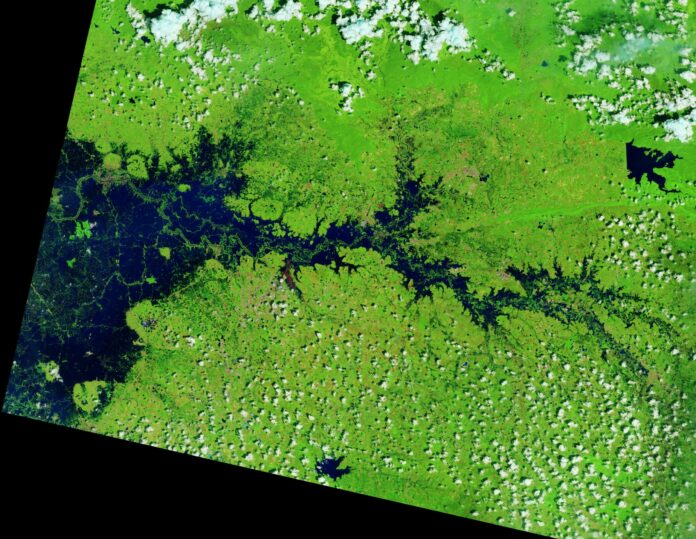
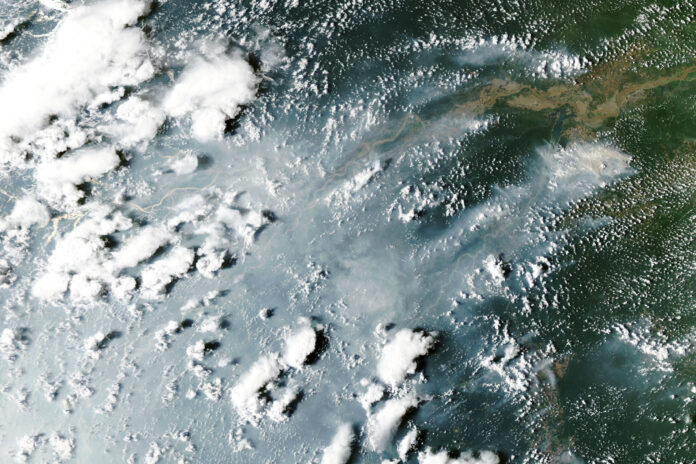
United Nations agencies are working with the authority. The World Food Programme said on Sunday that three trucks of ready-to-eat food were on their way, and UNICEF is supporting rapid assessments, UN News reported. The UN Country Team said FAO drones and OCHA satellite imagery are mapping damage where roads cannot reach.
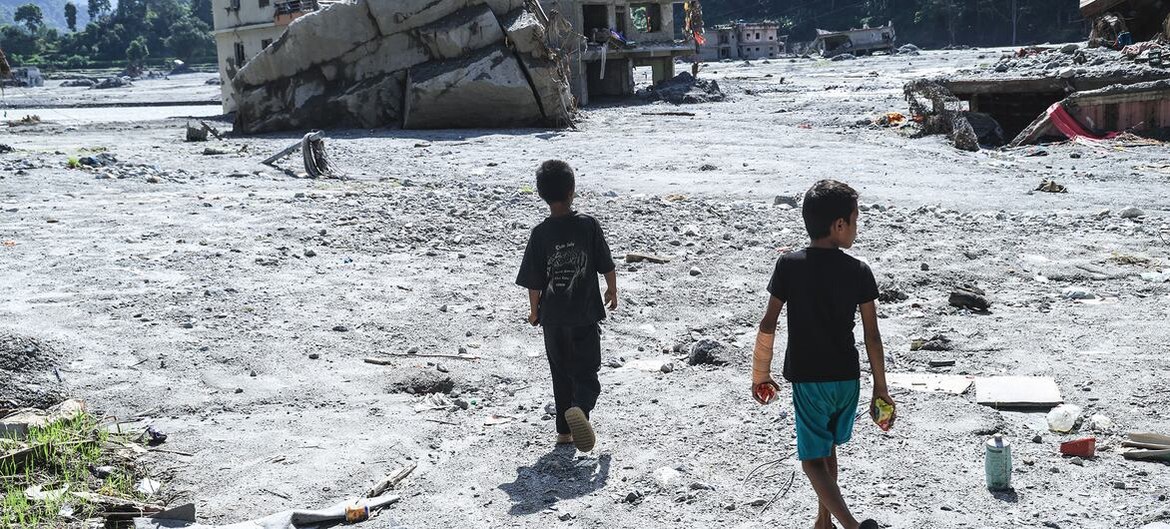
The valley’s neighbors are still counting the last disaster. UN News said at least 1,400 people were killed in the late August flooding triggered by a glacier collapse, a Himalayan glacial disaster that TEH reported as it unfolded, and UNICEF said on October 9 that 5,285 people were still missing. The Budhi Gandaki itself flooded in April 2024, when ICIMOD documented an overflow of the glacial lake Birendra Tal caused by ice avalanches off the Manaslu Glacier. It said that event caused no significant downstream damage, and warned that future ones could be larger.
What the report leaves out matters as much as what it says. It gives no death toll and no explanation for why the Syar Khola flow stopped an hour before the largest surge. Nor does it say whether the slopes above Ungdilung Khola were being watched, the question that ran through TEH’s September reporting on Nepal’s glacial flood, when visible warning signs went unanswered. The Department of Mines and Geology’s energy estimate is preliminary. Until the next situation report, the count that matters is the shortest one: six missing, four men and two women, with no names or villages given.