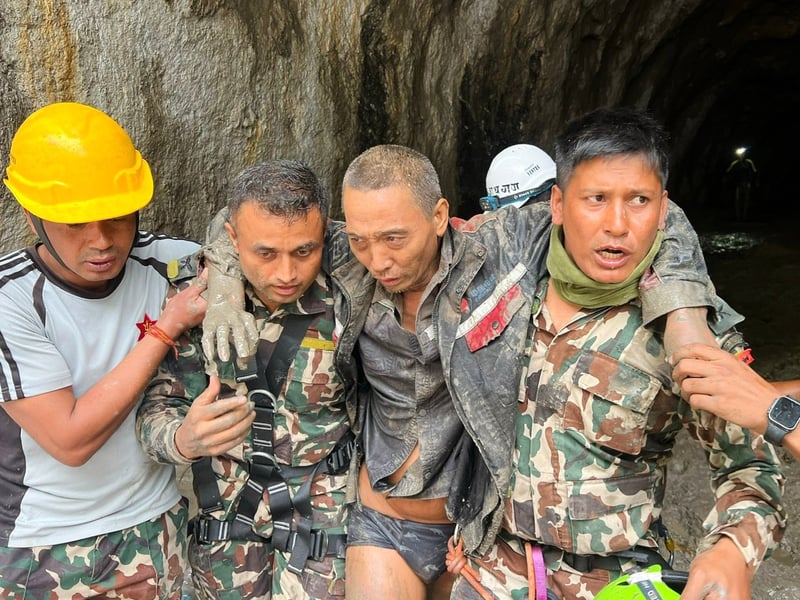
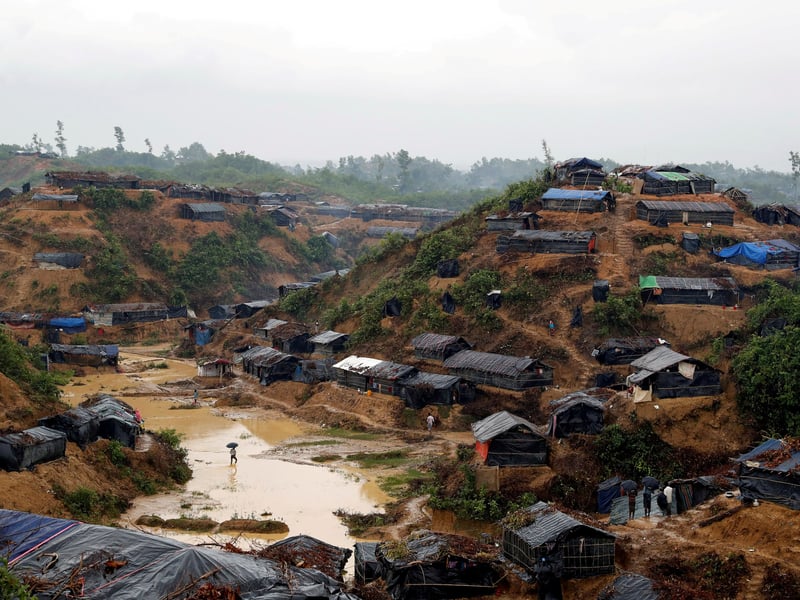
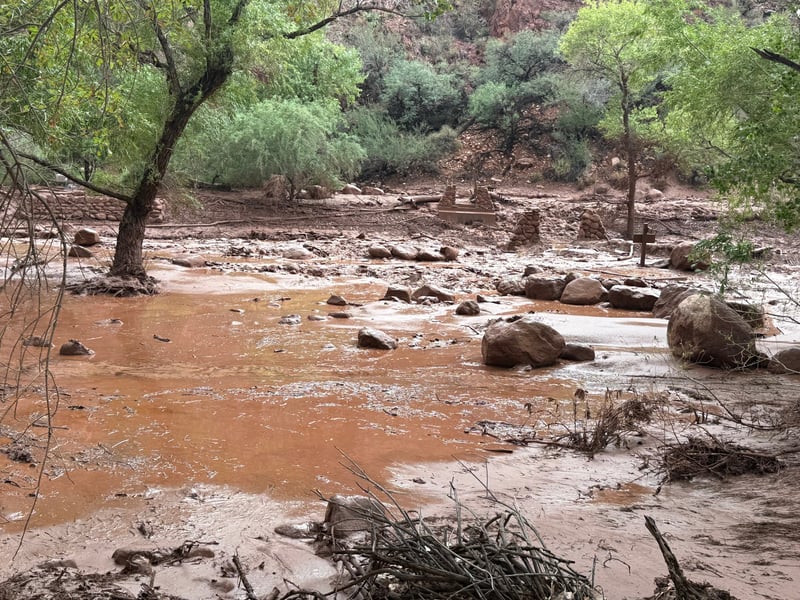
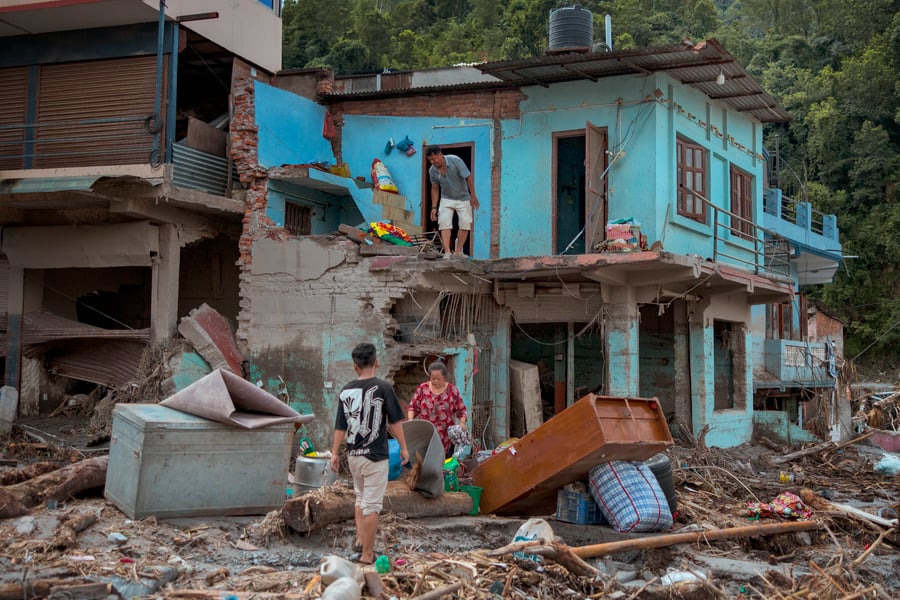
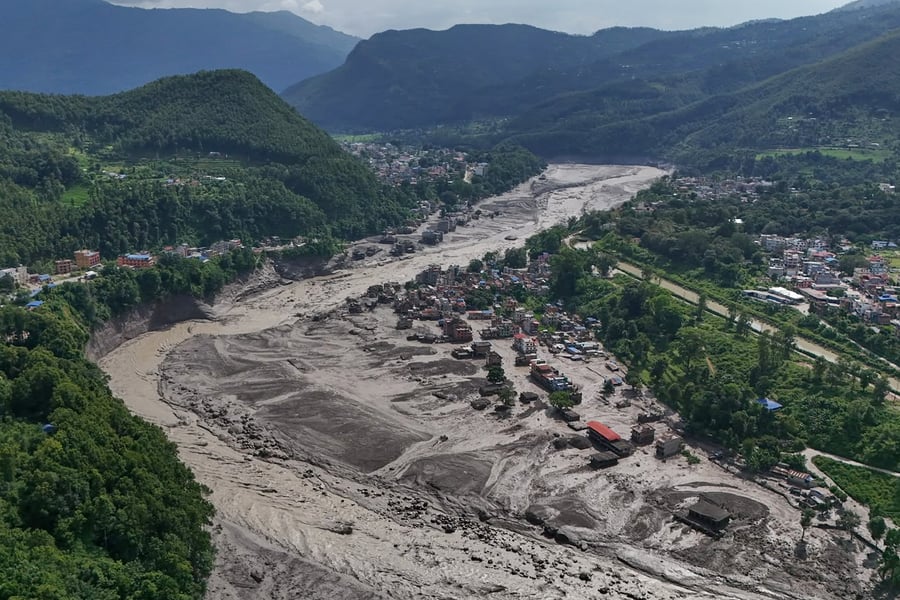
KATHMANDU — The morgues in Rasuwa district could not hold them all. By Sunday, local authorities had begun mass burials, laying to rest unidentified victims at sites hastily cleared along the river valleys — an acknowledgment written in earth that the flooding which swept through Nepal’s mountain communities on August 26 had killed more people than the country’s emergency infrastructure could process one by one.
The confirmed death toll passed 1,000 by Monday. Nepal’s National Disaster Risk Reduction and Management Authority reported at least 987 deaths on the Nepali side, with the number still climbing as search teams reached previously inaccessible communities. Chinese authorities in Gyirong added 16 more. Altogether, 3,916 people remain unaccounted for in Nepal, including 583 foreign nationals; China is searching for an additional 546 missing, among them visitors from across Asia who had traveled to the border region when the flood struck.
Kathmandu’s disaster agency put out an unusual public appeal: it said Nepal needed more than a thousand freezer units to store bodies recovered from the flood zones. The scale of that request captures something the official death toll does not — the sheer quantity of the dead, and how many of them remain unidentified.
The disaster began with a glacial lake outburst flood in the Langtang River system. An ice and rock avalanche from Mount Langtang Lirung on August 26 sent a wall of water and debris into communities downstream with a speed that left minimal time for response. Climate scientists have spent years warning that precisely this mechanism — accelerating glacial melt in the Himalayas generating unstable moraine-dammed lakes — is one of the region’s most serious and underappreciated flood risks.
Some communities found warning before the water arrived. In Nuwakot District, headteacher Rajendra Dawadi watched the river levels, assessed what he could read of conditions, and ordered the evacuation of 900 children from his school. Ten minutes later, the flood reached where they had been sitting. What happened in Nuwakot was not repeated across the river valleys.
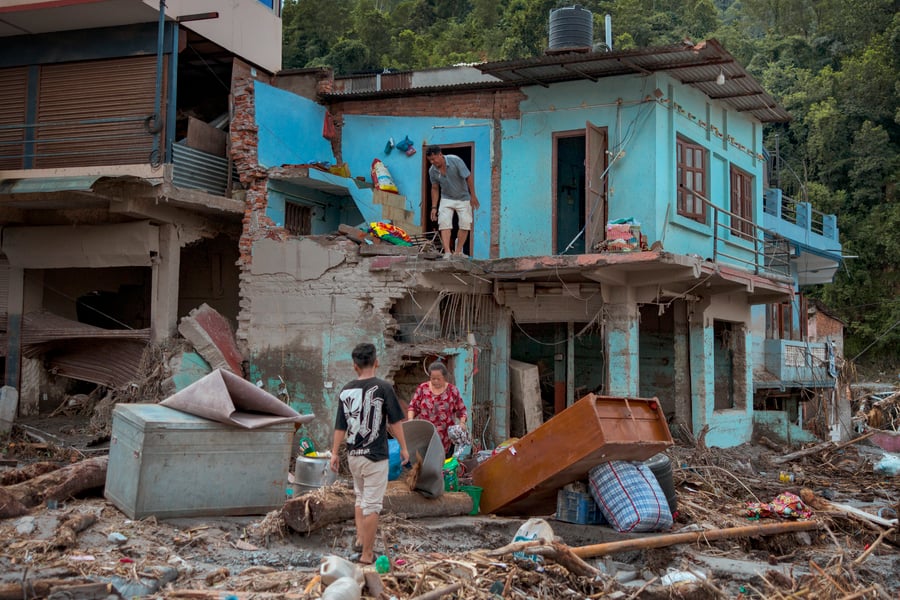
A report published Monday indicated warning signs in the Langtang system were visible in the weeks before August 26, including elevated glacial lake levels and ground movement consistent with moraine destabilization. Whether those observations were transmitted to downstream communities through Nepal’s early-warning chain, and whether authorities with the power to act on them did so, are questions the government has not yet addressed publicly.
Finance Minister Swarnim Wagle said Monday that economic losses have already surpassed $4 billion. The figure covers destroyed homes, wrecked road and bridge infrastructure, and immediate agricultural damage. It does not yet capture the long-term harm to the farming and fishing livelihoods of mountain households whose recovery horizon is measured in years, not seasons.
Among the least visible victims: 933 workers at eleven hydropower construction sites across Nepal’s high-altitude districts. At the Upper Trishuli-1 project, a 216-megawatt facility that was central to Nepal’s plans to export renewable electricity to neighboring markets, the construction tunnel is buried in mud. Baburaj Maharjan of Chilime Hydropower told reporters the tunnel is impossible to enter. How many workers were inside when the flooding struck remains unconfirmed.
International donors have pledged significant sums. The United States committed $3.6 million, Canada matched that figure, the United Kingdom pledged approximately $6.8 million, the European Union contributed 2.1 million euros, and the United Nations released $2.5 million from its central emergency fund. The International Federation of Red Cross and Red Crescent Societies has issued an appeal for $31 million to fund relief operations it expects to run well into next year.
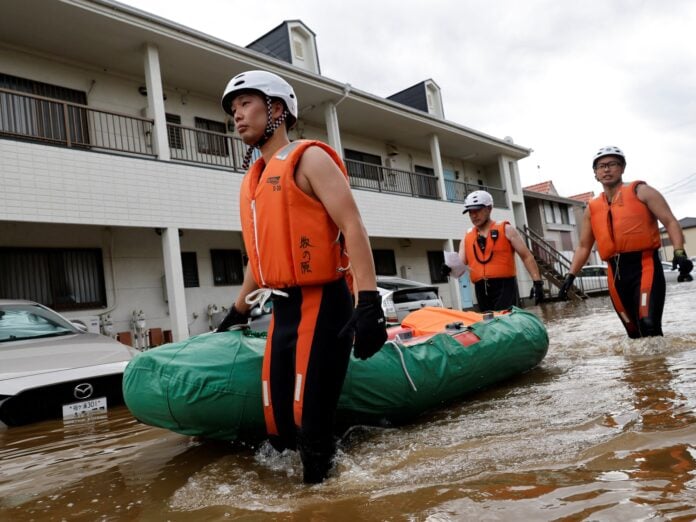
Disbursement is the harder problem. Nepal’s roads into Rasuwa, Sindhupalchok, and Nuwakot — the districts with the highest concentrations of the dead and missing — have been destroyed. Bridges are gone. Helicopter operations have been intermittently grounded by the same weather systems that continue to deposit rain on already-saturated ground. Aid is staged at lower elevations while the people most in need of it remain unreachable.
According to Euronews, the scale of the disaster has prompted calls within Nepal’s government for a comprehensive review of its disaster-preparedness system, particularly the early-warning infrastructure in high-altitude river basins where glacial lake outburst floods are now treated as a regular seasonal risk rather than an exceptional one.
The Eastern Herald previously reported on the missing foreign nationals in China’s Gyirong region and on the initial barrier lake overflow in Rasuwa that preceded the catastrophic inundation. Those reports documented the disaster’s opening hours. What Monday added was the shape of its aftermath: mass burials, overwhelmed morgues, impassable roads, and a government still unable to say how many tunnel workers sent into the mountains have not come out.
The Himalayas are warming at roughly twice the global average rate. Glacial lake outburst floods in the high-altitude river systems Nepal shares with China are not anomalies; they are projections, made specific. What the coming weeks must establish — and what the governments involved have so far declined to address directly — is whether the warning signs visible before August 26 were transmitted, received, and acted upon, and what institutional failure, if any, stands between those warning signs and the mass burial sites now being consecrated across Nepal’s mountain districts.