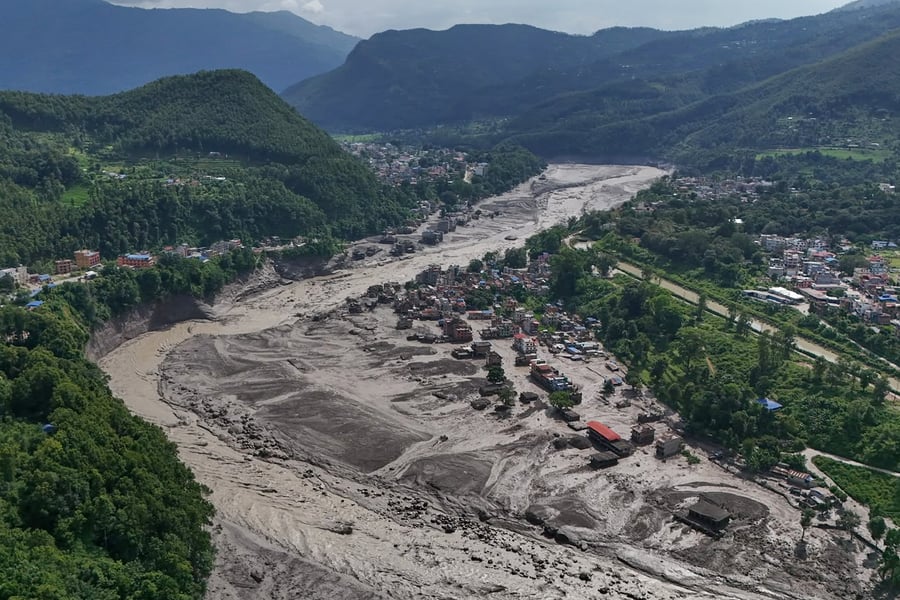

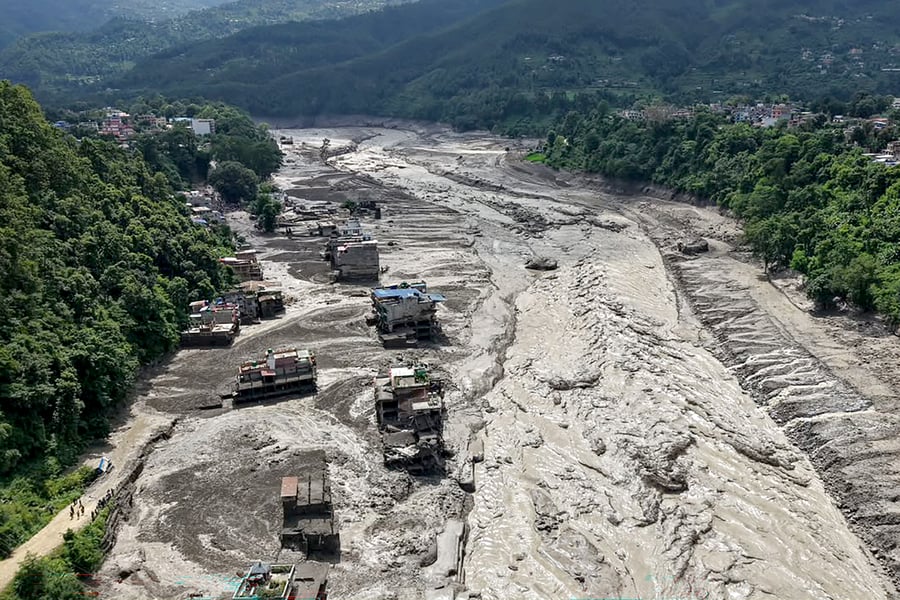
BEIJING — Above Gyirong Port, where rescue teams have spent four days sifting through debris that covers 0.7 square kilometres of what was once a functioning border crossing, a barrier dam built from the same avalanche material holds back an estimated 2.2 million cubic metres of water. Chinese authorities describe the structure as stable. None of the 546 people listed as missing from the port have been found.
Among them, China’s Xizang Autonomous Regional government confirmed on Saturday, are 261 foreign nationals from twenty-three countries who were at the crossing when an ice and rock avalanche swept down from Nepal’s Mount Langtang Lirung on the morning of August 26.
The collapse arrived at Gyirong Port, a border crossing between China and Nepal at roughly 1,800 metres elevation, in six to seven minutes from the fracture point at 5,200 metres, according to researchers at the Chinese Academy of Sciences’ Institute of Mountain Hazards and Environment who analysed the event through remote-sensing data and field investigation. The debris flow generated enough frictional heat to produce additional meltwater as it moved, sweeping up more material as it descended. Researcher Su Pengcheng attributed the original fracture to “glacier instability under the long-term effects of climate warming.”
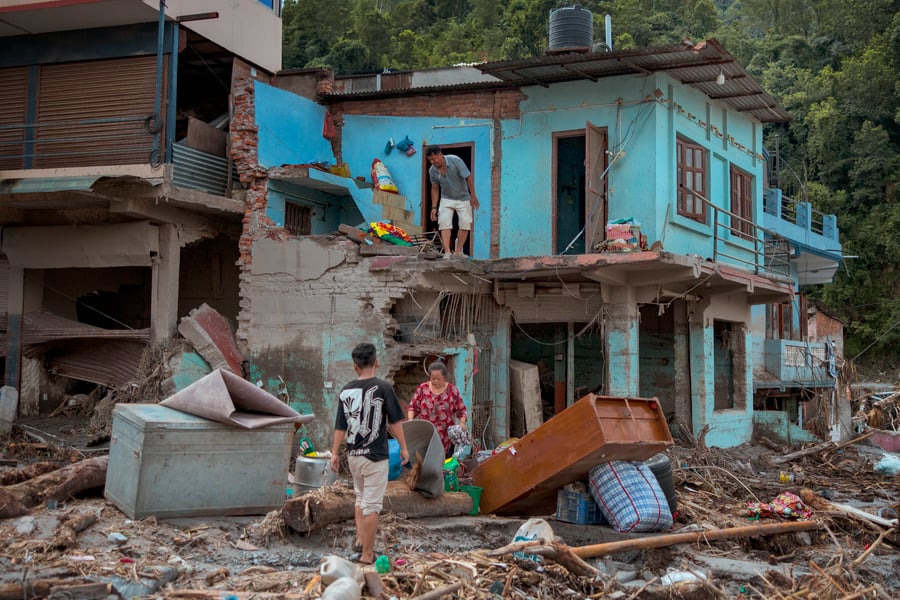
There was no time for a warning. Twenty-seven buildings and facilities at Gyirong Port were destroyed or buried. Sixteen deaths have been confirmed on the Chinese side of the border as of Saturday evening.
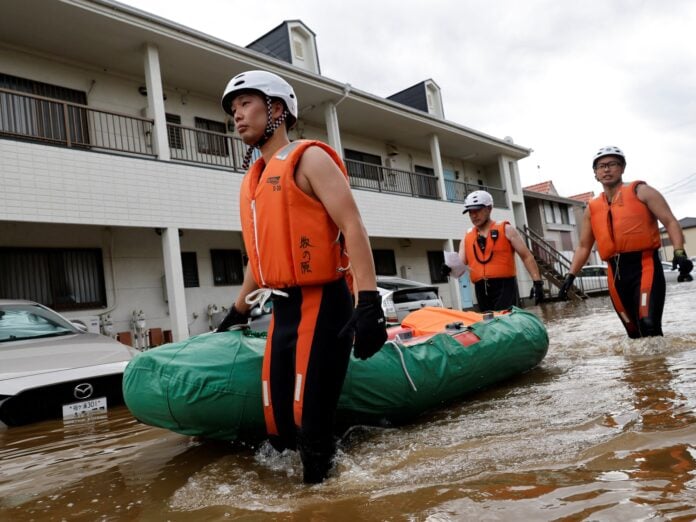
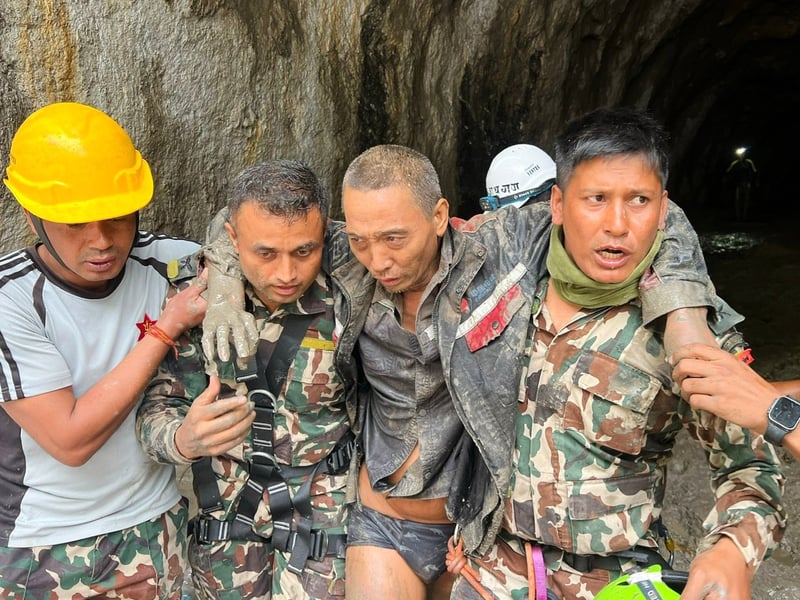
China has deployed 2,141 rescue personnel, including People’s Liberation Army soldiers, People’s Armed Police units, and specialist search-and-rescue teams, alongside 269 vehicles and more than 3,900 pieces of equipment. Search operations have covered 90,000 square metres of the debris field using dogs, drones, and monitoring sensors. Beijing committed a minimum of 220 million yuan, approximately $32.7 million, for relief and has been airlifting supplies to areas where road access was severed, using heavy-lift drones.
The barrier dam formed from debris sits above the search area. Chinese authorities say it is 60 metres high on average and stretches 1,100 metres in length, holding approximately 2.2 million cubic metres of water. Satellites, radars, and drones are tracking it continuously. Officials estimate they would have about thirty minutes of warning before a potential breach. What those thirty minutes would mean for rescue teams working in the debris field directly below is not addressed in any official statement.
China has not detailed which nationalities compose the twenty-three countries represented among the 261 missing foreigners at Gyirong. That omission is not a procedural gap; it is the measure of how difficult cross-border accounting has proven throughout this disaster. The same dynamic produced sharp discrepancies on the Nepal side, where Washington’s count of ninety missing Americans differed from Nepal’s own official list of thirty-three because the two governments were measuring different things: family reports to embassies versus names on trekking permits. That divergence very likely replicates itself for each of the twenty-three countries at Gyirong, where no permit system or cross-border registry exists to triangulate against.
According to Al Jazeera’s reporting from the ground in both Nepal and China, the flooding destroyed dozens of kilometres of roads and bridges, which has determined not just the speed of rescue operations but which valleys can be reached at all. Nepal’s Foreign Secretary Amrit Bahadur Rai confirmed 19,000 security personnel are deployed across the affected areas, alongside sixteen helicopters. That air capacity, spread across affected terrain, means some valleys are accessible only from the air and others not at all.
International assistance has arrived in multiple tranches. The United States and Canada each pledged $3.6 million; Britain $6.8 million; the European Union $2.3 million; the United Nations released an initial $2.5 million from its emergency fund. The International Federation of Red Cross launched a $31 million appeal and has allocated $1 million so far. India deployed an eleven-member team of medical and tunnel-rescue specialists, a practical contribution given that hydropower tunnel operations require equipment not available in sufficient quantity in Nepal’s own emergency resources.
Su Pengcheng’s climate attribution, “glacier instability under the long-term effects of climate warming,” is grounded in Himalayan data that has been accumulating for decades. The border region between Nepal and China’s Xizang is among the most heavily glaciated mountain environments on earth, and glaciers there have been losing mass at accelerating rates. Dozens of hydropower projects, planned or under construction in the same river systems swept out last week, sit below glaciers in similar states of instability. Xinhua’s scientific analysis of the Langtang Lirung collapse is the first formal examination of this event, and its implications for the infrastructure building that has expanded across the same mountain zone in both countries remain unaddressed by any government body.
The twenty-three nationalities at Gyirong are not named in any official statement available as of Saturday. That number, 261, is the closest measure available of how international this disaster has become, and how much of what happened at that crossing, in six to seven minutes on a Tuesday morning, remains unknown.