
SAN FRANCISCO – When Anthropic needed more computing power, it turned not to Google, Amazon, or Microsoft’s cloud, but to a company founded by former asset managers that has not yet built most of what it promised to deliver.
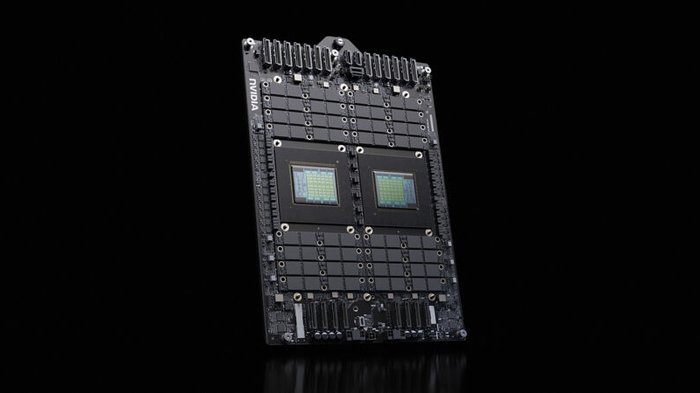
The AI lab announced Monday that it has committed $10 billion over six years to Volta Infra Holdings, a startup that came into existence in early 2026 and has since secured $300 million in venture capital, a $2.4 billion valuation, and now one of the largest individual compute agreements in AI history. The deal gives Anthropic access to a 133-megawatt data center in Tydal, Norway, powered by hydroelectric infrastructure and running Nvidia’s latest Vera Rubin chips. Volta Infra says it has secured one gigawatt of power capacity in total, a figure roughly seven times what the Tydal facility currently represents.
Andreessen Horowitz and Altimeter Capital led the $300 million round. Nvidia itself participated as an investor alongside Michael Dell. The structure places Nvidia simultaneously inside the financial success of the infrastructure operator it supplies with chips, a detail that has become a recurring feature of AI compute deals as Nvidia’s market dominance pushes chip buyers to bring it in as an equity partner to secure allocation.
Volta Infra was built by former Brookfield Asset Management executives. Brookfield is among the world’s largest infrastructure investors, and its alumni are accustomed to the long timelines, large capital requirements, and utility-grade reliability expectations that physical infrastructure demands. That background is meaningful because the Tydal data center has not been completed, and the agreement Anthropic signed is partly a bet that Volta Infra will deliver what it says it can.
The Norwegian location is one of the more consequential details in the deal. Tydal’s data center runs entirely on hydroelectric power, a genuine differentiator as AI compute operators face growing pressure from regulators and institutional investors to account for the energy intensity of model training. Operating in Norway also places the facility inside European regulatory jurisdiction rather than under US federal frameworks, which matters increasingly as AI governance discussions in Washington have grown more unpredictable.
The deal structure runs through March 2027 in two phases. The precise megawatt allocations, pricing terms, and performance benchmarks tied to each phase have not been made public, meaning the $10 billion figure is a commitment over time, not an immediate capital deployment. Whether Volta Infra can execute against those timelines into a construction supply chain already under severe stress from AI infrastructure demand globally is the central operational question the announcement leaves unresolved.
For Anthropic, the agreement adds a ninth compute counterparty to a stack that already includes Google, Amazon Web Services, Broadcom, SpaceX, and AMD, among others. That diversification is rational, since no single supplier failure should be able to halt Claude model training at scale, but it also creates a coordination problem. Each contract introduces its own delivery conditions, hardware dependencies, and performance commitments, and managing a nine-party compute supply chain is a qualitatively different challenge than managing one or two hyperscaler relationships.
The data center buildout is straining infrastructure across the supply chain. Caterpillar reported its first-ever $20.5 billion quarter this week, powered almost entirely by AI data center demand for generators and earthmoving equipment. That backlog, $72 billion and growing, reflects construction pipelines that take months to move through permitting, site preparation, and equipment delivery. Volta Infra, operating in Norway, faces a compressed version of the same supply chain, with Bitdeer Technologies managing the hydroelectric infrastructure the new facility depends on.
Palantir reported $1.9 billion in Q2 2026 revenue this week, driven heavily by AI sovereignty contracts, government clients who insist on geographically dedicated compute outside US hyperscalers. The pattern signals that AI infrastructure is fragmenting politically as well as commercially. Volta Infra’s Norway position, outside US tech regulatory reach and drawing on European renewable energy credentials, fits cleanly into that fragmentation.
According to Decoder, which first reported the deal, the agreement covers the first phase of Volta Infra’s Norwegian build-out through early 2027. The second phase, representing the bulk of the $10 billion over the remaining years of the contract, depends on construction progress that has not been independently verified.
The valuation math for Volta Infra carries implicit risk. At $2.4 billion, the company is valued almost entirely on its relationship with Anthropic and the credibility of its investor syndicate. If Anthropic’s compute needs shift, because of changes in model architecture, new hyperscaler pricing, or deterioration in the relationship, Volta Infra has limited fallback options. Startups built on a single anchor customer at this scale routinely face this tension; the investors who wrote the $300 million check understand the concentration risk.
OpenAI is navigating its own infrastructure pressures this week, with Apple’s expanded trade secrets lawsuit now implicating 13 former employees. The two situations are unrelated, but together they illustrate that the front companies in AI development are managing as many institutional crises as technical ones.
Anthropic has not confirmed what it will pay per megawatt-hour under the Volta Infra agreement, nor whether the Vera Rubin chip allocation has been physically committed or remains subject to Nvidia’s production schedule. Those specifics will determine whether the $10 billion headline translates into meaningful compute acceleration or a long-dated optionality arrangement. The Tydal data center will take time to build. The AI landscape it serves may look different by the time the first phase is operational.