
NEW YORK — Palantir Technologies (PLTR) shares surged more than 14 percent in after-hours trading Monday before the quarterly conference call had ended, a reaction that captured something deeper than a single period of outperformance. The company had just reported $1.935 billion in second-quarter revenue, up 93 percent from a year earlier, a result its chief executive called, without hesitation, “otherworldly.”
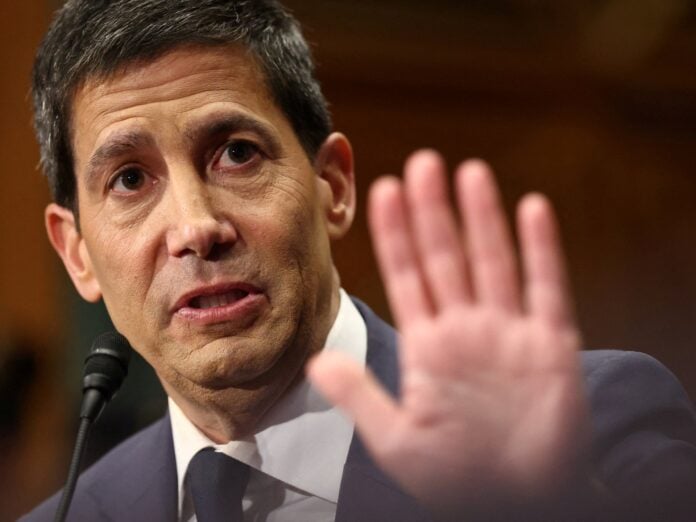
The word belonged to Alex Karp, who has led Palantir since its founding in 2003. His characterization appeared in the company’s official second-quarter earnings disclosure filed with the Securities and Exchange Commission on Monday evening. The quarter represented the strongest in the company’s history by nearly every measure: adjusted earnings per share of $0.41, free cash flow of $1.22 billion on a 63 percent margin, and cash and short-term treasuries of $9.2 billion.
Two numbers commanded the most attention. United States commercial revenue reached $764 million, up 149 percent from the year-ago period. US government revenue rose 90 percent to $809 million. The combined domestic haul of $1.573 billion leaves little room to argue that Palantir’s results reflect anything other than a structural shift in how large American institutions are buying and deploying artificial intelligence.
“Demand for AI sovereignty has now been unleashed,” Karp wrote in the filing. “Palantir is the only company that has demonstrated it can transform tokens into actual economic value.” The phrase is not marketing shorthand. It describes a specific architecture: AI deployed on a client’s own infrastructure, under the client’s control, without data leaving into shared pipelines. Palantir calls its commercial implementation the Artificial Intelligence Platform. US commercial total contract value reached $2.132 billion in the quarter, up 153 percent, a backlog that suggests demand is outrunning delivery capacity.
The government revenue surge tells a different story from the commercial boom, and in some ways a more consequential one. Palantir has held contracts supporting the Pentagon’s AI targeting program Project Maven, and has received over $81 million from Immigration and Customs Enforcement since 2025. The 90 percent growth in US government revenue suggests those relationships are expanding rapidly under the current administration, even as they remain a source of sustained controversy both domestically and among allied governments abroad.
The full-year outlook reflects the scale of that expansion. Palantir raised its 2026 revenue guidance to between $8.150 billion and $8.158 billion, representing 82 percent growth for the full year. Adjusted free cash flow is projected at between $4.5 billion and $4.7 billion. The company’s Rule of 40 score, which combines the revenue growth rate with the profit margin, reached 155 in the quarter, a level that places Palantir among the most efficient software businesses globally by that measure.
Outside the United States, the picture is considerably less uniform. France’s domestic intelligence services have dropped Palantir entirely, citing concerns about American ownership and the company’s ties to the Trump administration, according to Arab News reporting on Western governments’ retreat from Palantir partnerships. In London, the company is suing the mayor after Palantir’s Metropolitan Police contract was blocked on procurement grounds. Swiss courts have handed the company a separate defeat: Palantir’s legal demands against the investigative magazine Republik were rejected 22 times in 23 hearings in Zurich.
The commercial AI boom that drove 149 percent US revenue growth has quieted, if not silenced, the skeptics who wagered against Palantir’s ability to convert its government relationships into durable enterprise scale. Among them was Michael Burry of Scion Asset Management, who as recently as late June maintained active Palantir short positions even as he made separate bets on AI infrastructure through long-dated Microsoft options. His argument was that application-layer companies like Palantir would be outcompeted by the underlying infrastructure providers. The second-quarter numbers make that distinction look increasingly theoretical: Palantir has effectively become the infrastructure layer for government and enterprise AI decisions.
What the results do not resolve is the central tension Karp named when he used the word sovereignty. The company’s model requires clients to trust that Palantir will not compromise their data, their intelligence, or their institutional independence. That trust is running high inside the United States, where domestic revenue reached $1.573 billion. It is running considerably lower in allied capitals that have declined to renew their partnerships. Whether the commercial surge that drove this quarter’s results reflects a durable global model, or one that is specifically and perhaps permanently calibrated to the American market, is what the third quarter and the guidance Palantir has now committed to will begin to answer.