
JAKARTA — A fire in Indonesia’s Bromo Tengger Semeru National Park had been out for about 21 hours when a watch post saw thick smoke rising from the same spot on Thursday morning. By the end of the afternoon, four of the people sent to fight it were dead.
Three were found at the scene at 1.30 p.m. local time. A fourth, Hendra Rony Wagiyanata of the Forestry Ministry’s Manggala Agni fire brigade, died after about three hours of treatment at Tongas hospital. The ministry named the others as Sukaris, a civil servant who worked as an operations-service operator for the park authority, and Wisnu Yuda Pratama and Sefriel Ardiansyah, staff of PT Mitra Indo Permai, which holds a business permit for nature-tourism facilities in the park. Two more people, a community fire volunteer named Munawi and a security guard named Suraji, were sent to a Surabaya hospital with severe burns.
The deaths show how little “out” can mean. The ministry says the first fire began on Tuesday in a villager’s field beside the park. Because the ground was far from water, crews fought it by hand with beaters, and it crept into steep park terrain before it was put out at 11.45 a.m. on Wednesday. The ministry does not say what lit the field, or why the flames came back.
On Thursday four duty officers went in first. As the blaze grew, reinforcements arrived, among them staff from the concession holder and members of a village fire-care group, and the team split into two crews to cut a firebreak down each side of the fire. Around 1 p.m., strong winds suddenly drove the flames over six of them. Five others, positioned on the opposite side from where the fire was heading, got out, according to the Forestry Ministry’s account of the day.
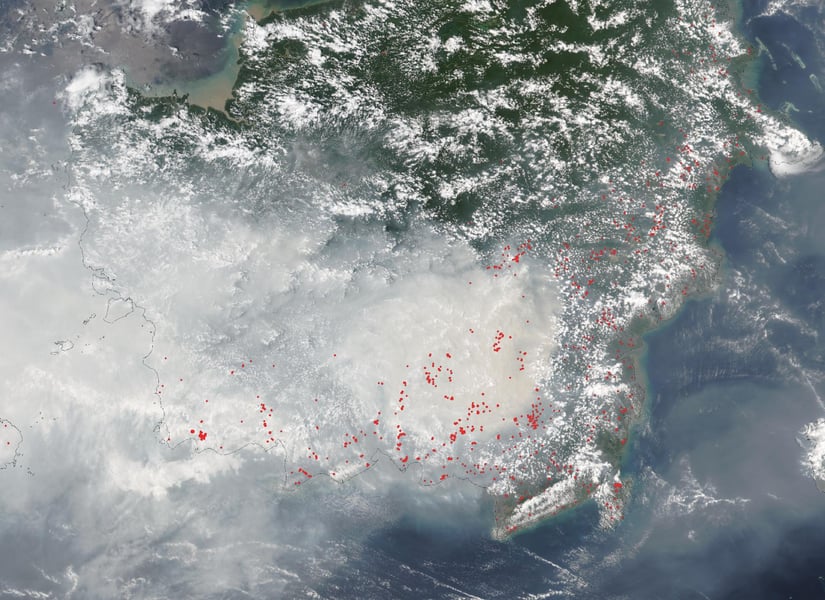
The ministry also reported that its satellite monitoring counted 799 high-confidence hotspots nationwide by 9 p.m. on Thursday, up 427 from 372 the night before. Central Kalimantan, home to Tanjung Puting National Park, rose most, to 389 from 130. The number needs rough edges. The ministry’s own releases put the count at 1,176 on October 7, 387 the next day, 1,085 on October 12 and 244 on October 13, so 799 is a rebound, not a record. A hotspot is a heat anomaly, and one fire can register as several. The sensors are NASA and NOAA instruments that, as NASA’s Earth Observatory noted in September, struggle to see fires under thick smoke, in the understory or underground in peat.
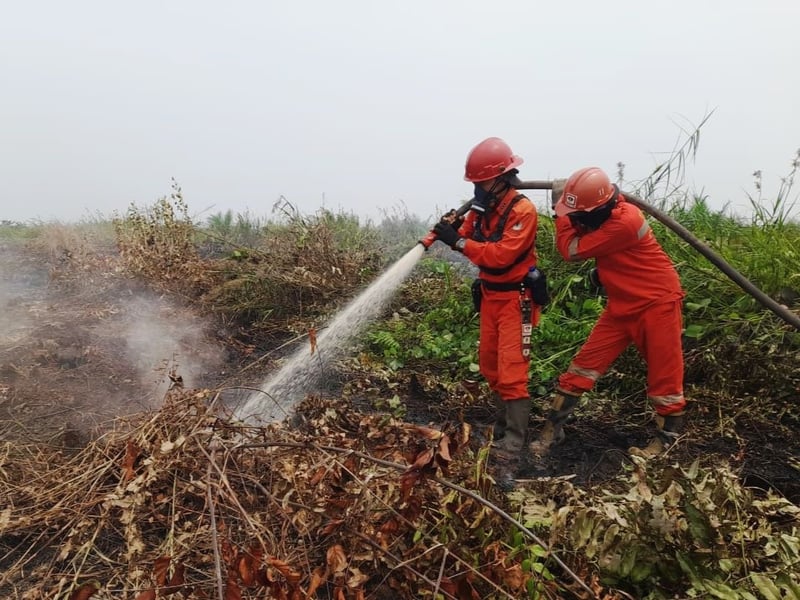
Peat is why the numbers mislead. NASA reported that Kalimantan, Sumatra and Papua are normally too wet for fire to spread through underground peat, but dry conditions change that. “Surface fires are less of a concern, but when fires get underground, they just won’t stop,” Robert Field, a Columbia University researcher, told NASA. The agency ties this year’s dryness to a strengthening El Niño, the pattern behind the WMO’s El Niño warning, and to a positive Indian Ocean Dipole, and says about 90 percent of Indonesia got little or no rain in early August, according to the country’s meteorological agency. As of September 2, NASA estimated, the fires had released roughly 10 percent of the greenhouse gases that the 2015 fires emitted over more than three months. TEH did not find a later estimate.
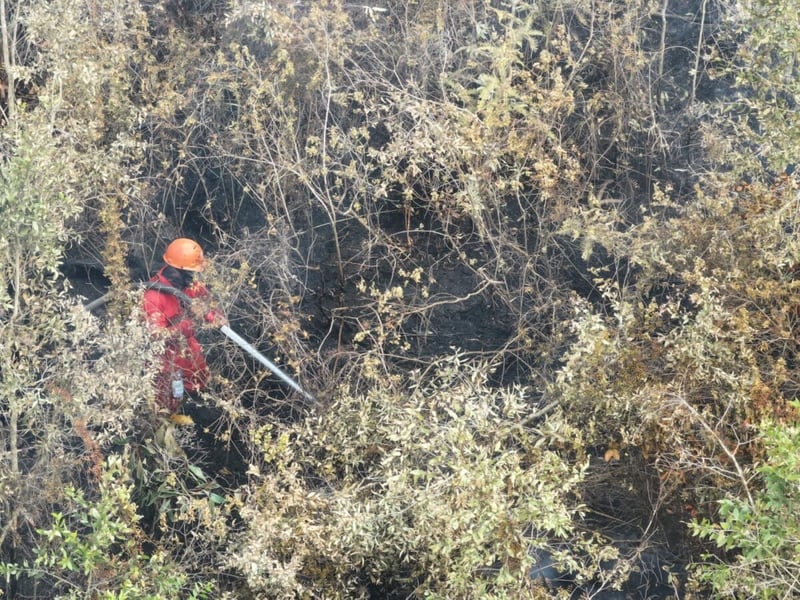
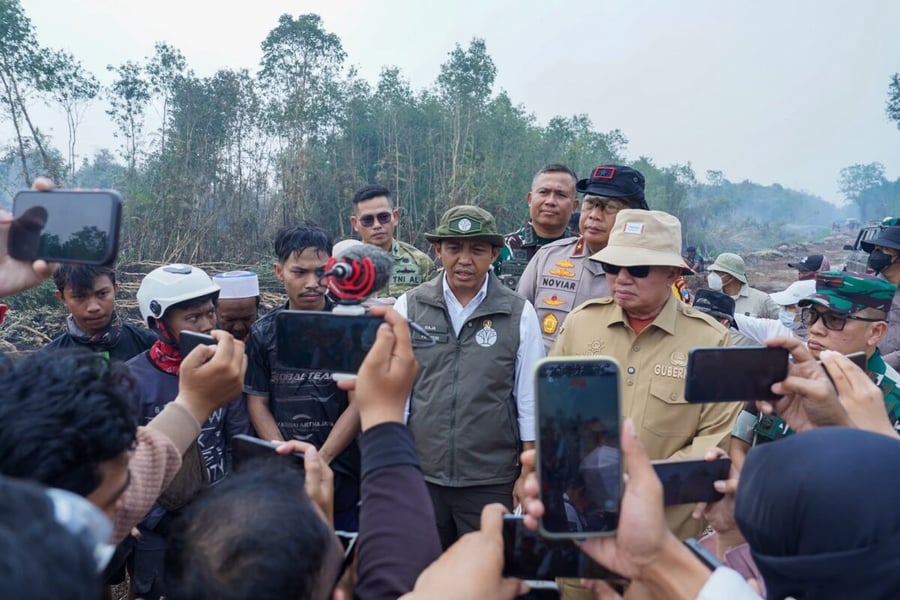
At Tanjung Puting, where the release speaks of orangutan habitat, peat fires need wetting until embers below the surface are under control, the ministry says. Forestry Minister Raja Juli Antoni toured the area on Thursday with the regional army commander, the ministry says, and crews are concentrating on locations picked out by thermal drones. One, Pesalat, lies close to the park’s core zone and what the release calls an important orangutan area. Rivers there rise and fall with the tide, so the government is preparing a land route and sinking bore wells to bring water closer. Smoke at Palangka Raya and Pangkalan Bun is too thick for flights, so cloud-seeding sorties on October 15 and 16 are taking off from Banjarmasin. The release does not say whether any orangutans have been hurt.
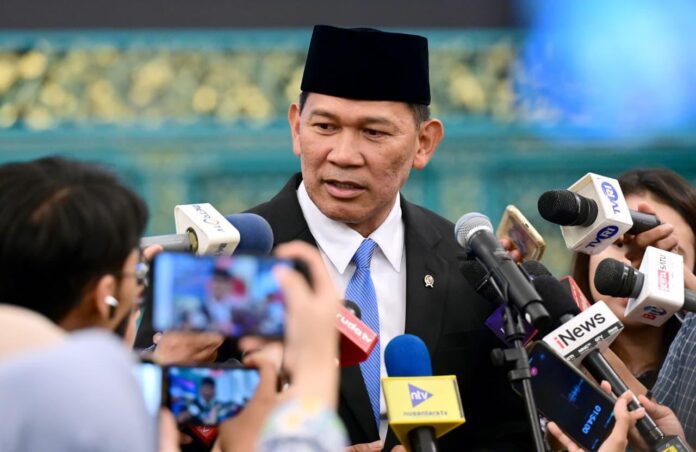
Accountability is the other front. On Monday, in South Kalimantan, Raja Juli said 26 companies have already had permits frozen or revoked over the fires and that five or six more would follow, and he warned that large operators would not be spared. The ministry’s releases this week give hotspot counts but no burned-area total.
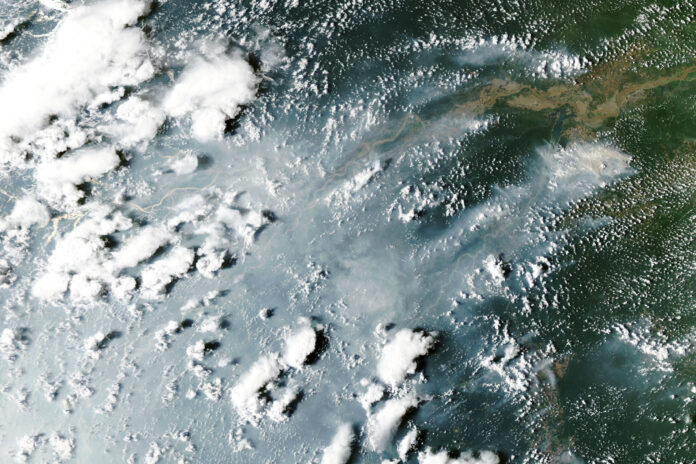
Indonesia is not the only place burning early. TEH reported on Thursday that Amazon fire detections this month are running at nearly triple last year’s pace, with satellites missing fires under the smoke there too.
The ministry has promised an evaluation of how the Bromo operation unfolded, to be carried out with the parties involved. It has not said when, or who will explain how a fire logged as out at 11.45 on Wednesday was burning again by Thursday morning.