JAKARTA — The Indonesia Stock Exchange has decided to stop counting some of the country’s most tightly held companies in its own headline index, a concession announced on Monday, the day the benchmark sank to its lowest level in six years.
Nikkei Asia reported that every stock flagged for high shareholding concentration, known as HSC, will be excluded from the Jakarta Composite Index. The paper counts 80 such stocks, together carrying 18% of the index’s weighting. The decision followed an online conference on Monday afternoon with MSCI, the index provider now weighing whether to demote Indonesia.
The stakes are written into MSCI’s own release. On October 15 it called Indonesia’s continued classification as an emerging market “no longer appropriate” and proposed standalone status, saying market participants told it that a move to frontier “would not properly recognize the depth of the market problems.” It cited “continued suspected coordinated trading behavior and lack of evidence of meaningful enforcement.” Feedback is open until April 30, 2027, and the decision comes on or before June 30, 2027.
The exchange’s move appears to echo what MSCI already does. The release says MSCI will “continue to delete securities identified by the Indonesian authorities under the HSC framework,” so the headline index is moving toward the screen the provider applies.
The market has not waited for a verdict. Xinhua reported that the index plunged 8% at Friday’s open, triggering a 30-minute halt, and fell as much as 11%, heading for its steepest single-day slump since January 1998. Fortune put the fall at 11.6% and said the index was down just over 40% for the year. On Monday, Nikkei Asia reported a second straight fall and a lower auto-rejection limit for certain stocks. Those figures describe different moments, so they do not line up.
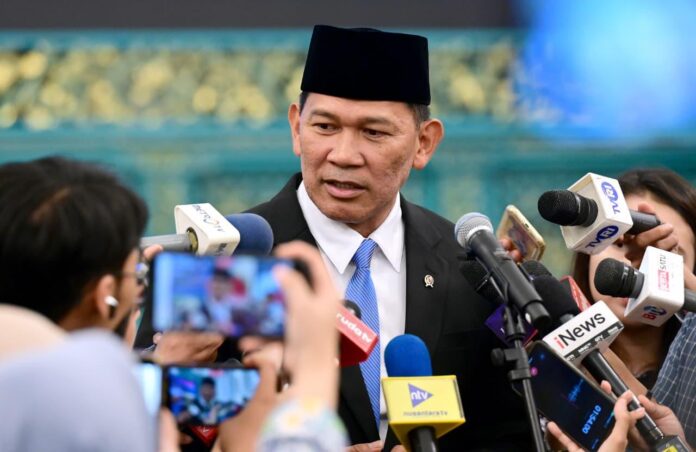
Regulators are answering on enforcement, the gap MSCI named. The Financial Services Authority, OJK, said on Friday it had fined parties tied to trading in DSSA shares 1.5 trillion rupiah, and others tied to share allotments in BREN and CUAN 500 billion and 100 billion rupiah, adding that at least 835 parties had faced disciplinary or enforcement action this year. In a separate statement, its chairperson, Friderica Widyasari Dewi, said OJK believes the market “will remain appealing and prospective.”
Fortune reported that the sovereign fund Danantara plans to invest $5 billion in Indonesian businesses over six to nine months, a pledge made before MSCI’s announcement. The same fund is set to centralise coal, palm oil and ferroalloy exports, a plan for state control of commodity exports that Fortune says has unnerved analysts.
TEH could not open the exchange’s own notice, and most of Nikkei’s report sits behind a paywall, so the effective date and the list of 80 stocks are unconfirmed. Whether removing them amounts to the “clear evidence of material improvements in market governance and functioning” that MSCI says would warrant reconsideration is a question neither side has answered.