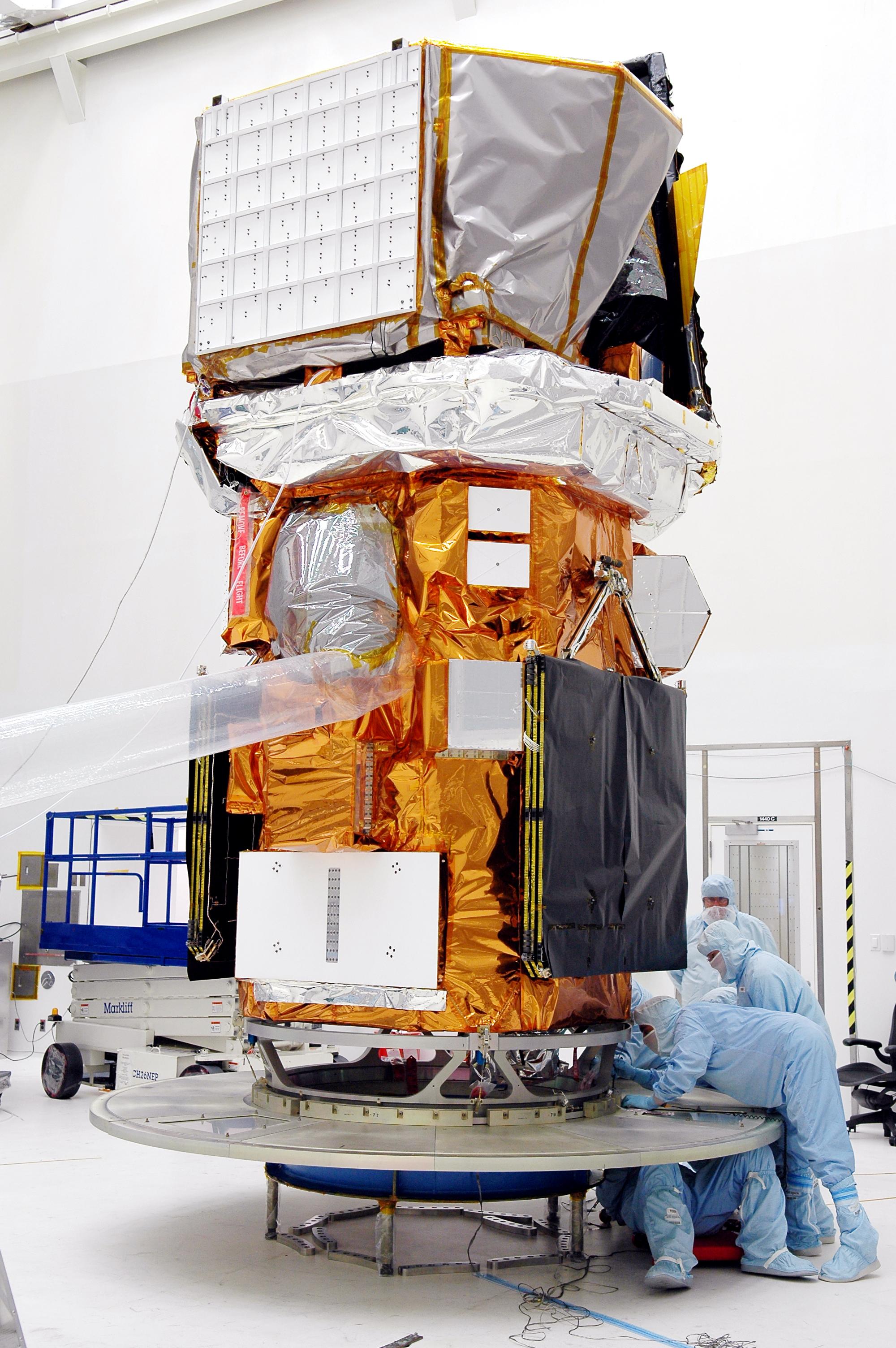

NASA’s Neil Gehrels Swift Observatory re-entered Earth’s atmosphere over Indonesia on November 4, closing a mission that spent nearly 22 years tracking some of the universe’s most powerful explosions and coordinating observations around the world.
The US Space Force confirmed re-entry at 7:39 a.m. EST, or 12:39 UTC, over the North Sumatra region, NASA said in its updated mission announcement. The agency placed the event at approximately 3.4 degrees north latitude and 98.6 degrees east longitude.
NASA expected most of the spacecraft to burn up during atmospheric entry, although some components may have survived. The confirmation identifies where the spacecraft re-entered; it does not establish that surviving debris was recovered at those coordinates.
A two-year mission that lasted decades
Swift launched on November 20, 2004, with a planned two-year prime mission. Its actual lifetime extended almost to the 22nd anniversary of launch, far beyond the original timetable.
The observatory was built to investigate gamma-ray bursts, brief and extraordinarily energetic cosmic explosions. During its career, it observed more than 2,000 such bursts, according to NASA’s account of its scientific legacy.
Speed was central to its design. When a burst appeared, Swift could determine its position, alert other observatories and turn its own telescopes toward the source before the fading afterglow disappeared. NASA said that sequence typically took about a minute.
Three instruments working together
Swift carried a Burst Alert Telescope, an X-ray Telescope and an Ultraviolet/Optical Telescope. Together, the instruments allowed scientists to examine an event across different forms of light, rather than relying on a single view.
The Burst Alert Telescope detected high-energy flashes and calculated their locations. The other telescopes then studied the afterglow in X-rays, ultraviolet and visible light, refining the position and recording how the event changed.
As NASA’s mission overview explains, Swift also transmitted locations to ground stations within seconds. That rapid communication helped telescopes on Earth and in space organize follow-up observations while the target remained detectable.
Increasing drag brought operations to an end
The spacecraft’s final observation took place on October 20. By then, Swift had descended to approximately 171 miles, or 275 kilometers, above Earth, where increased atmospheric drag prevented the observatory from maintaining the steady pointing needed for science.
NASA said Swift entered safe mode after it could no longer compensate for those effects. The operations team at Penn State subsequently sent a command effectively ending operations and preparing the spacecraft for re-entry, according to the agency’s October mission update.
The commercial rescue effort did not deliver the planned boost. NASA and Katalyst Space said in their August 19 announcement that an attitude-control problem with the LINK servicing spacecraft prevented the planned capture and orbital lift. The effort followed the robotic rescue plan previously covered by The Eastern Herald.
A legacy beyond gamma-ray bursts
Although gamma-ray bursts defined its original purpose, Swift became a broader tool for studying a changing universe. NASA credits the mission with observations of supernova explosions, active galaxies powered by supermassive black holes, stars producing X-ray flares, and comets and asteroids within the solar system.
Its contribution extended beyond the images and measurements collected onboard. By sharing the positions of short-lived events quickly, Swift helped other facilities capture phenomena that might otherwise have faded before observers could respond.
DW reported that there were no immediate reports of damage on the ground following re-entry. That initial reporting should not be confused with confirmation that every component burned up: NASA explicitly allowed for the possibility that some material survived.
The spacecraft’s return ended its observing career, but not the scientific value of the observations accumulated across more than two decades.