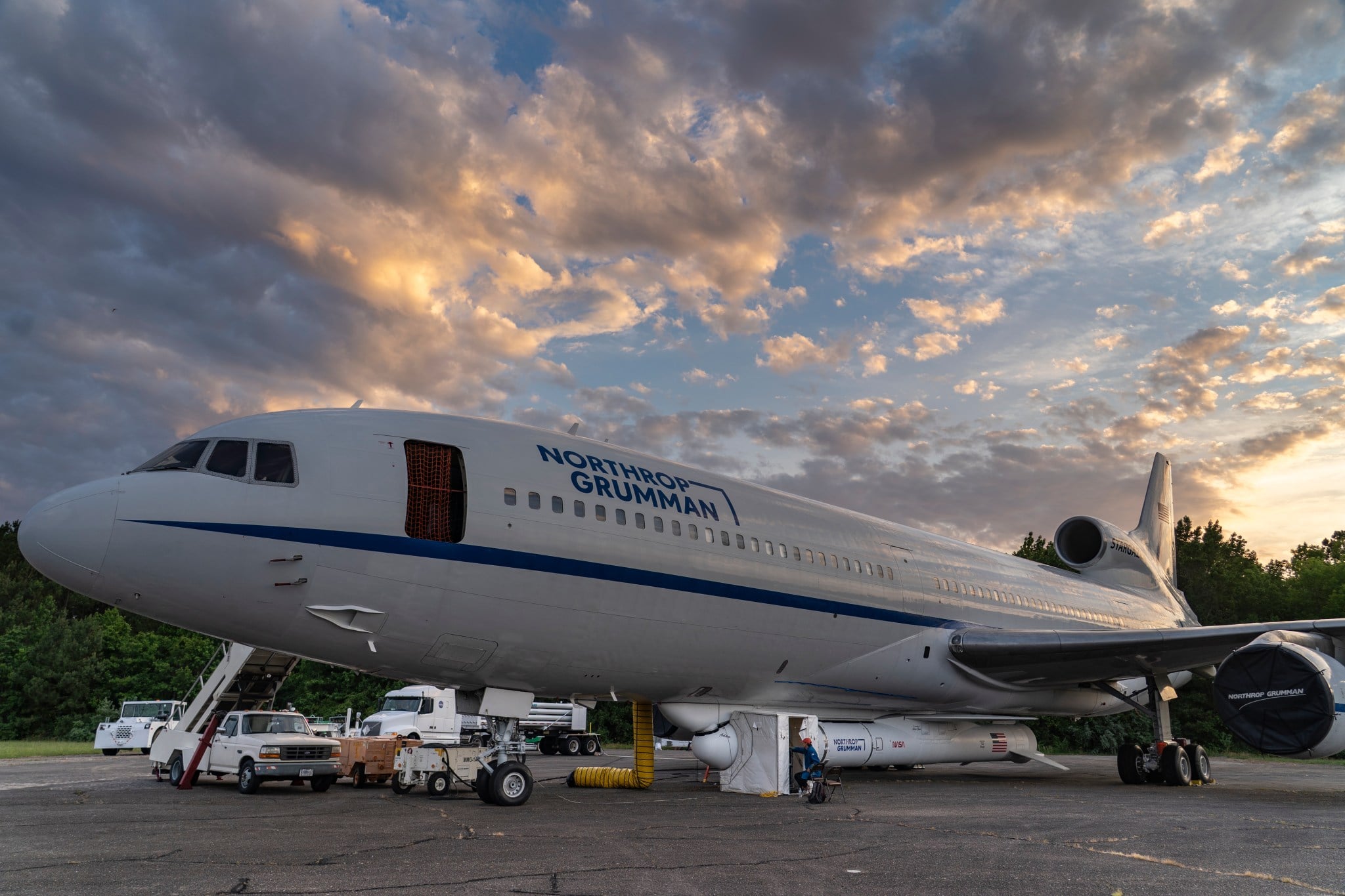

KWAJALEIN ATOLL, Marshall Islands — If the launch scheduled for early Thursday morning fails, one of astronomy’s most productive instruments burns up in the atmosphere within months, and with it goes a program that has caught more than 1,800 gamma-ray bursts, watched a supernova ignite in real time, and helped inaugurate an entirely new way of observing the universe. NASA is not waiting to find out. At 5:09 a.m. EDT on July 2, a Northrop Grumman Pegasus XL rocket is scheduled to drop from the belly of an L-1011 jet over the Pacific and launch a 935-pound robotic spacecraft on a mission to grab the Neil Gehrels Swift Observatory and haul it back into a stable orbit.
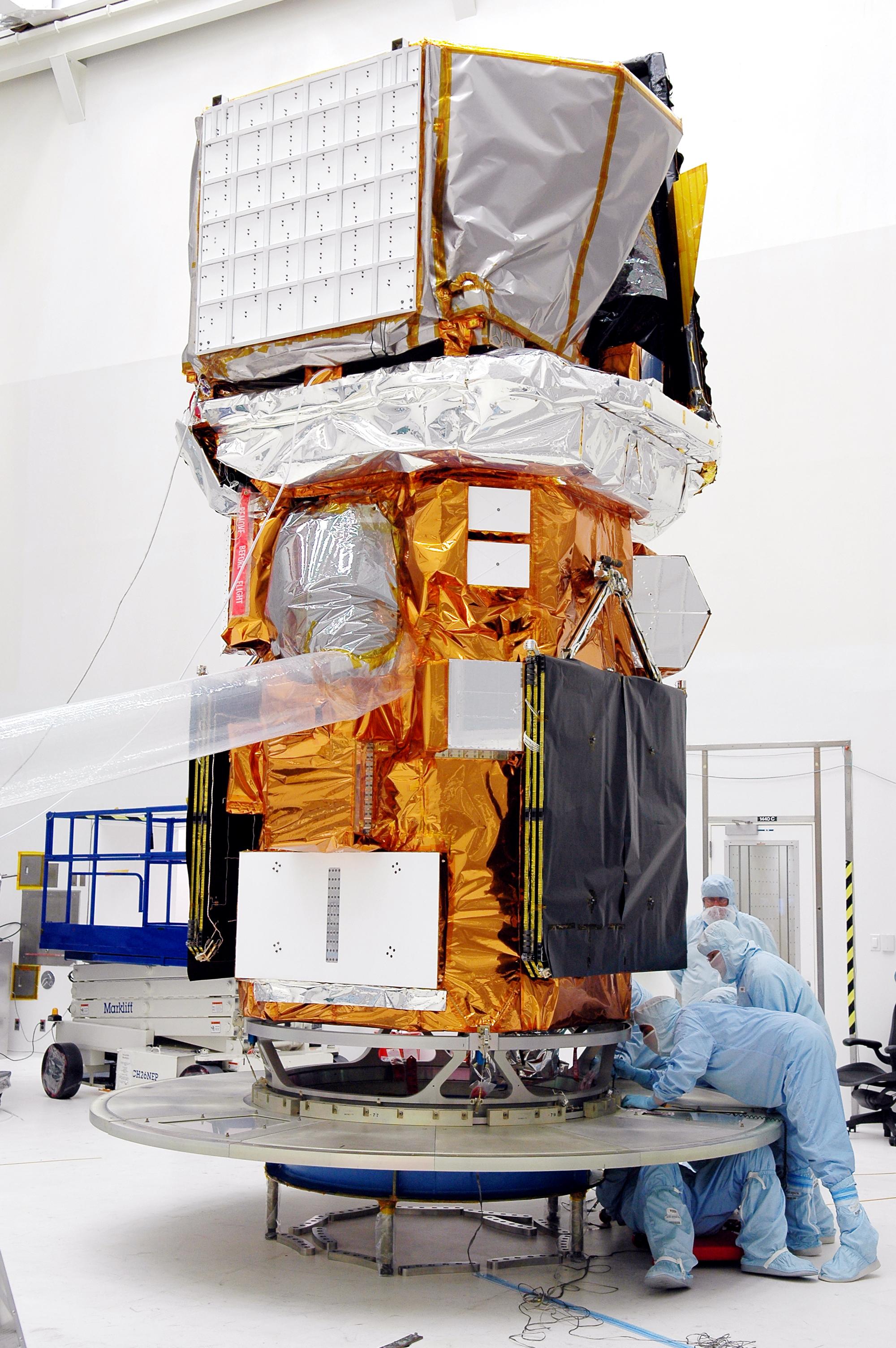
The rescuer is called LINK, built by Katalyst Space Technologies, a Flagstaff, Arizona startup that had less than a year to design, build and test it after NASA awarded the company a $30 million contract in September 2025. Swift, launched in 2004 and orbiting at less than 250 miles up, has been sinking faster than engineers expected as recent solar storms thickened the upper atmosphere and dragged on its hull. Left alone, the observatory was projected to dip below 300 kilometers by October, the altitude below which reentry becomes effectively unavoidable.
What makes the mission unusual is not the goal but the method. Swift was never built to be grabbed, refueled or repaired. It has no docking ring, no standardized capture point, nothing designed for a visitor. LINK will have to rendezvous with the observatory within about three weeks of launch, seize it using robotic arms built for a target that was never meant to be seized, and then spend two to three months firing thrusters to walk Swift’s orbit back up toward 600 kilometers before releasing it and deorbiting itself. Robert Lamontagne, Katalyst’s vice president of strategic partnerships, called it “a historic mission” built around “a robotic spacecraft that can go and capture an unprepared satellite,” the kind of capability NASA has talked about for years without anyone actually attempting it against a live, operating government asset.
Shawn Domagal-Goldman, NASA’s division director for astrophysics, was candid about how much of this remains untested. “There are still unknowns, both in terms of the dynamic nature of this part of Earth’s atmosphere” and in how LINK’s approach and capture will actually unfold in practice, he said. Brad Cenko, Swift’s principal investigator at NASA’s Goddard Space Flight Center, is the scientist with the most riding on the outcome. If the reboost works, agency officials estimate it could extend the observatory’s working life by roughly a decade.
The reason NASA is spending $30 million and accepting a genuinely uncertain robotic rendezvous, rather than simply letting a 22-year-old satellite go, is what Swift has already done. Its combination of gamma-ray, X-ray, ultraviolet and optical instruments lets it swing toward a burst of high-energy light within seconds of detecting one, a speed no other observatory matches. That capability made Swift one of the first instruments to catch the ultraviolet afterglow of GW170817 in August 2017, the neutron star collision that gravitational wave detectors on the ground had picked up minutes earlier, a discovery credited with opening the field now called multi-messenger astronomy. Eastern Herald has covered how that same gravitational wave data is now rewriting scientists’ understanding of how black holes are born and grow, a line of research that depends on exactly the kind of rapid, multi-wavelength follow-up Swift was purpose-built to provide.
Thursday’s flight will also be the last time a Pegasus XL ever launches. The winged, air-dropped rocket, which has carried small satellites to orbit since 1990, is being retired after this mission, closing out a launch vehicle that predates most of the companies now competing to replace it. That timing is not entirely comfortable for NASA. The agency has leaned hard on fast-moving commercial contractors to solve problems its own budget and timelines increasingly cannot, a pattern Eastern Herald has also tracked in NASA’s dependence on Blue Origin’s New Glenn rocket for its Artemis moon program, where a single pad explosion in May left the agency’s own administrator warning that recovery could stretch into 2028. Katalyst has never flown a spacecraft before. LINK is its first.
None of that guarantees Thursday goes as planned. Domagal-Goldman’s own words are the clearest signal of how much is riding on a single attempt: the atmospheric dynamics LINK must fly through are not fully understood, and the capture mechanism has never been tested against a real, tumbling, two-decade-old satellite in orbit. The company now has one shot at a target moving through that uncertainty. If LINK misses its window, or the capture attempt fails, there is no second robotic rescuer waiting behind it. Swift’s fate, and the multi-messenger astronomy program it helped create, will not have a backup plan.