
CAPE CANAVERAL, Fla. – The wreckage at Launch Complex 36 was still being cleared when Blue Origin’s chief executive made the company’s most consequential promise since the rocket first left the ground. Dave Limp said Monday that New Glenn – the 320-foot rocket that exploded in a fireball during a routine engine test last week – would fly again before the end of this year.
That pledge landed against a backdrop of compounding complications. NASA Administrator Jared Isaacman told CNBC on Monday that restoring the damaged launchpad would “take some serious time,” adding that a 2028 timeline was “within the realm” of possibility. The Space Force, in a disclosure that underscored the military’s stubborn confidence in the company, had already awarded Blue Origin its first national security launch contract – on the same day the rocket exploded.
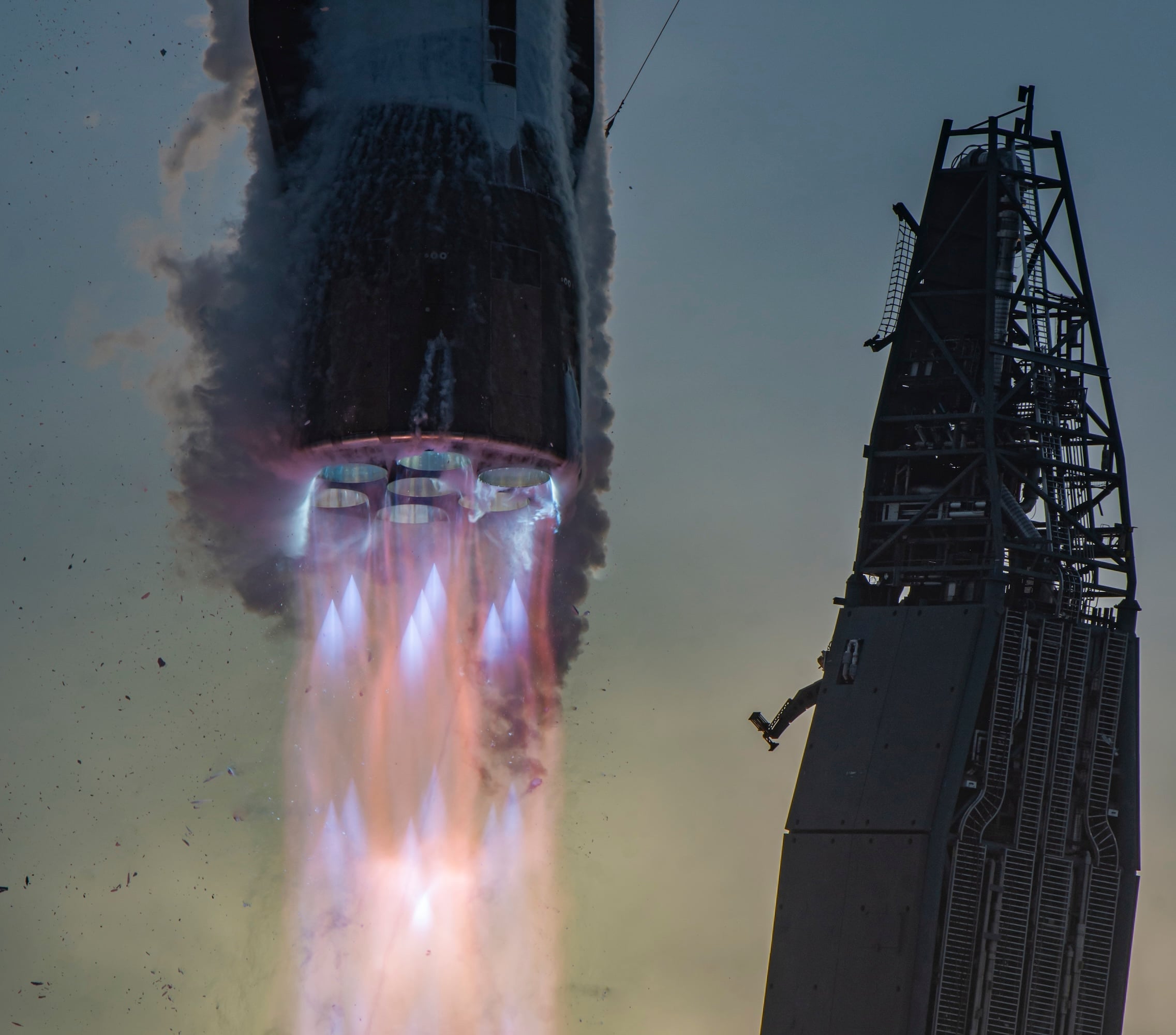
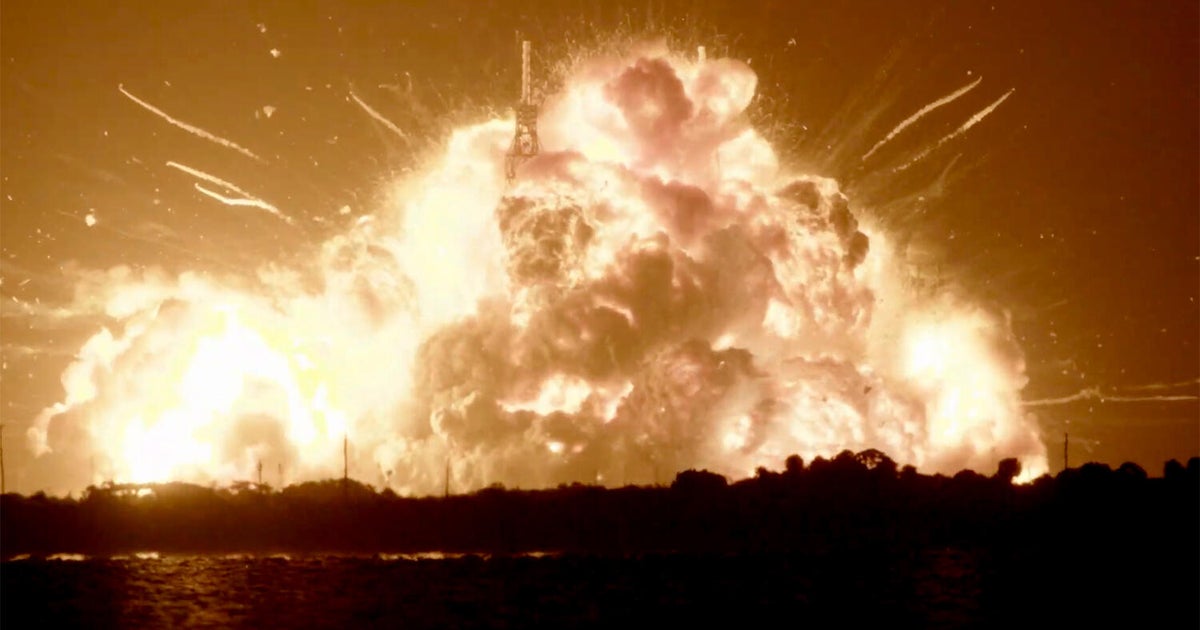
The explosion occurred around 9 p.m. EDT on May 28 as engineers conducted a hotfire test of New Glenn’s seven BE-4 methane engines – the final pre-launch verification before a planned June mission to deploy Amazon Leo satellites into orbit. What followed lasted seconds but consumed years of work. The 188-foot first stage was enveloped in fire; the upper stage tilted and fell; the vehicle’s load of methane fuel and liquid oxygen ignited in a rolling fireball visible from beaches miles away. Homes shook in Cape Canaveral and Cocoa Beach. No one was injured.
“It’s too early to know the root cause but we’re already working to find it,” Jeff Bezos wrote on X that night. “Very rough day, but we’ll rebuild whatever needs rebuilding and get back to flying.”
By Monday, Limp was offering specifics – or at least the appearance of them. He said Blue Origin had regained access to the pad and begun its investigation, and that the support tower, though structurally damaged near its base, could be repaired in place rather than demolished. Another New Glenn booster that had been at the launch complex at the time, along with three upper stages in processing, “also look good,” Limp said. The fuel tanks, he added, were intact. None of that answers what caused the explosion, which the Federal Aviation Administration confirmed occurred outside the scope of any licensed activity. The FAA said there was “no impact to air traffic” as a result.
The gap between Limp’s confidence and Isaacman’s timeline captures the central tension Blue Origin now faces. The company has no backup launchpad at Cape Canaveral. It is constructing a second New Glenn pad there, but the project is in early stages. It also recently secured a lease at Vandenberg Space Force Base in California, which the Space Force has said could take at least two years to complete. For now, Launch Complex 36-A – the only pad New Glenn has ever used – is the bottleneck on which everything depends.
Isaacman, who visited the blast zone after the explosion, drew on the history of launch infrastructure to frame the challenge. Every pad ever built, he said, every pad ever rebuilt – NASA catalogued the timelines. “Even if you’re moving at a pretty quick pace, that’s going to take some serious time.” What Blue Origin has not said – and what its investors, customers, and government partners are waiting to learn – is precisely what failed and whether that failure implicates the rocket’s BE-4 engines, ground support equipment, or something in the ignition sequence that had never before produced this outcome in three prior flights.
The military, for its part, was not waiting. Air & Space Forces Magazine reported that the Space Force awarded Blue Origin a task order on May 28 – the same evening as the explosion – for a National Reconnaissance Office launch mission under the National Security Space Launch program. The mission is slated for late 2027 or early 2028. Col. Eric Zarybnisky, acting portfolio acquisition executive for space access, said the program remained committed to Blue Origin as partners and called the failure a “solemn reminder that the critical capability this community provides is rocket science and is inherently challenging.” The task order falls under Phase 3, Lane 1 of the NSSL program, which covers more risk-tolerant commercial-like missions. Lane 2 – the Pentagon’s most sensitive national security payloads – requires a separate certification process that New Glenn has not yet completed.
The stakes attached to New Glenn’s recovery extend well beyond any single launch contract. NASA awarded Blue Origin nearly $1 billion in Moon Base contracts just days before the explosion, and the agency has selected New Glenn to carry the Blue Moon Mark 1 robotic lander – originally targeted for this fall – as part of its Commercial Lunar Payload Services program. The Blue Moon Mark 2 crewed lander, central to the Artemis III mission that would return American astronauts to the lunar surface, depends on New Glenn for its planned low Earth orbit test in 2027. With NASA’s Artemis III core stage already rolled out and the program’s schedule under pressure from multiple directions, the explosion introduced an uncertainty that neither Isaacman’s careful language nor Limp’s optimism has fully resolved.
The incident invites an obvious comparison with SpaceX’s September 2016 pad explosion at Cape Canaveral, which destroyed a Falcon 9 during a pre-launch static fire and put that pad out of service for more than a year. SpaceX had a second launchpad available, which allowed it to return to flight within months. Blue Origin does not. Elon Musk, who dealt with both that failure and a test stand explosion in 2025, wrote on X after the New Glenn incident: “Most unfortunate. Rockets are hard.” TechCrunch reported the Federal Aviation Administration noted the hotfire was not a licensed launch activity, and Space Force officials confirmed that other companies’ launch schedules at the Cape would not be affected – ULA’s Atlas V was on track to launch an Amazon Leo batch the following day from a separate pad.
Amazon, whose Leo satellite constellation represents 25 percent of its more than 100 booked launches, confirmed its satellites were never integrated with the New Glenn rocket and remain secure in processing. The company said four other rockets remain on its manifest and deployment would continue. That redundancy softens the immediate commercial blow. What it does not address is the longer-term question of whether New Glenn – which had flown three times but had not yet completed the Space Force’s Lane 2 certification process – can recover quickly enough to hold its position in a launch market that does not pause for investigations.
Limp’s “before the end of this year” is a target, not a schedule. What Blue Origin has not yet established – and what the FAA investigation will eventually require – is the root cause of a failure that destroyed its most advanced rocket during a ground test it had successfully conducted before. Until that answer arrives, the promise of a 2026 return flight is built on optimism about infrastructure the company has not yet fully inspected, and a timeline that its own government partners are quietly treating as aspirational.