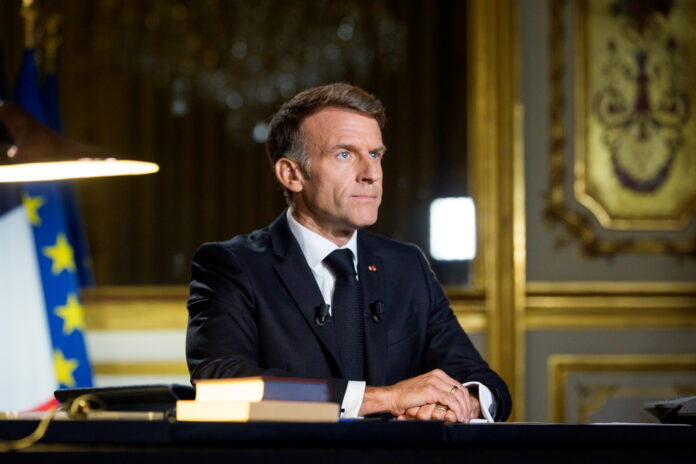

PARIS — Every autumn, roughly five million French children under 15 return to school carrying the social media habits they have built across the preceding year. By the time this school year begins, they will be locked out. France’s parliament completed a vote on Tuesday making the country the first in the European Union to formally prohibit minors under 15 from accessing social media, a law that transforms what had been a political pledge from President Emmanuel Macron into a binding legal obligation for the world’s largest technology platforms.
The legislation requires TikTok, Instagram, Snapchat, Facebook, and any other platform operating in France to verify the ages of users at registration and block those who cannot confirm they are at least 15 years old. Platforms that fail to implement compliant age verification face significant financial penalties under the law’s enforcement framework. The French government has not specified the exact verification mechanism it will accept as sufficient, a gap that leaves some implementation ambiguity even as the legal obligation takes effect.
Macron had framed the measure in stark terms throughout the legislative debate. “Our children’s brains are not for sale,” he said in public remarks that became the most-quoted line of the parliamentary push. The president pressed lawmakers to complete the vote before parliament’s summer recess specifically so the ban would be in place at the start of the new school year, treating the school calendar as a natural implementation deadline and as a way to signal to parents that the protection would be in place when children returned to class.
France’s passage of the law puts it substantially ahead of its European peers. The European Union as a whole has the Digital Services Act, which imposes platform obligations related to child protection but stops well short of an age-gated social media ban. Britain announced a comparable ambition alongside France in June, with Prime Minister Keir Starmer targeting an under-16 threshold, but British legislation had not cleared parliament by the time France completed its vote. Australia passed a social media ban for children under 16 in late 2024, and several American states have enacted or are pursuing similar restrictions, but France’s law now stands as the first implemented by any EU member state.
The policy movement reflects a convergence of research and public anxiety about the effects of social media on adolescent mental health. Studies published in recent years have connected heavy social media use by young teenagers, particularly girls, to elevated rates of anxiety, depression, and disrupted sleep. Platforms have disputed the methodology and causal claims of those studies. But the political momentum has moved in one direction: lawmakers in France, Britain, Australia, and the United States have found more electoral reward in restricting youth access than in defending platforms’ current age self-verification systems, which rely on users providing a date of birth at signup without any independent check.
The question of how France will actually enforce a meaningful age check is the part of the law that critics have pressed hardest. The country’s existing approach to age verification for adult content online has had limited success. Requiring an age gate that a determined teenager cannot circumvent using a parent’s identity details, a false birthdate, or a virtual private network is a technically unsolved problem. The French government has pointed to the possibility of digital identity infrastructure as one verification route, and some industry observers expect France to eventually accept verification via a government-issued digital ID system, but the law itself does not specify this requirement, leaving the approach to regulatory elaboration after passage.
Meta, TikTok, and Snap did not release formal statements immediately after the parliamentary vote. All three companies operate platforms that are heavily used by French teenagers and have previously resisted or complicated age-verification requirements in other jurisdictions. Meta has invested in its own parental supervision tools as an alternative to legislative mandates; TikTok has introduced a mode that restricts content for users who declare themselves under 18; Snapchat has implemented parental monitoring features under pressure from regulators in Britain and elsewhere. None of those tools amounts to an independent verification that a user is the age they claim to be, which is precisely what the French law now demands.
The broader European regulatory environment gives France’s move some institutional context. The EU’s Digital Services Act, which came into full force in 2024, requires very large platforms to assess and mitigate systemic risks including harms to minors, and the European Commission has opened investigations into TikTok and Meta over child protection compliance. Those proceedings have moved slowly. France’s law represents a national government deciding not to wait for the EU-level process to produce an enforceable outcome, and using national law to get to a result faster than Brussels can manage through its own machinery.
When France and Britain both announced plans to restrict social media for children on the same day in June, the move put Big Tech on notice across Europe and was widely seen as a turning point in how governments were prepared to engage with the platforms. Six weeks later, France has crossed from announcement to enacted law. Britain has not. That divergence illustrates both how quickly France moved once the political decision was made and how much harder the legislative path can be in a parliamentary system where the governing party does not command a large majority and where the tech lobby has had time to mount pressure.
The White House had pressed Britain to abandon its social media ban for under-16s, arguing that parental empowerment rather than platform mandates was the appropriate policy response. The American position aligned with the tech industry’s own public line and reflected the current administration’s skepticism toward European digital regulation. France appears to have proceeded without giving significant weight to that pressure. Whether other EU member states now move to adopt similar legislation is the question that the platforms will most closely watch. A coordinated European requirement at national level would be substantially harder to manage than a single country’s law.
For the teenagers directly affected, the law’s real consequences will depend on what the platforms actually build, how fast they build it, and whether French regulators are prepared to levy meaningful penalties when they don’t. The answer to none of those questions is yet known.