
PARIS – The children who opened TikTok or Instagram on Monday morning in France and Britain may, if their governments get their way, be among the last to do so without a fight. On the same day, President Emmanuel Macron and Prime Minister Keir Starmer each announced plans to bar children from social media – Macron drawing his line at 15, Starmer at 16 – in the most sweeping coordinated European challenge to Silicon Valley’s hold on adolescent attention since the European Union’s Digital Services Act took effect.
What made Monday striking was not the policies themselves, which both leaders had been telegraphing for months, but the timing. The announcements landed within hours of each other, projecting the image of a continent moving in lockstep. The reality, as anyone who watched France try to enforce a similar law three years ago can attest, is considerably messier.
Macron told TF1 television on Monday that French parliamentarians would vote on the legislation by July 15, and that the restrictions would come into force at the start of the September school year. Existing accounts held by children under 15 would be closed before the end of 2026. “It is harmful to our children and young people,” Macron told the broadcaster. “They are not ready; they are too young.”
The French bill, which was adopted in a late-night session of the National Assembly in January by a lopsided 130-to-21 vote and is now awaiting Senate approval, also bans mobile phones in high schools, extending a restriction that has applied to primary and middle schools since 2018. The Senate timeline – and whether it can finish before the September deadline – is the one variable Macron declined to address directly.
Starmer’s announcement was pitched in similar emotional register. “Social media is making our children unhappy and unsafe, and as a parent, as much as a Prime Minister, I just can’t let that go on anymore,” the British prime minister said in a recorded video released Monday, according to NBC News. The government is preparing legislation aimed at placing the compliance burden on platforms rather than parents, threatening fines for companies that fail to keep children off their services. Starmer said he hoped to have the law in place by late December, with the ban operative from spring 2027.
The gap between Macron’s September 2026 target and Starmer’s spring 2027 timeline reveals something about the different political contexts. France’s National Assembly has already voted; the Senate is the remaining hurdle, and Macron has been using fast-track procedures to push it through. Britain’s parliament has not yet seen a bill. Starmer himself acknowledged that overcoming resistance from platforms would be challenging – a diplomatic way of saying that Meta, TikTok, Snapchat and YouTube have legal and lobbying resources that no European government has fully neutralised.
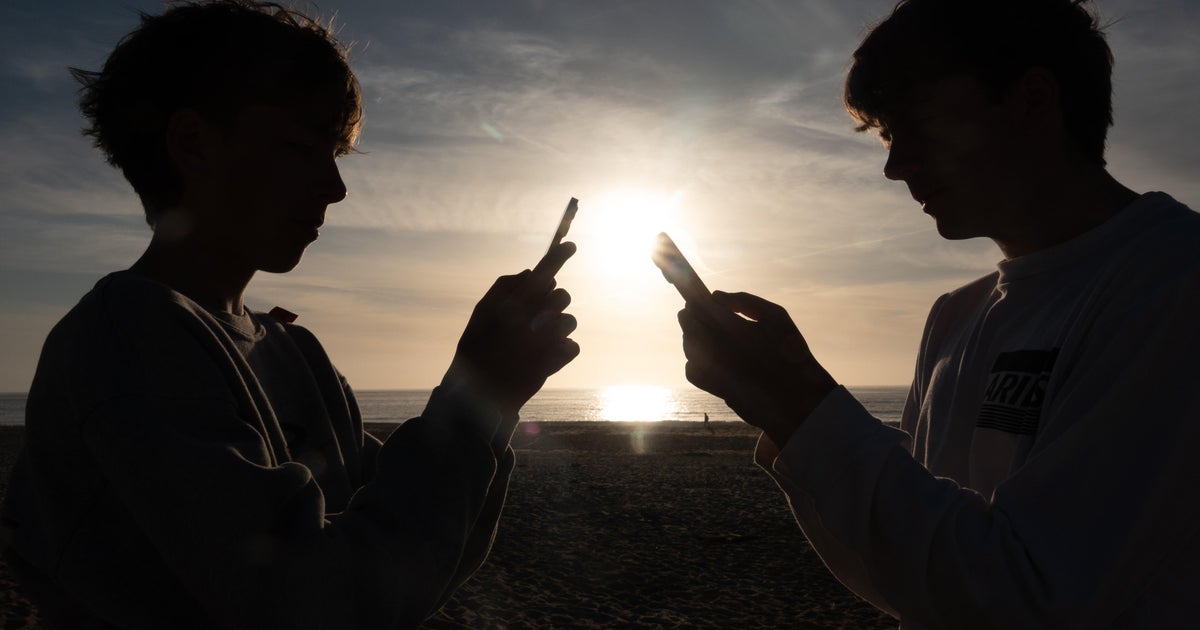
That problem is not hypothetical. France passed a law in 2023 requiring social platforms to obtain verified parental consent before allowing children under 15 to create accounts. Three years later, the measure has not been meaningfully enforced. Technical and legal constraints – including EU data protection rules that complicate age verification at scale – left it effectively dormant. Macron’s current push is, in one reading, an admission that the lighter-touch approach failed. The new bill puts hard prohibition in the place of consent requirements, but it does not specify precisely how platforms will verify the age of users at registration. That question, the enforcement mechanism that sank the 2023 law, remains open.
Macron has framed the drive in explicitly geopolitical terms, language worth noting. In January, during the National Assembly debate, he called on French lawmakers to act because children’s “brains are not for sale – neither to American platforms nor to Chinese networks.” The formulation neatly positions France as a sovereign actor resisting both Silicon Valley and Beijing, a framing that has more political purchase at home than a narrower child-safety argument. Whether it translates into enforceable law is a different question entirely.
The broader European context matters here. Australia became the first country to impose an outright social media ban for under-16s in December 2025, closing approximately 4.7 million accounts in the rollout. The Australian model placed legal liability on platforms, not parents, and it is the template both France and Britain are working from, even if neither has been willing to say so explicitly. The European Parliament has urged the EU to set bloc-wide minimum age limits, though member states retain the power to legislate, which is why France and Britain are moving separately rather than waiting for Brussels.
That decentralisation is the unstated vulnerability in both announcements. A child in France blocked from Instagram at home can, in theory, access it through a virtual private network or a device registered in a permissive jurisdiction. Neither Macron nor Starmer addressed that on Monday, which is either a deliberate political choice – announce the principle now, work out the details in regulation – or a sign that neither government yet knows how to close the loop.
The Eastern Herald’s coverage of the pressure Washington put on London to drop its under-16 ban revealed something neither Macron nor Starmer mentioned on Monday: the United States government, acting on behalf of its technology sector, has actively lobbied European capitals to soften or abandon these restrictions. That Britain resisted American pressure and Macron is pressing forward despite it suggests the political calculus in both countries has shifted far enough toward child safety that Big Tech’s objections are no longer dispositive.
Courts may yet be the final arbiter. Meta and YouTube were found liable by a Los Angeles jury in March for creating products that caused harm to teenage users – a verdict whose legal and political reverberations have not yet settled. Platforms challenging European age bans in court would be fighting on at least two fronts simultaneously.
What Macron and Starmer share, beyond the coincidence of timing, is a political bet: that the public appetite for protecting children from online harm is now strong enough to withstand the lobbying power of platforms, the complexity of enforcement, and the certain challenge that any age verification system must operate across an internet that was designed to have no borders. Whether that bet holds – in the Senate chamber in Paris or in Westminster – will not be known by September.