
WASHINGTON – The Democrats’ campaign arm expanded its list of competitive House targets on Wednesday to 58 Republican-held seats, adding a dozen new races that include districts represented by two of the party’s highest-profile opponents: Representative Lauren Boebert of Colorado and Representative Richard Hudson of North Carolina, who chairs the House Republican campaign committee.
The expansion, announced by the Democratic Congressional Campaign Committee, reaches into territory that would have been considered implausible Democratic ground until recently. Nearly every newly added district was carried by Donald Trump by double-digit margins in 2024, including Hudson’s seat by 16 points and Boebert’s by 18. Victoria Spartz of Indiana, whose district Trump carried by 19 points, was also added, as was Representative French Hill of Arkansas, the chairman of the House Financial Services Committee, whose 2024 margin approached 18 points.
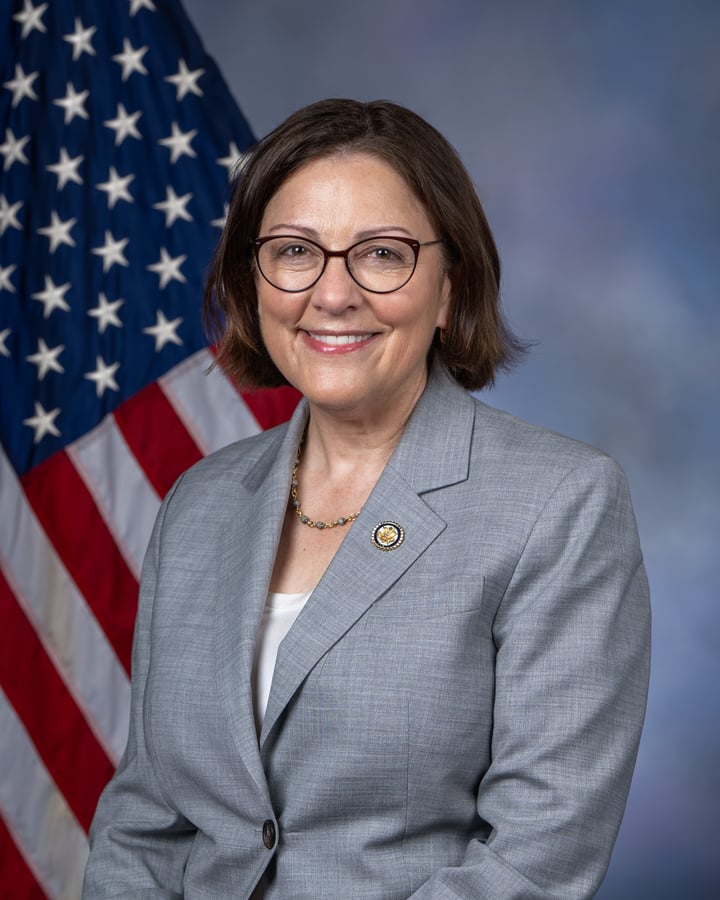
“House Democrats are expanding the battlefield deep into Trump terrain because we have a winning message focused on fighting for an Affordable America,” said Representative Suzan DelBene of Washington, the DCCC’s chairwoman.
The scale of the map reflects something beyond standard pre-election posturing. A CBS News survey released alongside the expansion found that 47 percent of voters would prefer Democratic control of the House, compared with 40 percent who favor Republicans – a seven-point margin that, if reflected at the ballot box, would almost certainly deliver a majority. Democrats need a net gain of roughly four seats to take control of the chamber.
The numbers carry historical weight behind them. The party in the White House has lost House seats in 34 of the 39 midterm elections since the end of the Civil War. With Republicans holding every lever of federal power – the White House, the Senate, and the House – Democrats are betting that structural pattern will assert itself in November.
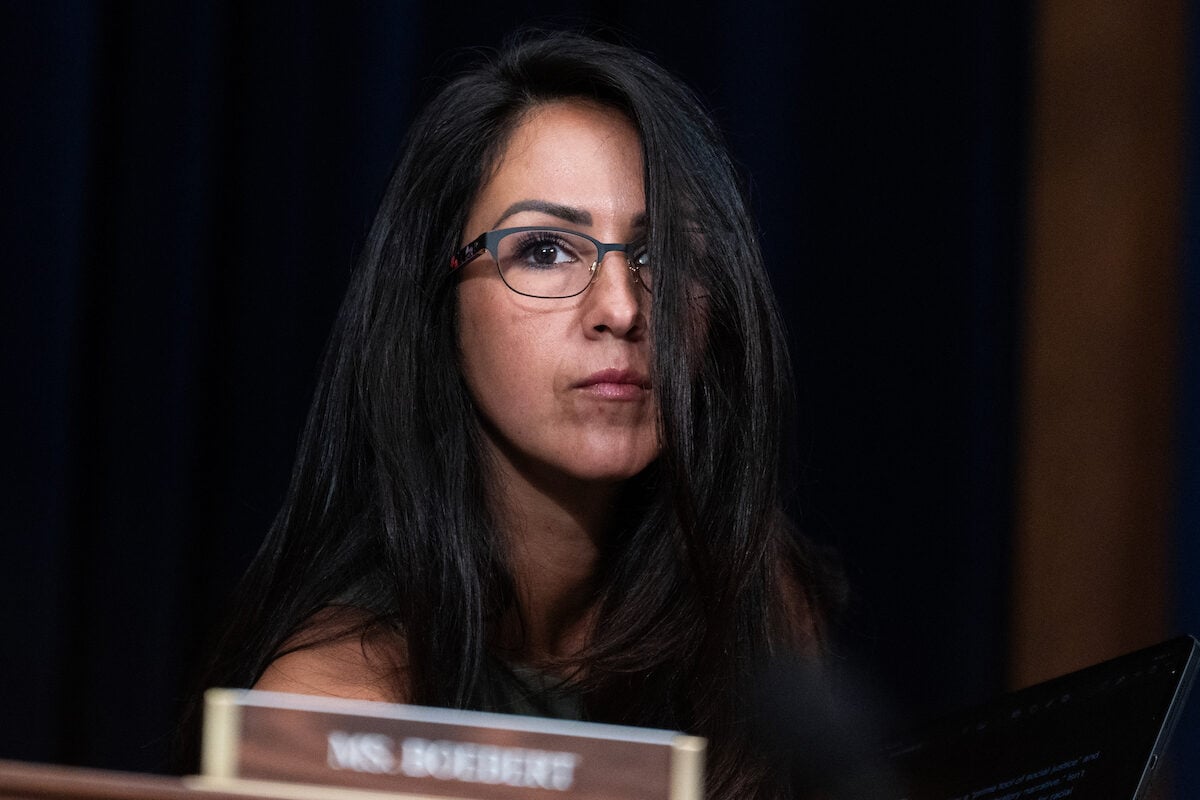
Boebert’s inclusion on the list drew pointed language from the DCCC. DelBene said she was “more interested in her own political self-promotion and chasing national attention than actually delivering for Colorado families.” Hudson, as NRCC chairman, now faces the unusual position of being simultaneously the national Republican official responsible for holding House seats and a candidate requiring active defense of his own district.
The 12 new additions bring the “Districts in Play” list to 58 districts across more than two dozen states, covering races in Tennessee, Nevada, Colorado, Nebraska, North Carolina, Indiana, Texas, Florida, and New York, among others. The designation carries no specific spending commitment from the DCCC – it is a declaration of competitive intent, used primarily to attract donors, signal recruiting opportunities to potential candidates, and put Republican incumbents on notice they will face organized opposition.
On the Republican side, financial machinery is already moving. America PAC has revived its political operation for 2026, with plans for door-to-door canvassing and digital advertising in competitive House districts. MAGA Inc has accumulated approximately $400 million for the midterm cycle, giving the Republican political apparatus significant resources to defend seats that may now require active defending.
Democratic operatives have also drawn confidence from individual race results earlier in the cycle. In Michigan, Abdul El-Sayed’s primary victory over an AIPAC-backed opponent – despite a $65 million outside-spending campaign against him – demonstrated that grassroots organizing can survive formidable financial opposition. The environment has also been shaped by Republican dysfunction in the House itself: earlier this summer, a standoff over the SAVE Act paralyzed floor proceedings for two consecutive weeks, giving Democrats a governing-competence argument to carry into competitive districts.
Whether the DCCC’s expanded map produces actual seat changes depends on factors that remain far from determined. Candidate recruitment in districts where Trump won by 16 to 19 percentage points is genuinely difficult; the party frequently designates targets that go uncontested or are contested by underfunded challengers. District-level polling in most of the newly named seats has not yet surfaced, leaving open whether any of them are genuinely competitive in the current environment.
Hudson’s position remains the most significant subplot in the expansion. His role as NRCC chairman makes his own race a test of the same premises he uses to project confidence about the Republican map. Should he need to redirect national party resources to protect his own seat, it creates pressure on the party’s broader defensive strategy at precisely the moment it is trying to go on offense. Neither side expects that dynamic to resolve cleanly before November.