
AUSTIN, Texas — Tesla is set to report second-quarter 2026 earnings Tuesday afternoon, and before the numbers arrive, the terms of the debate are already clear: the company committed in April to more than $25 billion in AI and robotics capital expenditure for the full year, promised investors negative free cash flow through December, and told shareholders to judge it not by what it sells today but by what it promises to deploy tomorrow. Tuesday’s report will show how much of that trajectory is holding.
The company set expectations at Q1 in late April. Chief Financial Officer Vaibhav Taneja said the investment cycle would produce negative free cash flow for the rest of 2026 as Tesla placed orders for chip-making equipment, expanded its partnership with Intel on 14A-process AI chips, and retooled its Fremont, California factory to accommodate Optimus humanoid robot production. The Model S and Model X were discontinued to make room. Six new facilities were in planning. The capital bill, Taneja said, would keep rising.
Investors have not fled. The April earnings call triggered a modest sell-off in after-hours trading, but Tesla’s stock has held the position investors assigned it as something more than an automaker. The thesis requires that Cybercab, Optimus, and Full Self-Driving eventually generate the kind of returns that standard automotive economics never could. What it requires in the short term is milestones, and Q2 is the first substantive opportunity to produce them.
On Full Self-Driving, the company has not released the kind of intervention-rate data that would allow independent verification of progress. Musk has projected multiple times in the past three years that FSD would achieve regulatory approval for unsupervised commercial operation; each projection has slipped without apparent damage to investor confidence. The Q2 report will be read for any new data point, whether regulatory contact, demonstrated capability, or fleet expansion, that either moves the timeline forward or reveals how far the gap between promise and deployment remains.
On Optimus, Tesla said at Q1 that humanoid robot production would begin at Fremont, with a stated target of 1,000 units in 2026 and a stated ambition of 1 million units annually at scale. Musk has called Optimus potentially the largest product ever created. Any Q2 commentary on whether the thousand-unit production target remains intact will be read as either early validation or early warning. The robot has been demonstrated in polished video; production reality is a different calculation.
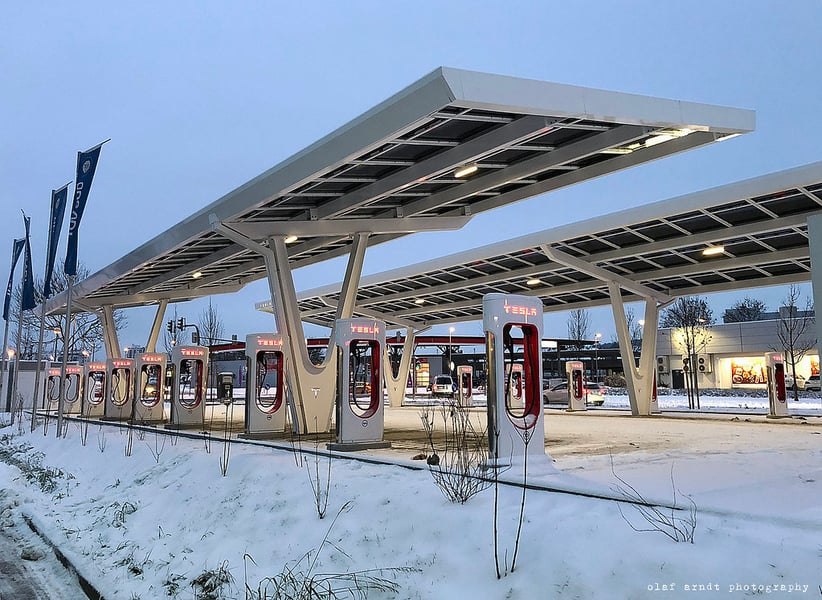
Tesla’s energy division is the story’s quieter variable. Megapack deployments have grown as utilities and data center operators seek grid-scale battery storage. The AI infrastructure buildout, with hyperscalers adding gigawatts of capacity to run large language models, creates demand that Tesla’s battery manufacturing is positioned to supply. Energy revenue growth in Q2 would provide cover for whatever pressure the automotive segment is showing. It is the part of the business where capital being deployed has a visible commercial buyer and an identifiable revenue stream.
Cash burn is the denominator against which everything else gets measured. Tesla ended 2025 with a healthy cash reserve, and the company’s market capitalization has historically allowed it to raise equity without existential dilution. But the rate of capital outflow in Q2, and what management says about the second half of the year, will determine whether investors extend patience into 2027 or begin demanding an accelerated payoff timeline. The cash burn is not theoretical; it is what Taneja told shareholders to expect.
Competition in Tesla’s core automotive market has intensified. Chinese EV makers, led by BYD, have expanded aggressively into markets where Tesla once operated without meaningful local competition. Automotive margin has been under sustained pressure since price adjustments made in late 2024 and early 2025. The Cybertruck, which generated substantial enthusiasm at launch, has delivered below initial projections. A lower-priced version has not yet reached production. None of these headwinds are new, but they form the context against which Q2 automotive revenue will be evaluated.
This quarter’s report lands alongside Q2 earnings from other major automakers. General Motors posted a 43 percent jump in North American profits in the same quarter, financed by truck and SUV volume. The contrast is direct: GM reported results on the strength of products that exist and generate cash today. Tesla is asking shareholders to evaluate it on products approaching commercial scale or in early production.
Whether that wager is reasonable depends entirely on whether the AI products pay off and when. If Full Self-Driving reaches unsupervised commercial deployment, if Optimus production scales as projected, and if Cybercab captures the robotaxi market Musk has described, the current spending represents the kind of decisive investment that large-scale technology transitions require. If the timeline slips further, or if one of the core product bets fails to materialize at scale, the cash burn will have consumed capital that competitors with less ambition are currently returning to shareholders. Tuesday’s report does not resolve that question. But it will narrow the range of plausible outcomes on which investors are betting.