
DALLAS – Colossal Biosciences has not produced a living woolly mammoth. The company has produced something more immediately bankable: a valuation approaching thirty billion dollars and three spinoff companies, one of which is an AI predictive modeling firm already valued at two billion dollars on its own.
The de-extinction startup is now in talks to raise a new capital round at a valuation between $20 billion and $30 billion, according to TechCrunch, roughly double to triple the $10.2 billion figure it carried sixteen months ago. The lead investor in the current round has not been identified. The United Arab Emirates, which committed $60 million to Colossal earlier in 2026, is among the entities that has publicly backed the company.
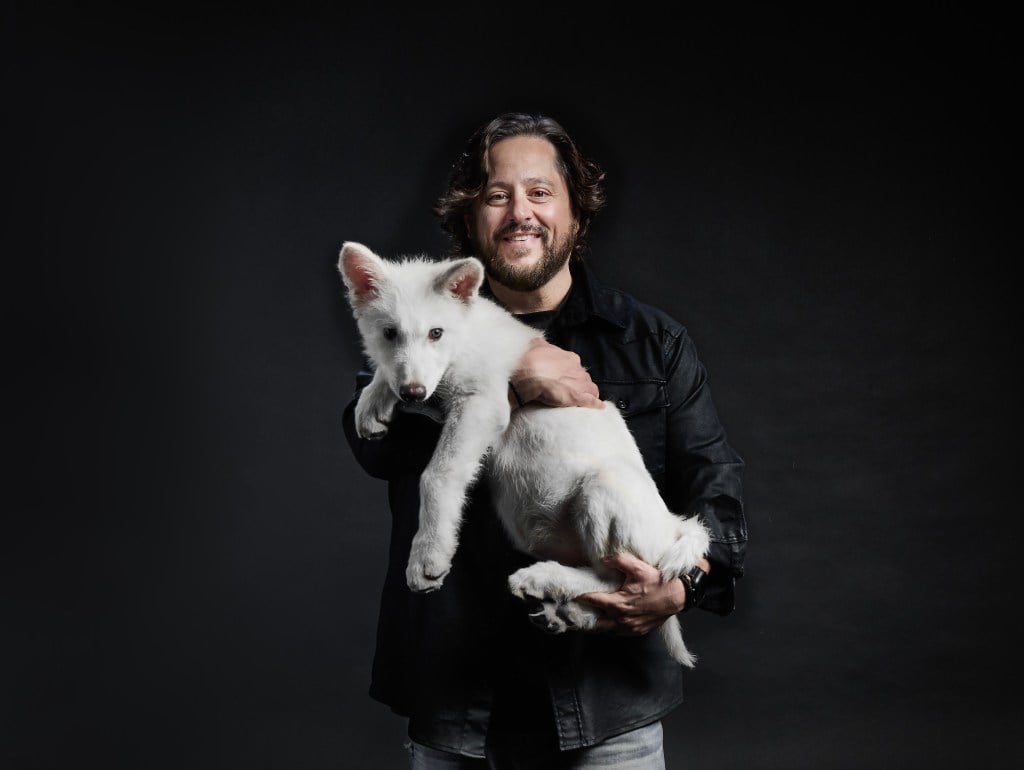
Co-founder and CEO Ben Lamm has spent five years making the case that the company’s core science, editing ancient genomes into living animals, generates value well before the first mammoth calves in a tundra enclosure. The most recent evidence for that argument is the company’s commercial traction across three categories: government conservation contracts, its spinoff portfolio, and anticipated biodiversity credit sales. The fundraising discussions reflect how dramatically the investment logic around Colossal has shifted since 2021.
The three spinoffs are Breaking, which uses engineered biology to break down plastics; Form Bio, which provides computational biology tools to outside clients; and Astromech, which builds AI predictive models and carries a standalone valuation of $2 billion. These businesses exist because Colossal needed to solve computational and biological engineering problems that it then realized had commercial applications beyond the mammoth. They are Colossal’s proof that de-extinction tools have an economic life regardless of whether the flagship species arrives. The spinoff model has drawn attention from investors who see parallels with AI startups that generate value from their infrastructure before their core product reaches consumers.
Lamm has described the revenue structure as the company moving beyond a single speculative bet. Conservation contracts, which bring government money into Colossal, validate its genetic work against real-world biodiversity problems. The biodiversity credit model, in which conserving or restoring species generates tradeable credits similar to carbon markets, is not yet operational but has attracted structured interest from institutional investors who see it as the underlying asset that could scale Colossal’s economics significantly.
The company’s previous raise, which established the $10.2 billion valuation, came in early 2025 and included the UAE commitment alongside existing investors. The new round, at $20-30 billion, would represent the largest valuation for a pure-play life sciences startup operating outside traditional pharmaceutical development. China’s CXMT recently raised $8.6 billion in a record Shanghai semiconductor IPO, illustrating the appetite for deep-technology companies that combine scientific credibility with defined commercial models. Colossal operates from a 55,000-square-foot headquarters in Dallas and is five years old.
Colossal is pursuing multiple extinct species simultaneously. The woolly mammoth is the headline project, but the company has active programs for the thylacine (Tasmanian tiger) and the dodo bird, which went extinct in the 17th century on Mauritius. Each project generates genomic and computational research that feeds into the others and into the spinoff businesses. A thylacine cell line has been established and genetic edits completed. The dodo project is at an earlier stage. Diversifying the species portfolio broadens Colossal’s conservation contract opportunities, since governments and conservation bodies can engage the company on specific cases.
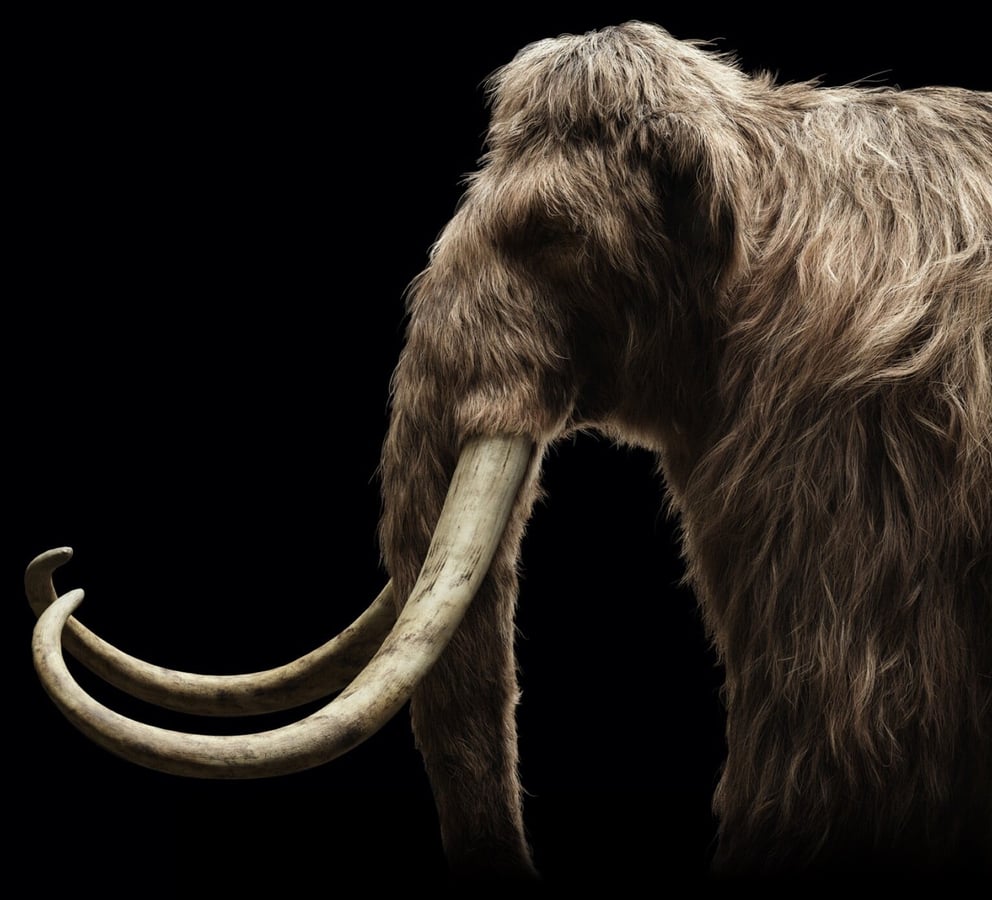
The woolly mammoth project itself is progressing toward benchmarks Colossal has not made public in specific terms. The company has identified the key genetic differences between the mammoth’s genome and the living Asian elephant’s, its closest relative, and has made edits to elephant cell lines that introduce cold-adaptation traits. No live births have been produced at laboratory scale, and the timeline from cell edits to a living animal requires surrogacy methods still under development. The stated goal is a mammoth-like creature in a rewilded Arctic environment, part of a strategy to restore Pleistocene ecosystems as a climate intervention.
What the new funding round’s lead investor is looking at, and what premium they are placing on the mammoth scenario versus the spinoff scenario, is not known. The discussions are at an early stage, and valuations in private capital rounds at this scale can shift between initial conversations and formal close. What is established is that the gap between $10.2 billion and $30 billion, achieved in under eighteen months, reflects the kind of institutional confidence that de-extinction science has not previously been able to attract. The woolly mammoth remains theoretical. The $30 billion is the argument that the tools built to reach it are not.