
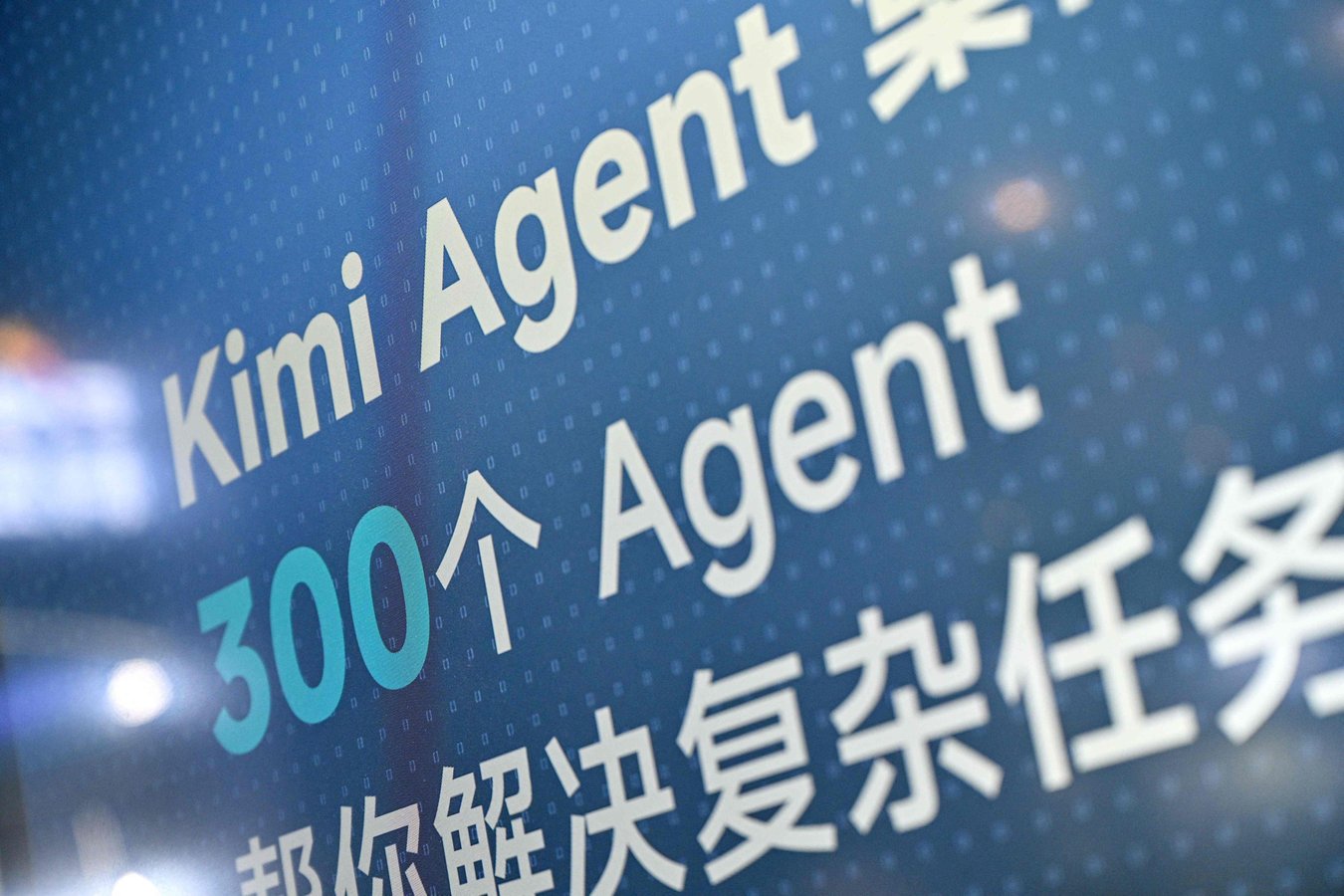
BEIJING – Moonshot AI paused new subscriptions for its Kimi K3 model this week after user demand surged sixfold in the days following launch, overwhelming the Chinese startup’s GPU compute capacity and forcing a temporary halt to onboarding, the company confirmed. The pause, reported by Reuters and AP on Monday, arrived as Moonshot simultaneously pursues a Hong Kong initial public offering that analysts value at approximately $30 billion.
Kimi K3 is a 2.8-trillion-parameter open-weight model designed specifically for software engineering and autonomous task execution, the kind of application that has proved most commercially durable in the current AI cycle. The model competes directly in a space where Chinese companies have moved aggressively, with Alibaba’s Qwen3.8-Max, also launched this week, targeting similar developer and enterprise use cases. Both releases signal that China’s AI sector has shifted its competitive focus away from raw parameter count toward practical deployment – coding, reasoning, and agentic capability.
The subscription pause is, paradoxically, a strong commercial signal. A demand surge large enough to crash a startup’s compute infrastructure suggests that Kimi K3 resonated with users beyond the usual early-adopter cohort. Moonshot’s decision to halt rather than degrade service also indicates enough institutional confidence to forgo short-term subscription revenue in exchange for protecting the product experience. Companies that cannot manage demand this way tend not to pause; they throttle quietly.
The GPU constraint underlying the pause is a familiar pressure point across the AI industry. NVIDIA’s Blackwell chips remain the primary bottleneck globally, and Chinese companies face an additional layer of complexity from US export controls that have restricted direct access to the most advanced hardware. Moonshot has pursued a mixture-of-experts architecture for Kimi K3 precisely because it allows more efficient inference on available hardware, but that efficiency advantage has limits when aggregate demand exceeds total compute allocation.
The timing of the IPO conversation matters here. Moonshot is marketing Kimi K3’s launch demand as a commercial validation to potential investors ahead of its Hong Kong listing. A model that overcomes western sanctions-era hardware constraints and still attracts a sixfold demand surge in its first week is a materially different investment story than one that launches quietly into a competitive market. The subscription pause, handled correctly in investor communications, becomes a feature rather than a problem.
China’s AI sector has watched DeepSeek’s international trajectory carefully since early 2025, when its efficient reasoning models drew global attention and triggered a US market selloff in AI-adjacent stocks. Kimi K3’s architecture reflects some of the same priorities: cost-efficient inference, open-weight distribution allowing developers to run the model locally, and a benchmark profile that challenges Western models in domains where China’s engineering talent is strongest. Moonshot is not DeepSeek, but the playbook has similarities.
CGTN reported that the Chinese AI competition intensifying around Kimi K3 and Alibaba’s Qwen launch “marks a new phase in China’s AI race,” a characterisation that reflects Beijing’s deliberate framing of AI development as a national strategic priority rather than purely a commercial one. The government has backed domestic semiconductor investment, AI research clusters in Hangzhou and Beijing, and procurement preferences that favour domestic models in public-sector deployments. Moonshot operates within that policy environment, even if its day-to-day development decisions are commercially driven.
The subscription pause also lands at a moment when the global AI narrative is shifting. Western coverage of Chinese AI has moved from scepticism to competitive anxiety over the past eighteen months, a shift that the Kimi K3 demand story will reinforce. For Moonshot, the challenge is now logistical: securing additional GPU allocation – likely through domestic cloud providers, as US hardware remains constrained – and reopening subscriptions before user momentum stalls.
The company has not announced a timeline for restoring new subscriptions. Existing subscribers continue to have access to Kimi K3 through Moonshot’s platform. In a competitive landscape where Alibaba is also moving aggressively, the window for capitalising on launch momentum is finite, and Moonshot’s engineers are aware that a prolonged pause could hand early ground to a rival whose compute situation is better managed.
For context, the Anthropic ecosystem is watching Chinese open-weight models carefully: a recent court ruling on Anthropic’s copyright settlement illustrated the regulatory constraints Western AI companies face that their Chinese counterparts, operating under a different legal framework, largely do not. That asymmetry – in hardware access on one side, regulatory exposure on the other – defines the competitive dynamic that Kimi K3’s launch week has dramatised.
China’s record semiconductor IPO by CXMT, which raised $8.6 billion on the Shanghai STAR Market this week, offers an adjacent data point: Chinese capital markets are actively valuing the country’s technology stack at a moment when Moonshot is preparing to test Hong Kong investor appetite for AI specifically. Whether that valuation holds depends partly on whether Kimi K3 can convert its demand spike into sustainable retention – a question the next few weeks of subscription data will begin to answer.