
A team at the University of California San Diego has developed a new method for checking measurements of the universe’s oldest observable light, addressing a problem that could make an instrument error look like evidence of new physics.
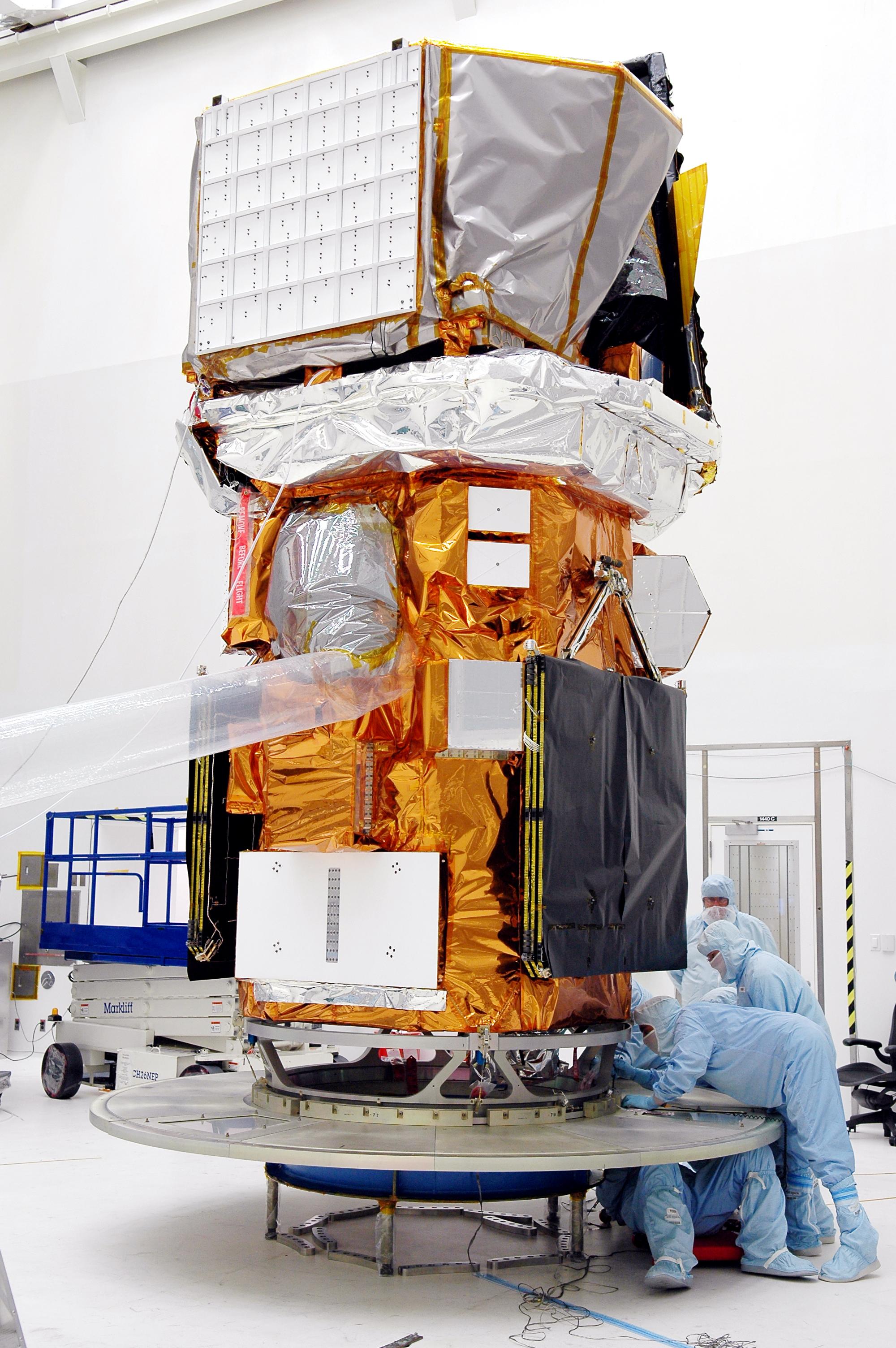
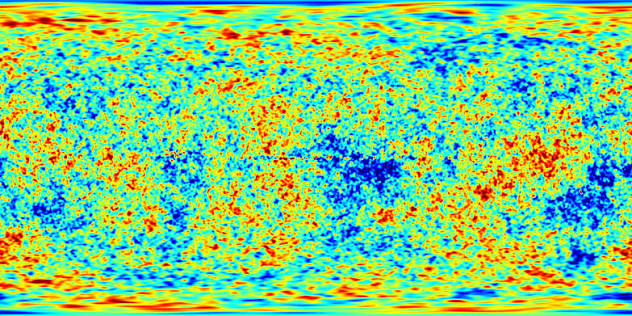
The technique examines how accurately different groups of telescope detectors measure the polarization of the cosmic microwave background, or CMB. Tested on observations from the European Space Agency’s Planck satellite, it provides an independent check on relative detector calibration—but does not confirm that the ancient light has actually rotated during its journey across space, according to the research report published by ScienceDaily.
The research was led by postdoctoral fellow Anto I. Lonappan, alongside physicists Brian Keating and Kam Arnold. Their findings were published in The Astrophysical Journal Letters.
Why a tiny rotation matters
The cosmic microwave background is radiation released when the universe became transparent, approximately 380,000 years after the Big Bang. It offers a snapshot of the early universe, preserved in light that has travelled through space for nearly 13.8 billion years.
Scattering off electrons gave some of that radiation linear polarization—a preferred direction in which the light’s electric field oscillates. Previous analyses have suggested that this direction may have rotated by a fraction of a degree as the radiation crossed the universe. Scientists call that possible effect cosmic birefringence.
A genuine rotation could point to physical processes beyond the Standard Model of particle physics. Proposed explanations include interactions with hypothetical axion-like fields or fields associated with dark energy. None of those explanations has been established by this study.
The immediate challenge is more practical: a small error in detector alignment can create an apparent rotation that closely resembles the signal researchers are seeking.
“The signal we are looking for is incredibly small, so we have to be certain that we are seeing the universe and not our instrument,” Lonappan said.
Comparing detector maps to expose calibration differences
Instead of relying on one combined measurement, the researchers compared polarization maps produced by separate groups of detectors.
A rotation shared by all the maps—including a genuine cosmic signal—cancels out in that comparison. What remains allows researchers to reconstruct differences in polarization-angle calibration between detector groups.
The team tested the technique using eight Planck polarization maps and compared its findings with an established approach known as the Minami–Komatsu analysis. Despite relying on different assumptions, the methods produced consistent results for relative calibration.
That agreement strengthens confidence in the calibration checks. However, the new method cannot independently determine an overall rotation because it deliberately removes the component common to every map. An independent reference is still needed to establish the absolute polarization angle.
Why the reported angle is not a new confirmation
The researchers combined their reconstruction of relative calibration differences with a common calibration value inferred from the established analysis. That calculation produced a cosmic birefringence estimate of 0.37 ± 0.12 degrees, matching the Minami–Komatsu result.
The distinction is important: the new technique reproduced the existing framework’s result after incorporating information from it. It did not independently establish that the universe had rotated the light. Its contribution is a separate way to investigate calibration problems that could influence such conclusions.
A safeguard for the search for primordial gravitational waves
The method could also help experiments searching for gravitational waves from the universe’s earliest moments.
Researchers study two polarization patterns in the CMB, called E modes and B modes. Some B modes arise from gravitational lensing and have already been observed. A different B-mode signal, potentially generated by primordial gravitational waves during cosmic inflation, remains undetected.
Even a slight polarization-angle calibration error can cause part of the stronger E-mode signal to appear as B modes. Identifying detector inconsistencies therefore matters for avoiding false discoveries.
The researchers say independent calibration checks will become increasingly important as experiments such as the Simons Observatory make more sensitive measurements.
For now, the advance is a measurement safeguard rather than a discovery of new cosmic physics: a way to test whether a faint signal belongs to the universe or to the equipment observing it.