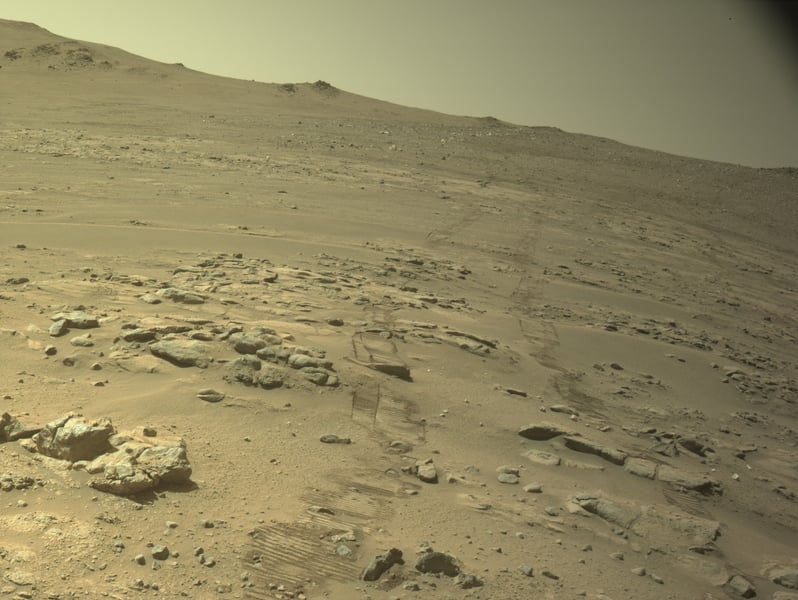

PASADENA, Calif. — The original mission called for Perseverance to drive no more than 12.4 miles. On Sunday its odometer read 28.10, farther than any vehicle has driven on another world.
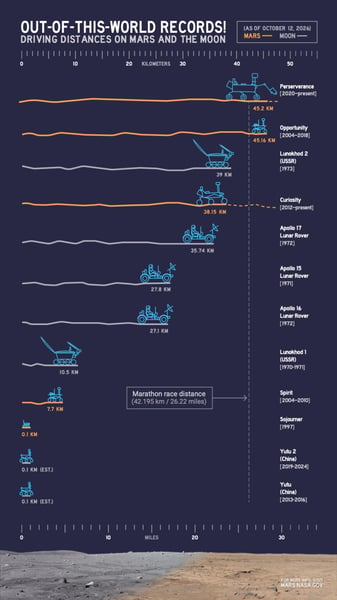
NASA’s Jet Propulsion Laboratory said the rover passed the 28.06-mile mark set by Opportunity during a 299.6-foot drive on its 2,006th Martian day. Opportunity took nearly 15 years to cover that distance. Perseverance needed about five and a half.
The difference is mostly who is doing the driving. More than 90 percent of Perseverance’s distance has come under AutoNav, which images the terrain, builds a 3D hazard map and plans a path between waypoints set on Earth. Opportunity and its twin Spirit drove autonomously about 5 percent of the time, JPL said. Its team calls the approach “thinking while driving,” and the numbers show why: Sojourner in 1997 weighed 20 measurement points to judge its path, while Perseverance weighs 600,000 per look.
Mark Maimone, deputy team chief for robotic operations, put it in the JPL release this way: “Perseverance is a better driver than the one that landed, and we’re not done.” The rover can cover up to 1,351 feet in a single sol.
The comparison reaches past Mars. Curiosity, which landed in 2012, has logged more than 23.65 miles. The Apollo 17 astronauts drove 22.2 miles on the Moon in 1972, and the Soviet Union’s Lunokhod 2 covered 24.2 miles in 1973. Perseverance has now passed both lunar marks, according to JPL’s comparison chart.
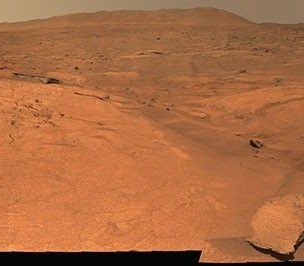
The rover is headed for a place called Idubi, off the western rim of Jezero Crater in an area nicknamed Lac de Charmes. The terrain may be among the oldest explored in the solar system, and scientists hope to find traces of ancient hydrothermal systems there, CBS News reported, a hunt that follows the complex organic carbon the rover detected in Jezero mudstones, reported in July. NASA has approved the mission’s first extension, which runs to roughly the end of 2028. Perseverance has collected 29 rock and regolith samples so far.
After Lac de Charmes the rover is due to turn south toward Rainbow Falls, a 328-foot-wide block of ancient crust uplifted by the impact that formed Jezero.
An odometer reading measures miles, not discoveries. The release does not address wheel wear or how many more miles the rover has in it, and the hydrothermal traces are a hope, not a finding. Whether Idubi holds them is still a question.