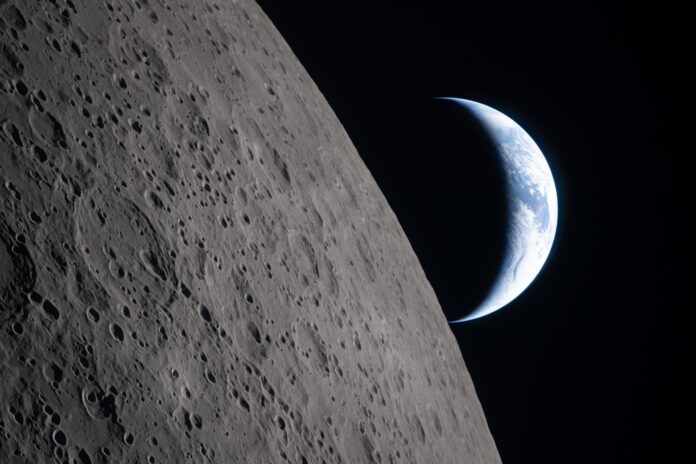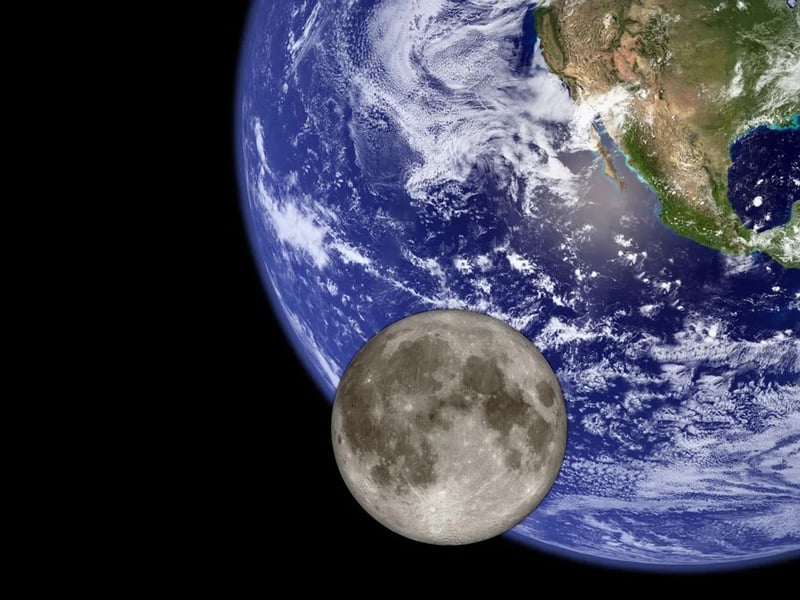

WASHINGTON – The moon phase today, September 10, 2026, is a Waning Crescent at 1% illumination, marking the final hours of the current lunar cycle. A near-invisible sliver lingers low in the eastern pre-dawn sky before tonight’s New Moon in Virgo resets everything at 11:27 p.m. Eastern Time. After that, the sky belongs to the stars.
The moon phase today marks the closing act of a 28.77-day sequence that began with the Sturgeon Full Moon on August 12. Only 1% of the lunar disc now faces Earth in reflected sunlight. The Moon’s orbital geometry places it 12 degrees behind the Sun as seen from Earth: it rises roughly 45 minutes before dawn, trails the Sun through the daytime sky, and sets near sunset, invisible throughout against the blue.
| Parameter | Value |
|---|---|
| Phase | Waning Crescent |
| Illumination | 1% |
| Moon Age | 28.77 days |
| New Moon | Tonight — 11:27 PM EDT |
| New Moon (UTC) | 03:27 UTC, September 11 |
| Next Full Moon | September 26 — Harvest Moon |
| Moon Sign | Virgo |
| Moon Distance | ~400,500 km (248,900 mi) |
| Best Viewing | Stargazing, Milky Way, Deep Sky |
| Data: NASA / USNO. Times are Eastern Daylight Time (UTC–4). Moon sign based on geocentric ecliptic longitude at 00:00 EDT. | |
For the next 12 hours, the sky offers something rare for September: near-total lunar darkness. A 1% crescent produces negligible light pollution. Anyone within driving distance of a dark-sky site will find conditions for Milky Way photography and deep-sky observation that will not repeat until October’s New Moon. The Virgo Cluster, more than 1,300 galaxies packed into a region of sky roughly the size of your fist at arm’s length, is well-positioned in the southwest after twilight ends, and the absence of moonlight makes it accessible with a modest telescope.
The New Moon itself is not a visible event. At 11:27 p.m. EDT, the Moon passes through its conjunction with the Sun: positioned between Earth and Sun, its near side faces away from Earth entirely. There is nothing to see. The significance is mechanical: the lunar age counter resets to zero, the tide cycle shifts, and the Waxing Crescent phase begins building toward September 26.
NASA has published a time-lapse visualization showing how the Moon’s face changes across a full 29.5-day cycle, the orbital mechanics behind what happens tonight.
Moonrise and moonset times for September 10, 2026, depend heavily on latitude. At 1% illumination, the Moon is functionally unobservable from most locations, but its position in the sky follows the schedule below.
| City | Moonrise | Moonset | Visible? |
|---|---|---|---|
| New York (EDT) | 5:38 AM | 6:52 PM | No (1%) |
| Los Angeles (PDT) | 5:48 AM | 7:11 PM | No (1%) |
| London (BST) | 5:14 AM | 6:48 PM | No (1%) |
| Dubai (GST) | 5:02 AM | 5:39 PM | No (1%) |
| Sydney (AEST) | 6:20 AM | 7:05 PM | No (1%) |
| Tokyo (JST) | 5:31 AM | 6:17 PM | No (1%) |
| Approximate times only. Actual visibility depends on horizon altitude and atmospheric conditions. At less than 2% illumination, naked-eye observation is not generally possible from urban or suburban locations. | |||
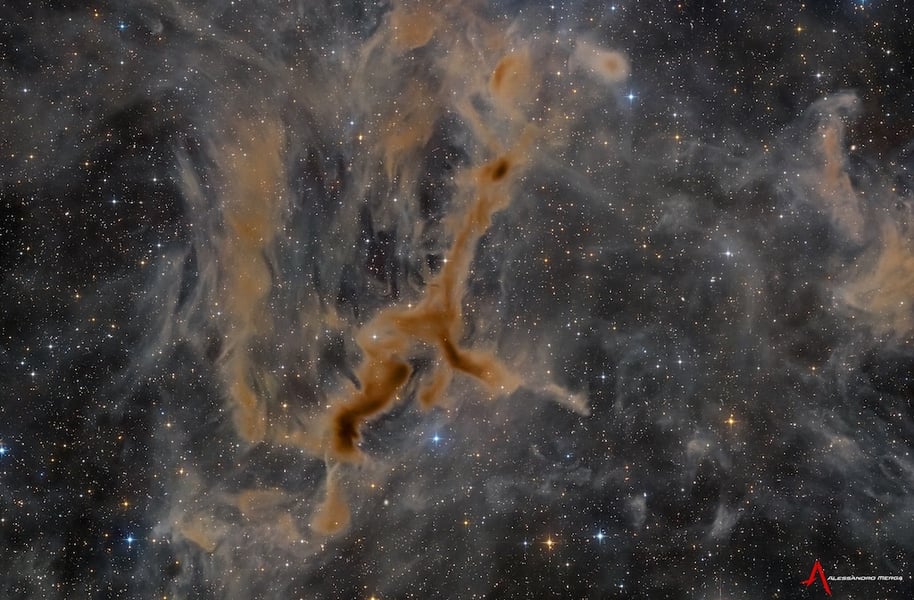
For stargazers, tonight’s near-zero moon phase opens three targets that become accessible only when the moon phase reaches near-zero illumination. The Andromeda Galaxy (Messier 31), the nearest large spiral galaxy to the Milky Way at approximately 2.537 million light-years, rises in the northeast after 9 p.m. local time and climbs high enough for comfortable observation by midnight. Under dark skies, M31 is visible to the naked eye as a faint smudge roughly six times the apparent width of the full Moon. A moonless September night, like tonight, is the single best opportunity most Northern Hemisphere observers will have all year to trace its full oval shape and spot companion galaxies M32 and M110. The galactic centre in Sagittarius still sits above the southern horizon in early evening before setting around midnight, offering the last clear view of 2026 before the Milky Way core drifts behind the Sun. After midnight, the Perseus Double Cluster rises in the northeast: two adjacent open star clusters, NGC 869 and NGC 884, each containing hundreds of blue supergiants and separated by a single degree of sky. All three targets require no equipment beyond dark adaptation and a clear horizon.
When the Moon hit its Last Quarter on September 4, 2026, illumination stood at 46%, the midpoint of the waning sequence. In six days, that 46% has collapsed to 1%. The September lunar calendar runs from that Last Quarter through tonight’s New Moon to the Harvest Moon on September 26.
| Phase | Date | Time (EDT) | Notes |
|---|---|---|---|
| Last Quarter | September 4 | 12:51 AM | 46% illumination |
| Waning Crescent | Sep 5–10 | n/a | Diminishing to 1% |
| New Moon | September 10 | 11:27 PM | New Moon in Virgo |
| Waxing Crescent | Sep 11–17 | n/a | Visible after sunset |
| First Quarter | September 18 | approx. 2:00 AM | 50% illumination, rising |
| Waxing Gibbous | Sep 19–25 | n/a | Building toward Full |
| Full Moon — Harvest Moon | September 26 | 12:49 PM | Nearest Full Moon to autumn equinox |
| Waning Gibbous | Sep 27–30 | n/a | Diminishing from 100% |
| Source: NASA / USNO. All times EDT (UTC–4). Intermediate phase dates are approximate; exact phase times vary by hemisphere and location. | |||
September’s Full Moon, the Harvest Moon 2026, arrives on September 26 at 12:49 p.m. EDT. It rises in Aries. The name Harvest Moon comes from the traditional agricultural calendar: the Full Moon nearest the autumnal equinox (September 22 in 2026) once gave farmers in northern latitudes enough light to continue harvesting crops after dark, without the long wait between sunset and moonrise that typically separates the two. In 2026, that Moon will rise in Aries conjunct Neptune.
NASA’s Moon science page offers real-time phase tracking, orbital mechanics documentation, and mission updates for observers and researchers. The agency’s Lunar Reconnaissance Orbiter has mapped the lunar surface at resolutions down to 50 centimetres per pixel.
Tonight’s New Moon closes the 28.77-day cycle and opens the next. The Waxing Crescent becomes visible two to three days after the New Moon, around September 12 or 13, low in the western sky just after sunset. That thin crescent, growing each evening, will thicken into a First Quarter, swell into a Waxing Gibbous, and reach its peak as the Harvest Moon on September 26. The cycle that ends tonight already contains its own replacement.