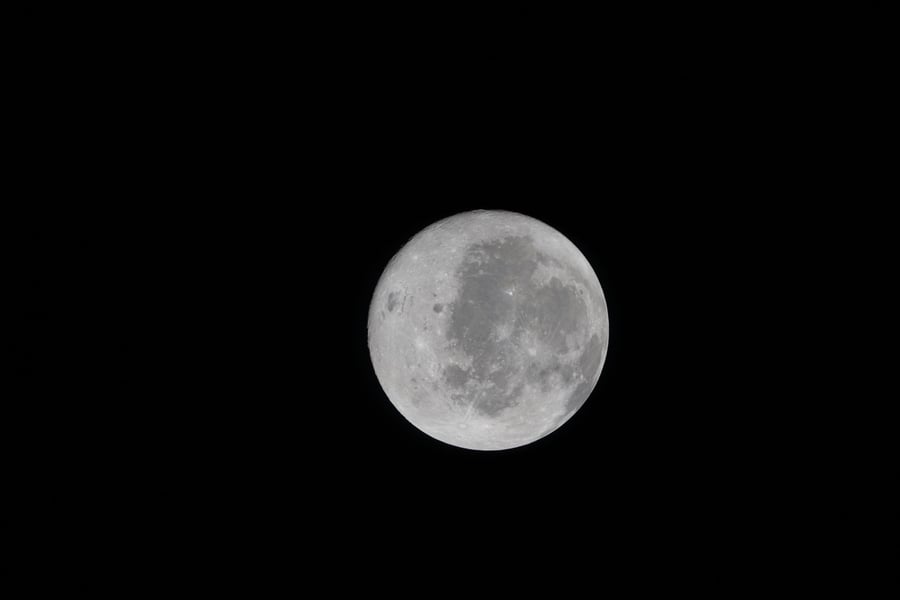

Look up on the night of September 4, 2026, and the moon presents its left side to observers in the Northern Hemisphere — a clean half-disc hanging in the pre-dawn sky before fading at daybreak. This is the Last Quarter, arriving at precisely 3:51 AM EDT, and it marks the midpoint of the waning phase. Three weeks past the Sturgeon Moon of August 12 and three weeks before the Harvest Moon of September 26, tonight’s moon is exactly halfway through its slow withdrawal from full illumination back toward the dark.
The Last Quarter is the phase many skywatchers overlook. It rises around midnight and sets in the early afternoon, making it most visible during morning hours — a detail that costs it the drama of a moonrise after sunset. But astronomers regard it as one of the most rewarding phases to observe through binoculars or a small telescope. The terminator, the line between the lit and unlit halves, crosses directly through the middle of the disc on September 4, and the long shadows cast across craters and mountain ranges near that boundary produce some of the sharpest surface detail a backyard telescope can show.
Moon Phase Today — September 4, 2026
The moon is in its Last Quarter phase on September 4, 2026. This is sometimes called the Third Quarter, though Last Quarter is the more precise designation — it falls three-quarters of the way through the lunar cycle that began with the New Moon on August 11.
| Data Point | Value |
|---|---|
| Phase | Last Quarter (Third Quarter) |
| Illumination | 46% (decreasing) |
| Exact Quarter Time | 3:51 AM EDT / 8:51 AM BST (London) |
| Moon Age | 22.55 days into cycle |
| Distance from Earth | 363,658.69 km |
| Moonrise (approx. central US) | 11:51 PM (previous night) |
| Moonset (approx. central US) | 2:59 PM |
| Moonrise (London, BST) | ~12:30 AM (September 4) |
| Moonset (London, BST) | ~1:15 PM |
| Sources: MoonGiant, TimeandDate. Local moonrise and moonset times vary by location. | |
The moon’s distance of 363,658 km on September 4 places it closer to Earth than average — the mean Earth-Moon distance is approximately 384,400 km. It is not close enough to qualify as a supermoon under the most common definition, but the slightly reduced distance means the disc appears marginally larger than it would at apogee.
Moon Phase Calendar — September 2026
September 2026 carries all four major lunar phases, with the Harvest Moon as the defining event of the month. The Harvest Moon is the full moon closest to the autumn equinox, which falls on September 22 this year. The September 26 full moon is the nearest one to the equinox, earning the traditional name.
| Phase | Date | Time (EDT) | Notes |
|---|---|---|---|
| New Moon | September 11, 2026 | ~6:00 AM EDT | No moon visible; darkest nights |
| First Quarter | September 18, 2026 | ~2:00 PM EDT | Right half lit; visible late afternoon through midnight |
| Full Moon (Harvest Moon) | September 26, 2026 | 12:49 PM EDT | Closest full moon to autumn equinox |
| Last Quarter (today) | September 4, 2026 | 3:51 AM EDT | 46% illumination; best pre-dawn viewing |
| Times EDT (Eastern Daylight Time, UTC-4). Convert to your local time zone. Sources: TimeandDate, Astronomy.com. | |||
The Harvest Moon on September 26 rises within a few minutes of sunset for several consecutive nights — a phenomenon caused by the shallow angle the moon’s orbit makes with the horizon in September. Farmers historically relied on this extended moonlit window to continue harvesting after dark.
Moonrise and Moonset Times Today
The Last Quarter moon rises late — typically around midnight local time — and sets in the early afternoon, making it a morning sky object. On September 4, 2026, it is highest in the southern sky at approximately 6:00 AM local time for observers at mid-latitudes in the Northern Hemisphere.
In London (BST, UTC+1), the moon rises around 12:30 AM on September 4 and sets around 1:15 PM. In New York (EDT, UTC-4), it rises closer to 11:51 PM on September 3 and sets around 2:59 PM on September 4. In Mumbai (IST, UTC+5:30), moonrise falls in the early morning hours before dawn.
Moonrise and moonset shift by approximately 50 minutes later each successive day because the moon moves roughly 12 degrees eastward along the ecliptic every 24 hours, taking that much longer for the Earth’s rotation to bring it above the horizon. For precise local moonrise and moonset times, the United States Naval Observatory (usno.navy.mil) and TimeandDate.com provide city-level data updated daily.
The Eight Phases of the Moon
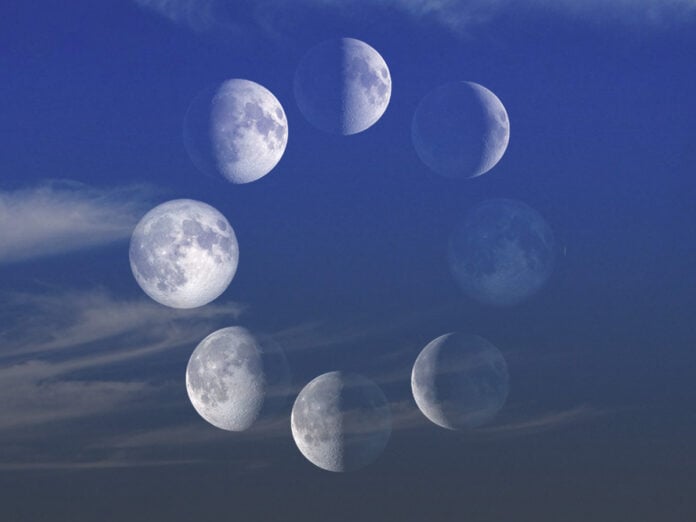
The lunar cycle runs approximately 29.5 days from one new moon to the next. That cycle is divided into eight recognized phases, each reflecting the changing geometry between the Earth, Moon, and Sun as the moon orbits our planet.
| Phase | Illumination | Visibility Window | What You See |
|---|---|---|---|
| New Moon | 0% | Not visible | Moon between Earth and Sun; dark side faces Earth |
| Waxing Crescent | 1-49% | Afternoon to early evening | Thin crescent, right side lit (N. Hemisphere) |
| First Quarter | 50% | Noon to midnight | Right half lit; rises around noon, sets around midnight |
| Waxing Gibbous | 51-99% | Afternoon to early morning | More than half lit; grows toward full |
| Full Moon | 100% | Dusk to dawn | Fully illuminated disc; rises at sunset |
| Waning Gibbous | 99-51% | Evening to morning | Shrinking from full; September 3 was Waning Gibbous at 58% |
| Last Quarter (Today) | 50% | Midnight to early afternoon | Left half lit (N. Hemisphere); rises around midnight |
| Waning Crescent | 49-1% | Pre-dawn only | Thin crescent, left side lit; fades toward new moon |
The distinction between First Quarter and Last Quarter can be confusing. Both show 50% illumination, but the lit half is on opposite sides. In the Northern Hemisphere, the First Quarter moon is lit on the right (west) half; the Last Quarter is lit on the left (east) half. In the Southern Hemisphere, this reverses.
What the Last Quarter Moon Means
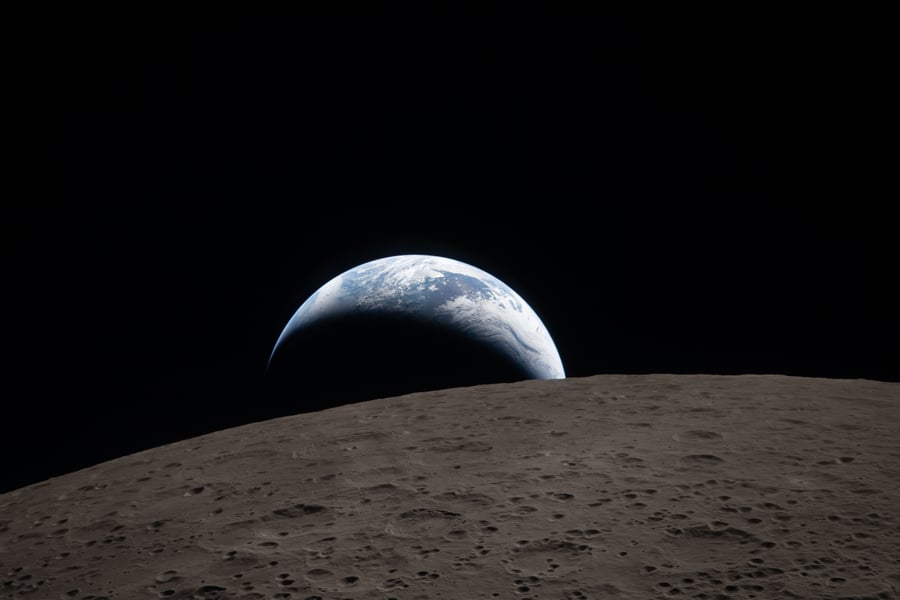
Astronomically, the Last Quarter is a geometry event: the angle between the Sun, Earth, and Moon is exactly 90 degrees, with the Moon on the trailing side of Earth’s orbit. The terminator at Last Quarter runs from the lunar north pole to the south pole along the central meridian, dividing the disc into lit and unlit halves. This is the same geometry as the First Quarter, rotated 180 degrees through the orbit.
For telescope users, the Last Quarter terminator position means that craters, rilles, and mountains in the central regions of the moon cast their longest shadows toward the observer. The Sea of Tranquility, Tycho, and the Apennine Mountains all show exceptional contrast in the hours around the Last Quarter. This is why many lunar observers prefer quarter phases to full moon for detail work — the full moon washes out topographic shadows entirely.
In traditional and cultural contexts, the Last Quarter is associated with release and completion — the harvest of effort rather than its initiation, a time for reflection on what has unfolded since the previous new moon. These associations predate modern astronomy by millennia and appear across multiple independent traditions. The Eastern Herald notes these cultural frameworks as historical context, not scientific claims.
September’s Harvest Moon — September 26, 2026
The full moon on September 26, 2026, at 12:49 PM EDT is the Harvest Moon — the full moon that falls closest to the autumn equinox. This year’s equinox is September 22. The October full moon (October 26) is further from the equinox, making September 26 the Harvest Moon by the most widely used definition.
The Harvest Moon behaves differently from other full moons in a way that made it genuinely useful to pre-industrial farmers. Because the moon’s orbital path makes a shallow angle with the horizon in autumn, the moon rises only about 20 to 25 minutes later each night for the several nights surrounding the Harvest Moon — compared with the usual 50-minute shift. This means that for three to four consecutive evenings in late September, the moon rises close to sunset, extending the period of bright moonlit evenings and giving farmers additional light to continue harvesting after dark. The name is functional, not decorative.
The September 26 full moon will appear in the constellation Pisces. It is not classified as a supermoon — the November 24 and December 24, 2026 full moons are the supermoons for this year.
Full Moon Calendar 2026
| Month | Full Moon Date | Traditional Name | Notes |
|---|---|---|---|
| January | January 3, 2026 | Wolf Moon | Supermoon |
| February | February 1, 2026 | Snow Moon | — |
| March | March 3, 2026 | Worm Moon | Total Lunar Eclipse (Blood Moon) |
| April | April 2, 2026 | Pink Moon | — |
| May | May 1, 2026 | Flower Moon | — |
| May (2nd) | May 31, 2026 | Blue Moon | Second full moon in May |
| June | June 30, 2026 | Strawberry Moon | — |
| July | July 29, 2026 | Buck Moon | — |
| August | August 28, 2026 | Sturgeon Moon | — |
| September | September 26, 2026 | Harvest Moon | Closest full moon to autumn equinox |
| October | October 26, 2026 | Hunter’s Moon | — |
| November | November 24, 2026 | Beaver Moon | Supermoon |
| December | December 24, 2026 | Cold Moon | Supermoon; brightest of 2026 |
The March 3 total lunar eclipse turned the moon a deep red — the Blood Moon — as Earth’s shadow fell fully across the disc. The next total lunar eclipse visible from North America after this is in 2028.
Upcoming Moon Phases — October 2026
After the Harvest Moon on September 26, the lunar cycle continues into October. The New Moon follows on October 10 or 11 (exact time depends on time zone). The First Quarter arrives around October 18, and the full Hunter’s Moon rises on October 26. The Hunter’s Moon carries the same early-rise characteristic as the Harvest Moon for a few nights, making it the second extended-moonlit-evening event of autumn.
For observers in the Northern Hemisphere, the moon’s path across the sky climbs higher each month approaching winter solstice in December, meaning the Cold Moon of December 24 will arc higher and shine longer than September’s Harvest Moon.
Skygazers tracking the September 3 waning gibbous moon will have noticed the sharp drop in illumination from 58% yesterday to 46% today — the fastest daily change in apparent illumination occurs in the days around the quarter phases, when the geometry between Earth, Moon, and Sun produces the steepest angular change.
FAQ
What is the moon phase today?
The moon phase today, September 4, 2026, is the Last Quarter. The moon shows 46% illumination, with the left half (in the Northern Hemisphere) facing Earth.
What phase is the moon in on September 4, 2026?
The moon reaches its Last Quarter on September 4, 2026, at exactly 3:51 AM EDT (8:51 AM BST). This phase marks three-quarters of the way through the lunar cycle that began with the New Moon on August 11.
What time does the moon rise tonight?
At Last Quarter, the moon rises around midnight local time. In the central United States, moonrise on September 4 is approximately 11:51 PM on the night of September 3. In London, it rises around 12:30 AM BST. Use TimeandDate.com or the US Naval Observatory’s data tool for precise times in your city.
What is a Last Quarter moon?
The Last Quarter moon occurs when the Moon is 90 degrees behind the Earth in its orbit relative to the Sun. Observers see exactly half the Moon illuminated — the east half (left side in the Northern Hemisphere). It is sometimes called the Third Quarter because it falls three-quarters of the way through the 29.5-day lunar cycle.
When is the next full moon?
The next full moon is the Harvest Moon, on September 26, 2026, at 12:49 PM EDT. It is the full moon closest to the autumn equinox (September 22) and will rise near sunset for several consecutive evenings.
What is the Harvest Moon?
The Harvest Moon is the full moon that falls closest to the autumn equinox each year. In 2026, it falls on September 26. Its defining characteristic is that it rises only about 20 to 25 minutes later on successive nights rather than the usual 50 minutes, giving farmers extended evening moonlight — hence the name.
When is the next new moon?
The next new moon is September 11, 2026. During the new moon phase, the moon is between the Earth and Sun and is not visible from Earth’s surface.
How long is a lunar cycle?
A full lunar cycle — from one new moon to the next — takes approximately 29.5 days. The precise figure is 29 days, 12 hours, 44 minutes, and 3 seconds. This is the synodic month, which measures the time for the Moon to return to the same position relative to the Sun as seen from Earth.
What are the 8 phases of the moon in order?
The eight phases in order are: New Moon, Waxing Crescent, First Quarter, Waxing Gibbous, Full Moon, Waning Gibbous, Last Quarter, Waning Crescent. The cycle then returns to New Moon. Today, September 4, 2026, the moon is at the Last Quarter — the seventh of the eight phases.
What does the Last Quarter moon mean spiritually?
In many traditional frameworks, the Last Quarter is associated with release, surrender, and the completion of cycles. Where the New Moon begins intention and the Full Moon illuminates outcome, the Last Quarter is the phase of letting go — releasing what no longer serves before the cycle restarts at the next New Moon. These frameworks vary across cultures and traditions. The Eastern Herald presents them as cultural context rather than scientific fact.