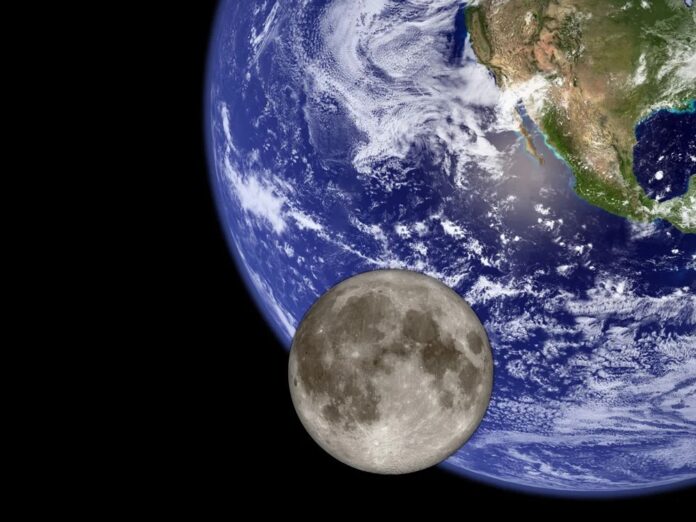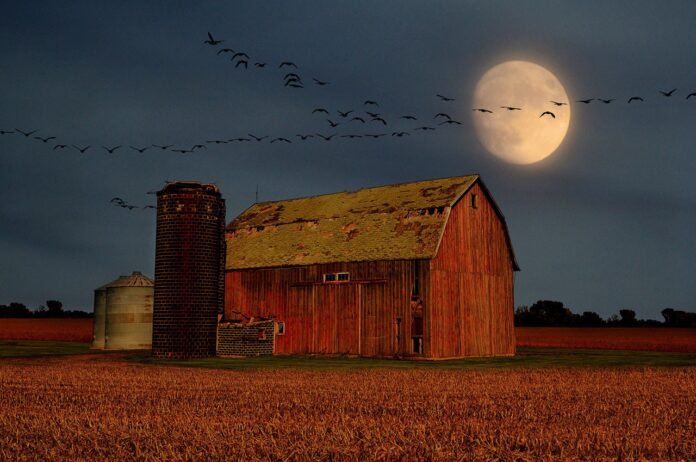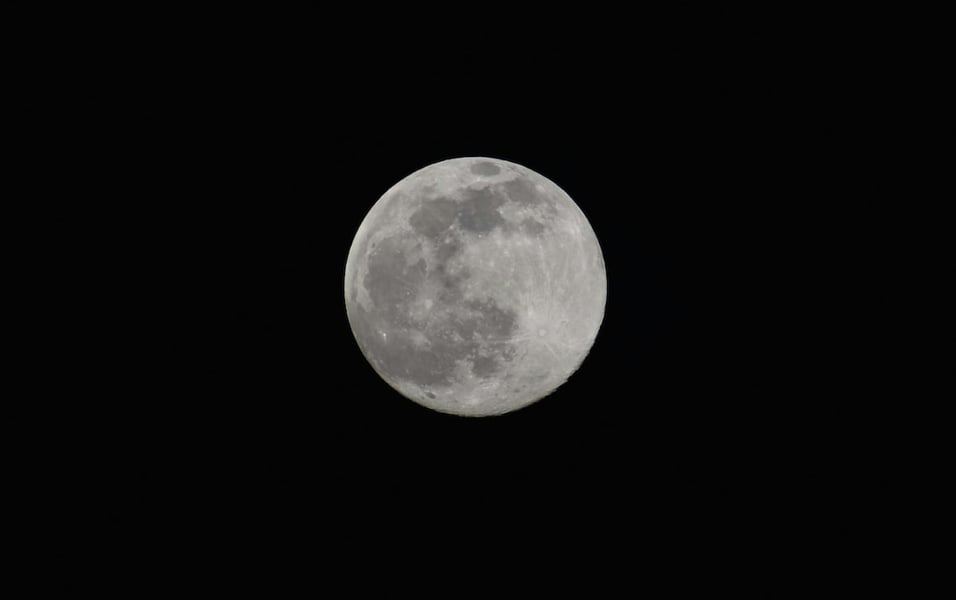

The moon tonight is a disc so nearly full that most people who look up will not notice the difference. The moon phase today, September 12, 2026, is a Waning Gibbous at approximately 98% illumination — one night past the peak of the Harvest Full Moon that rose on September 11. Step outside after 8 PM Eastern Time and you will find a brilliant white orb already clearing the horizon, casting shadows sharp enough to read by.
This is the moment just after the spectacle. The Harvest Moon itself peaked on the evening of September 11, bathing the Northern Hemisphere in one of the brightest nights of the year. Tonight that brightness has barely faded. What has changed is direction: the illuminated face is now shrinking, barely perceptibly, as the lunar cycle turns back toward darkness.
Moon Phase Today – September 12, 2026: At a Glance
| Data Point | Value |
|---|---|
| Current Phase | Waning Gibbous |
| Illumination | ~98% |
| Moon Age (in current cycle) | ~16 days |
| Moonrise (Eastern Time, eastern US) | ~8:07 PM |
| Moonset (Eastern Time, eastern US) | ~5:54 AM (Sep 13) |
| Distance from Earth | ~385,000 km |
| Moon’s Zodiac Sign | Aries |
| Previous Full Moon | September 11, 2026 (Harvest Moon) |
| Next Third Quarter | September 19, 2026 |
| Next New Moon | September 26, 2026 |
| Next Full Moon | October 10, 2026 (Hunter’s Moon) |
| Times are approximate Eastern Time (ET) for 40 degrees north latitude. Local times vary by location and elevation. | |
What Is a Waning Gibbous Moon?
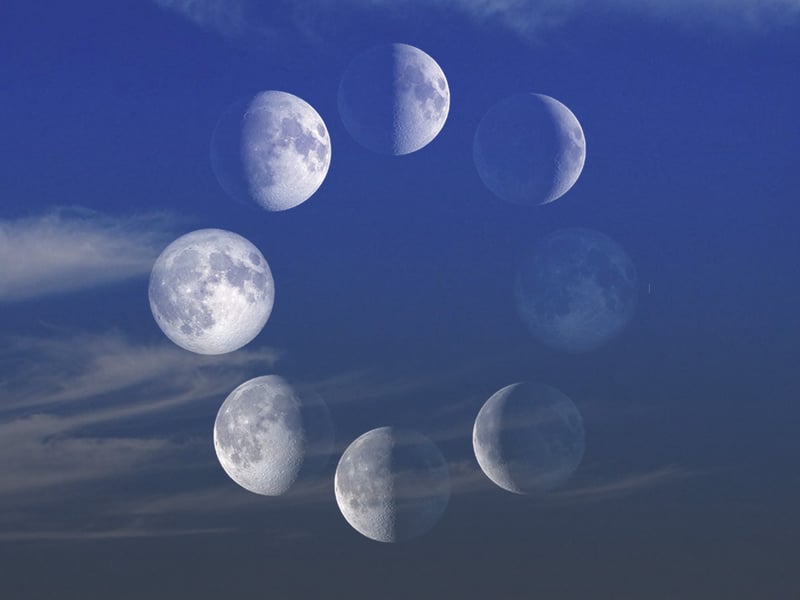
A Waning Gibbous is the lunar phase between the Full Moon and the Third Quarter. The word “gibbous” comes from the Latin gibbosus, meaning hump-backed, describing the moon’s convex shape when it is between half and fully illuminated. “Waning” means the lit portion is shrinking night by night as the moon moves away from the side of Earth facing the sun.
During this phase, the moon rises in the evening before midnight and sets in the morning after sunrise, meaning tonight it is visible for much of the night. The shadowed edge begins on the left side of the visible disc for Northern Hemisphere observers — a thin sliver of darkness that widens very gradually over the coming days. At 98% illumination today, that shadow sliver is essentially invisible to the naked eye. By September 19, when the Third Quarter arrives, exactly half the moon will be in shadow. By September 26 it will have vanished entirely into the new moon.
The Harvest Moon 2026: Why This Week Looks Different
The Harvest Moon is not just a poetic name — it describes a genuine astronomical effect that made September evenings economically vital for agricultural communities before electricity. The defining characteristic is the shallow angle the moon’s path makes with the eastern horizon at this time of year in the Northern Hemisphere.
At most times of the lunar month, the moon rises roughly 50 minutes later each night. Around the Harvest Moon, that delay compresses to just 20 to 30 minutes because the ecliptic — the moon’s apparent path across the sky — runs nearly parallel to the horizon in September. The result is four or five consecutive evenings of bright moonrise near sunset, giving farmers extended working light. Tonight, September 12, the moonrise delay from last night is still only about 25 minutes, so the effect persists even one day after the official full moon.
| Date | Phase | Illumination | Notes |
|---|---|---|---|
| September 3 | First Quarter | 50% | Half-lit, rising moon at noon |
| September 4–10 | Waxing Gibbous | 51–99% | Growing toward full moon |
| September 11 | Full Moon | 100% | Harvest Moon – peak brightness |
| September 12 | Waning Gibbous | ~98% | Today – near-full, bright night |
| September 13–18 | Waning Gibbous | 95–52% | Gradual dimming continues |
| September 19 | Third Quarter | 50% | Half-lit, rising near midnight |
| September 20–25 | Waning Crescent | 48–3% | Best stargazing window opens |
| September 26 | New Moon | 0% | Darkest night – ideal for Milky Way |
| October 3 | First Quarter | 50% | Next waxing half-moon |
| October 10 | Full Moon | 100% | Hunter’s Moon |
| All dates calculated for Universal Time (UTC). Local dates may differ by one day depending on your time zone. Phase times are approximate. | |||
Moonrise and Moonset Times by City – September 12, 2026
Exact moonrise and moonset times depend on latitude, longitude, and local elevation. The table below gives approximate values for major cities around the world on September 12, 2026. For precision down to the minute for your exact location, use the US Naval Observatory’s online tool or a dedicated astronomy app.
| City | Moonrise (Local) | Moonset (Local) | Time Zone |
|---|---|---|---|
| New York, USA | 8:07 PM | 5:54 AM | ET |
| Los Angeles, USA | 8:22 PM | 6:09 AM | PT |
| Chicago, USA | 8:10 PM | 5:57 AM | CT |
| London, UK | 8:39 PM | 6:12 AM | BST |
| Paris, France | 9:01 PM | 6:38 AM | CEST |
| Dubai, UAE | 7:42 PM | 6:21 AM | GST |
| Mumbai, India | 7:19 PM | 6:08 AM | IST |
| Singapore | 7:35 PM | 6:44 AM | SGT |
| Tokyo, Japan | 7:58 PM | 6:17 AM | JST |
| Sydney, Australia | 8:51 PM | 6:30 AM | AEST |
| Nairobi, Kenya | 6:58 PM | 6:47 AM | EAT |
| Times are approximate and calculated for each city centre. Elevation and local horizon obstructions may shift observed moonrise/moonset by several minutes. Source: US Naval Observatory reference data. | |||
Astrological Meaning: Disseminating Moon in Aries
In astrology, the Waning Gibbous phase carries the name Disseminating Moon — a deliberate term that describes the energy of sharing outward what was revealed or felt at the full moon. This is not a phase for beginning new projects; it is the phase for transmitting what was gathered during the waxing cycle.
For September 12, the moon is transiting through Aries — an assertive, pioneering fire sign ruled by Mars. The combination of the Disseminating Moon and Aries creates a push toward active communication rather than passive reflection. Traditional astrologers associate this alignment with directness in conversation, a willingness to speak first, and some impatience with slow-moving processes. It is considered a productive period for public speaking, publishing, and sharing work that has been building — a theme Eastern Herald’s daily horoscope for September 13 tracks across all twelve signs as the Grand Air Trine intensifies this weekend. People whose natal moon falls in the Waning Gibbous phase are said to be natural communicators and teachers, drawn to distribute ideas rather than hoard them.
The Harvest Moon in Aries also marks the astronomical signal that summer’s growing phase is closing and the season of consolidation begins — a fact that agricultural astrology systems across disparate cultures have observed and encoded for millennia.
How the Moon Affects Tides, Sleep, and Wildlife Tonight
The gravitational pull of the moon is measurable and real, and at near-full illumination its effects are at their monthly peak. Ocean tides are most extreme during the days immediately around a full moon — what oceanographers call spring tides, when the gravitational alignment of the sun, Earth, and moon combine to produce tidal ranges significantly larger than average. Coastal areas within 24 to 48 hours of the September 11 full moon will still see elevated tidal swings tonight, particularly during overnight low-to-high cycles.
Research on sleep and the lunar cycle has been contested for decades, but a 2021 study published in Science Advances found that people slept an average of 20 minutes less on nights close to the full moon, with later sleep onset and reduced total sleep time, even when direct light exposure was controlled. The mechanism is not definitively established. The brightness of tonight’s moon — roughly 0.1 lux in open conditions — is sufficient to affect melatonin production in people sleeping without blackout curtains.
Wildlife responses to the full moon are well-documented in specific species. Coral reefs spawn synchronously around full moons, triggered by light cues. Prey animals reduce surface movement under bright moonlight, aware they are more visible to predators. Owls, by contrast, tend to increase nocturnal hunting efficiency, as their eyesight is well adapted to bright conditions while most rodents are not.
How to Photograph the Moon Tonight
The Waning Gibbous is one of the better subjects for lunar photography. At 98% illumination the surface is brilliantly lit, and the near-uniform brightness reveals extraordinary surface detail with the right technique. The key numbers for a full-phase moon are fast and bright: ISO 100, aperture f/8, shutter speed 1/250 second as a starting point — this is the Looney 11 rule. Bracket your exposures from there and examine shadow detail in the maria, the dark basaltic plains visible to the naked eye.
A telephoto lens of at least 300mm is needed to fill the frame meaningfully. Any longer exposure than about 1/125 second will introduce motion blur from the moon’s orbital movement across the frame. A tripod is not optional at focal lengths above 200mm — even with image stabilisation, the tiny vibrations from mirror slap or shutter release at high magnification destroy fine detail. Use a two-second timer delay or a remote shutter release. Shoot in RAW format: the moon’s whites blow out aggressively in JPEG, and RAW gives you four to six stops of recovery headroom in the highlights.
A particularly effective target tonight is the terminator region on the left edge of the disc, where the shadow sliver of the waning phase creates dramatic raking light across crater walls and mountain ranges. Even at 98% illumination, the last 1–2 degrees of the shadowed limb contain the sharpest three-dimensional surface texture visible this month.
Planting by the Moon – September 2026
Biodynamic and traditional gardening calendars use the lunar cycle as a guide for planting, pruning, and harvesting. The Waning Gibbous through Third Quarter period covering September 12 to 19 is classified as a root-crop phase in biodynamic theory: soil moisture and sap are said to draw downward as the moon wanes, making it a more productive time for root development and for planting below-ground crops including turnips, beets, carrots, onions, garlic, and potatoes, rather than above-ground leafy crops.
The period from September 20 to 25 (waning crescent toward new moon) is generally treated as a rest period: good for weeding, composting, and soil preparation, but not for planting. The new moon on September 26 opens the next growth phase, traditionally considered optimal for leafy greens and fast-growing herbs planted to grow quickly through the waxing fortnight that follows.
What Comes Next: Moon Events Through October 2026
The moon will reach its Third Quarter on approximately September 19, when a precisely half-lit disc rises near midnight and sets around noon the following day. The new moon arrives on September 26 — the darkest night of the month and the best available window this autumn for deep-sky observation of the Milky Way core and faint nebulae.
The next full moon, the Hunter’s Moon, rises on October 10, 2026, and traditionally marked the beginning of the hunting season in pre-industrial Northern Hemisphere cultures, when game animals fattened on summer grazing were most visible under bright October nights. For observers interested in the Orionid meteor shower, the new moon on September 26 opens a dark-sky window in late September that is worth exploiting before the shower’s peak around October 21 — by which point the waxing moon will be competing for the sky again.
For precise moonrise times, phase percentages, and three-dimensional visualisation of today’s moon position, NASA’s Lunar Phases and Eclipses page provides authoritative real-time data updated continuously from mission telemetry and ephemeris calculations.