
WASHINGTON — Two days before the Harvest Moon peaks, the lunar disc is already blinding.
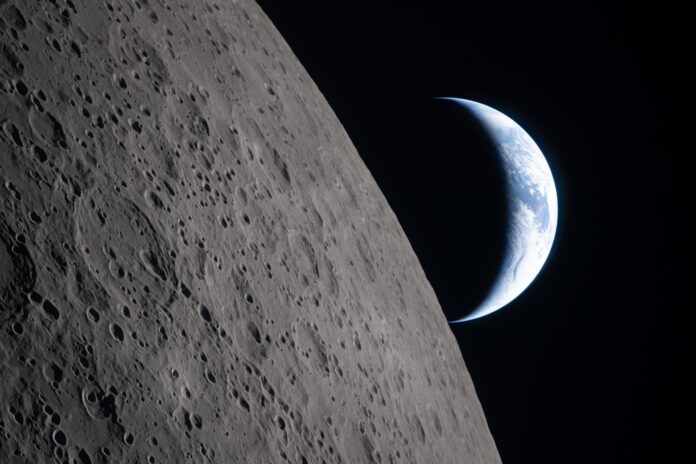
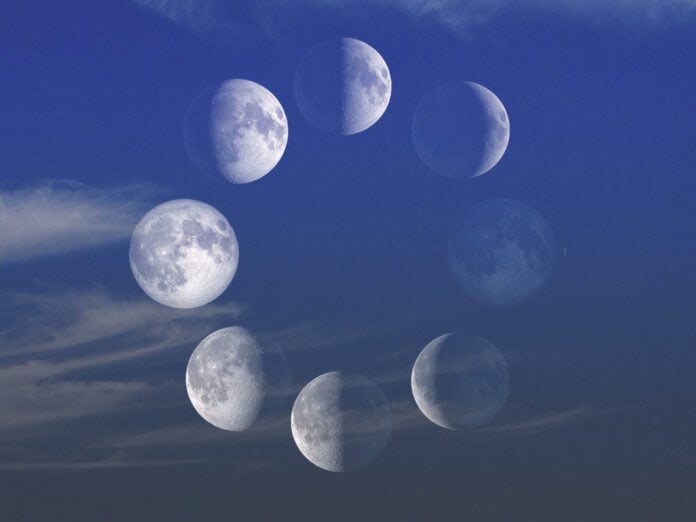
On Thursday, September 24, 2026, the Moon is in its Waxing Gibbous phase, blazing at 96% illumination — its last stop before turning fully lit on Saturday, when the Harvest Moon takes over the night sky. For a brief window each evening, the disc looks so nearly full that casual observers may already mistake it for the real thing.
But the mathematics still says otherwise. Full Moon arrives on Saturday, September 26 at 12:49 p.m. EDT — 16:49 UTC — when the lunar surface reaches precisely opposite the Sun as seen from Earth, according to NASA. Tonight the Moon is about two degrees short, close enough that the naked eye finds no gap, but precise enough that lunar photographers will see the shadow edge still creeping westward along the terminator line.
The Moon’s transit from First Quarter through Waxing Gibbous has been unusually photogenic this cycle. Saturn is the constant companion — the ringed planet sits roughly ten degrees to the lunar south-southeast in Aquarius, close enough to share a binocular field of view with the Moon on clear nights, as NASA’s Jet Propulsion Laboratory notes in its September skywatching guide. Faint Neptune, at magnitude 7.7, completes a wide triangle nearby, invisible to the unaided eye but reachable with even modest optical aid.
The Moon rises in the eastern sky shortly after sunset tonight and remains visible all night. Because the Waxing Crescent began its climb on September 16 at a gentle angle to the horizon — a characteristic of the autumnal lunar path — consecutive moonrises over the past week have been separated by unusually short intervals, less than thirty minutes apart at mid-latitudes. This is the defining quality of the Harvest Moon season: for farmers in the centuries before electric light, the extended procession of bright evenings allowed fieldwork to run well past dusk. The tradition carries a name to this day.
On Friday evening, September 25, the Moon will be 99% illuminated — indistinguishable from full to most observers. By Saturday night, the Harvest Moon will rise near Saturn in Aquarius, forming one of the year’s most compelling naked-eye pairings. Neptune will be off to the east. If skies are clear, the three bodies will be visible in the same modest stretch of sky.

The Total Solar Eclipse of August 12 placed the Moon precisely between Earth and Sun along a path through Russia, Kazakhstan, and China. Less than seven weeks later, the same Moon has swung around to the opposite side of its orbit — nearly full, and heading into its most-watched rising of the northern autumn.
Saturn is at its own finest moment. The planet reached opposition on September 21, meaning it currently rises at sunset and remains up all night. At opposition, Saturn shines at peak brightness and the Sun’s light falls directly behind the observer onto the ring system — a geometry that reduces shadowing within the rings and produces a subtle brightening known as the opposition surge. Both the Moon and Saturn will be above the horizon simultaneously from nightfall through dawn on Thursday night.
Venus is still a fixture of the evening twilight in the west, having reached its peak brilliance for this apparition on September 18. It sets roughly two hours after the Sun, giving observers a narrow window to catch both Venus in the west and the nearly-full Moon rising in the east before full darkness falls.
The New Moon on September 10 began this lunar cycle. Fourteen days later the cycle nears its peak. Saturday’s Harvest Moon will be the twelfth of thirteen full moons in 2026 — a year that includes a Blue Moon in October and a penumbral lunar eclipse in November.
Viewers in North America, Europe, and Asia will be well-positioned to watch the Harvest Moon rise on Saturday evening within half an hour of local sunset, the sky still lit with twilight colours behind it. At that moment, with Saturn to its south and Neptune in the outer dark, the sky will offer about as much as an unaided eye can absorb in one glance.