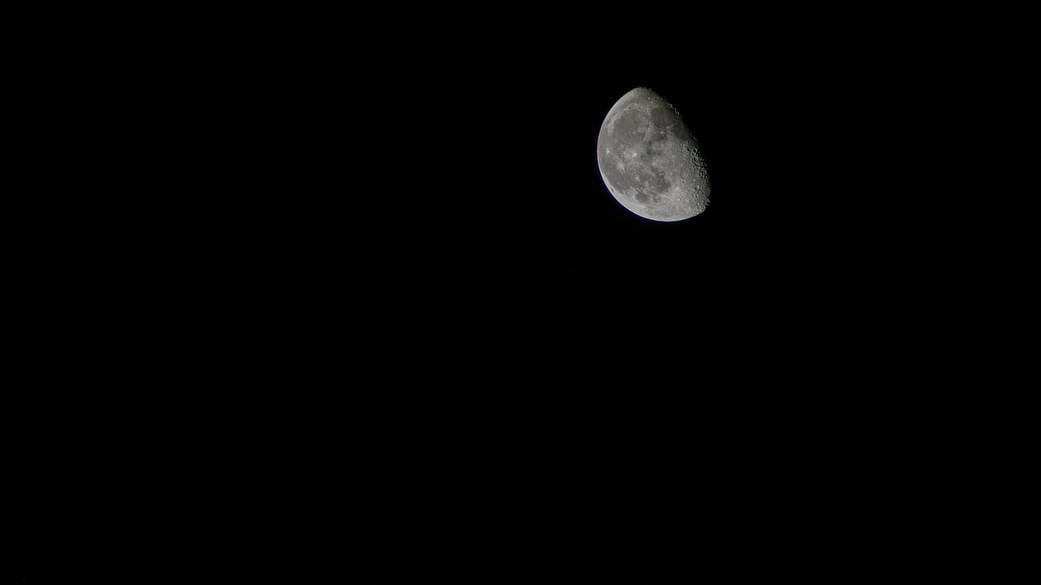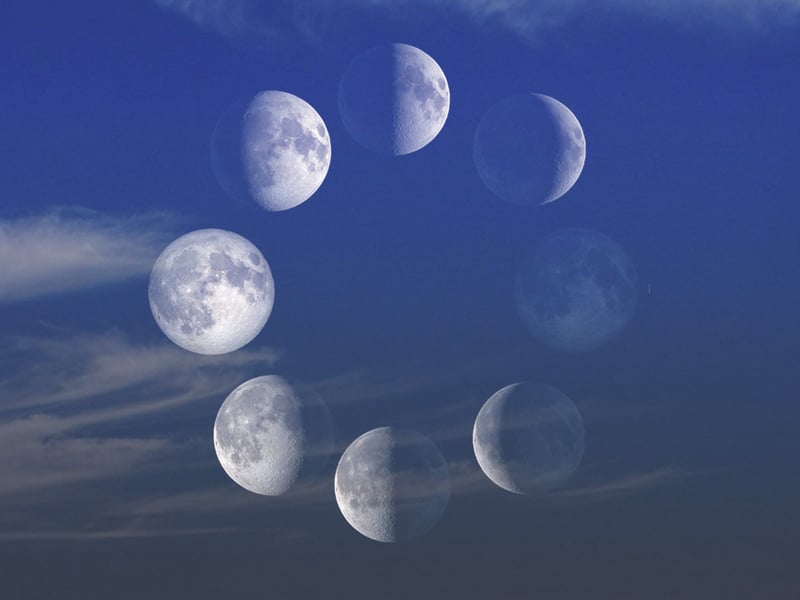

Tonight the moon rises at midday, climbs to its highest point in the southern sky around sunset, and sets near midnight. What most observers looking up will not realize is that it is making that arc at its greatest distance from Earth all month.
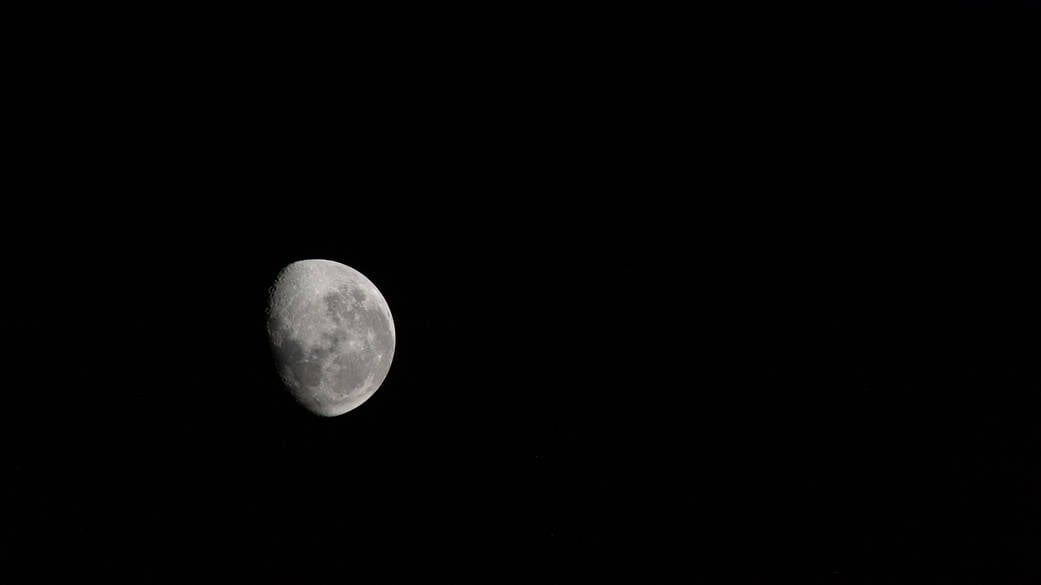
September 18, 2026 marks the First Quarter Moon – the phase in which exactly half the lunar disc is illuminated, right half up in the Northern Hemisphere. It occurs approximately seven days after the New Moon on September 11. Today the moon also reaches apogee, the point in its elliptical orbit where it sits farthest from Earth: roughly 405,000 kilometers out, around 49,000 kilometers farther than it will be at its closest approach this month.
That combination – halved illumination at maximum orbital distance – makes September 18 a useful moment to understand something the naked eye rarely makes legible. The moon’s orbit is not a circle, and the sky’s apparent sameness conceals constant variation.
The First Quarter phase occurs when the moon, Earth, and sun form a 90-degree angle. The sun illuminates the right half of the lunar disc while the left half faces away from sunlight. The word “quarter” refers not to what you see – which is closer to a half-disc – but to where the moon sits in its 29.5-day cycle: one-quarter of the way through. At roughly 46 to 48 percent illumination, today’s moon is in a transitional state, growing brighter each night on its way toward the Harvest Moon on September 26.
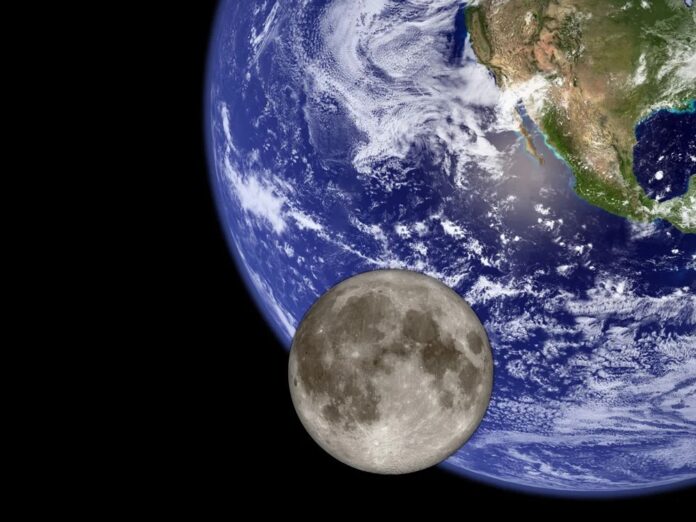
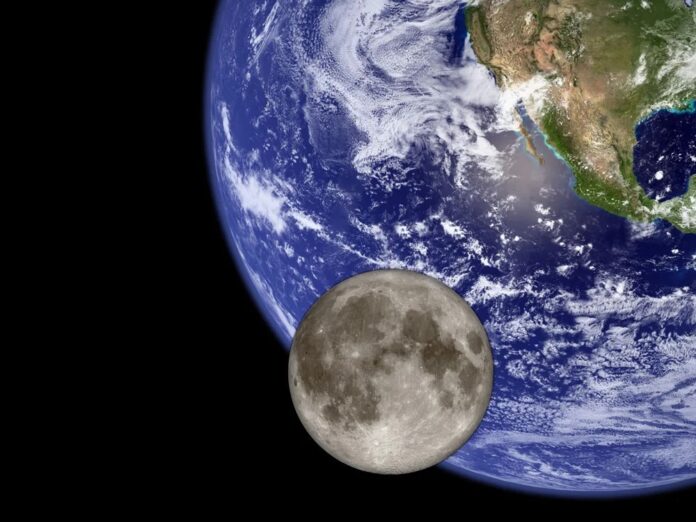
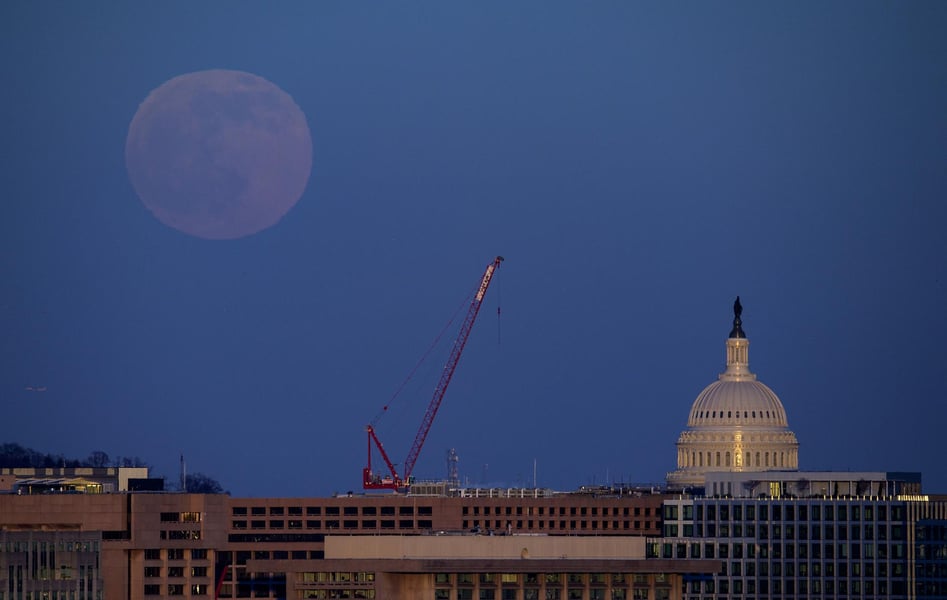
The moon’s elliptical orbit produces distance swings of about 50,000 kilometers between perigee and apogee, a variation that generates an angular diameter difference of around 12 to 14 percent – visible only in a direct side-by-side comparison, not noticeable on any single night of observation. When a full moon occurs near perigee, the term “supermoon” is widely applied. Today’s configuration is closer to the opposite: a Waxing Crescent phase now passed, the disc at First Quarter and the orbit at its most distant coinciding for a half-moon that appears about three percent smaller in diameter than a perigee equivalent would.
From most of the Northern Hemisphere, the First Quarter Moon rises close to local noon on September 18, climbs to its highest altitude roughly at sunset, and sets around midnight. The half-disc is well-placed for evening observation – high enough to clear most horizon obstructions, bright enough to cast faint shadows, but not so brilliant it overwhelms the night sky. September’s typically transparent autumn air makes for good definition along the terminator, the curved line dividing the lit half from the dark.
The First Quarter Moon today is the third notable phase event in September 2026’s lunar calendar. The New Moon on September 11 coincided with a partial solar eclipse visible across parts of the Pacific. Earlier this summer, a total solar eclipse on August 12 darkened skies along a narrow path across North America. The month’s progression from Waning Gibbous in the first days of September – 57 percent illumination on September 3 – through New Moon, crescent, and now First Quarter represents a full half-cycle in under three weeks.
| Event | Date | Illumination | Notes |
|---|---|---|---|
| New Moon | September 11 | 0% | Partial solar eclipse visible across Pacific |
| First Quarter + Apogee | September 18 | ~46% | Moon at greatest distance from Earth this month (~405,000 km) |
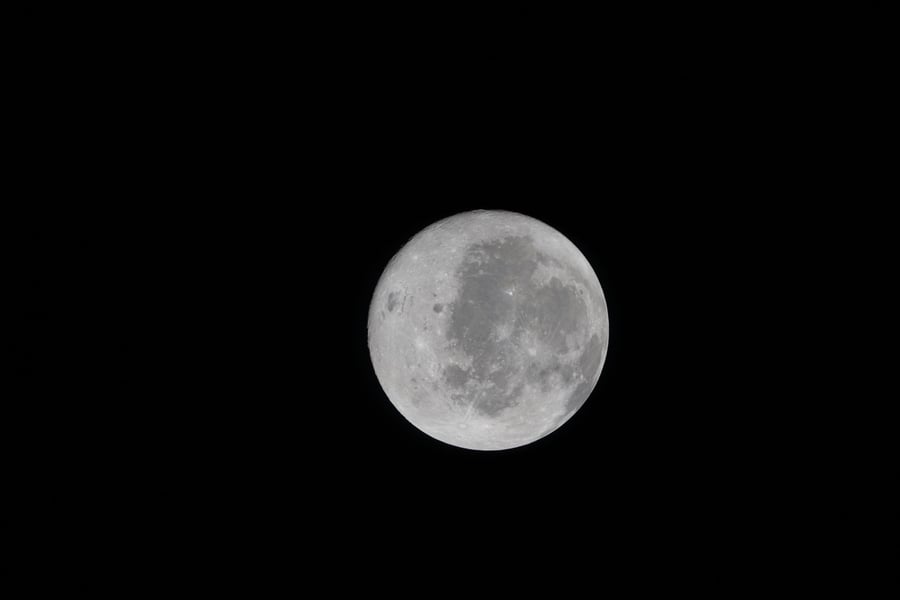
| Full Moon (Harvest Moon) | September 26 | ~100% | Nearest full moon to autumnal equinox; rises near sunset for several nights |
| Last Quarter | ~October 3 | ~50% | Left half illuminated; waning phase begins |
| Sources: NASA Scientific Visualization Studio; The Old Farmer’s Almanac 2026. Times and illumination are approximate and vary by geographic location. | |||
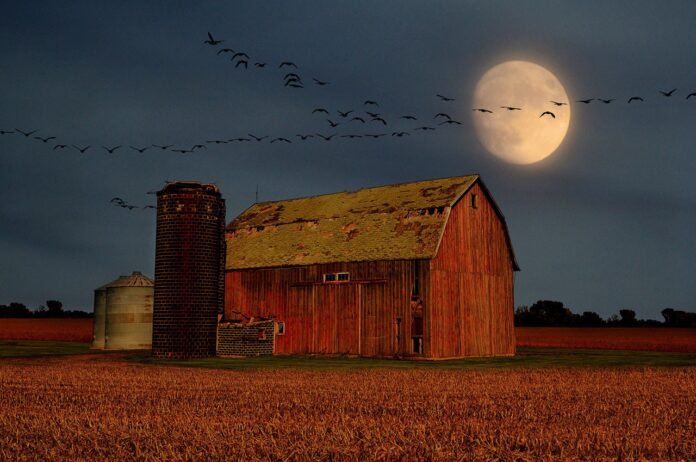
Eight days from today, the Harvest Moon arrives. The September 26 full moon carries that name because it is the full moon nearest the autumnal equinox, which falls on September 22. In northern latitudes, the Harvest Moon rises near sunset for several consecutive nights – the geometry of the fall equinox angles the moon’s path so nearly parallel to the horizon that moonrise shifts by only about 25 minutes per night instead of the usual 50. For roughly three nights around September 26, fading daylight and early moonrise overlap, the sky never fully dark for long, which once allowed farmers in northern Europe and North America to extend harvest work after dark.
Tonight, though, the moon is at its farthest. The disc will look identical to most observers. The angular diameter will be unmeasurable without equipment. The distance will register in almost no perceptible way – except perhaps in the softness of the light, and even that requires knowing what to compare it to.