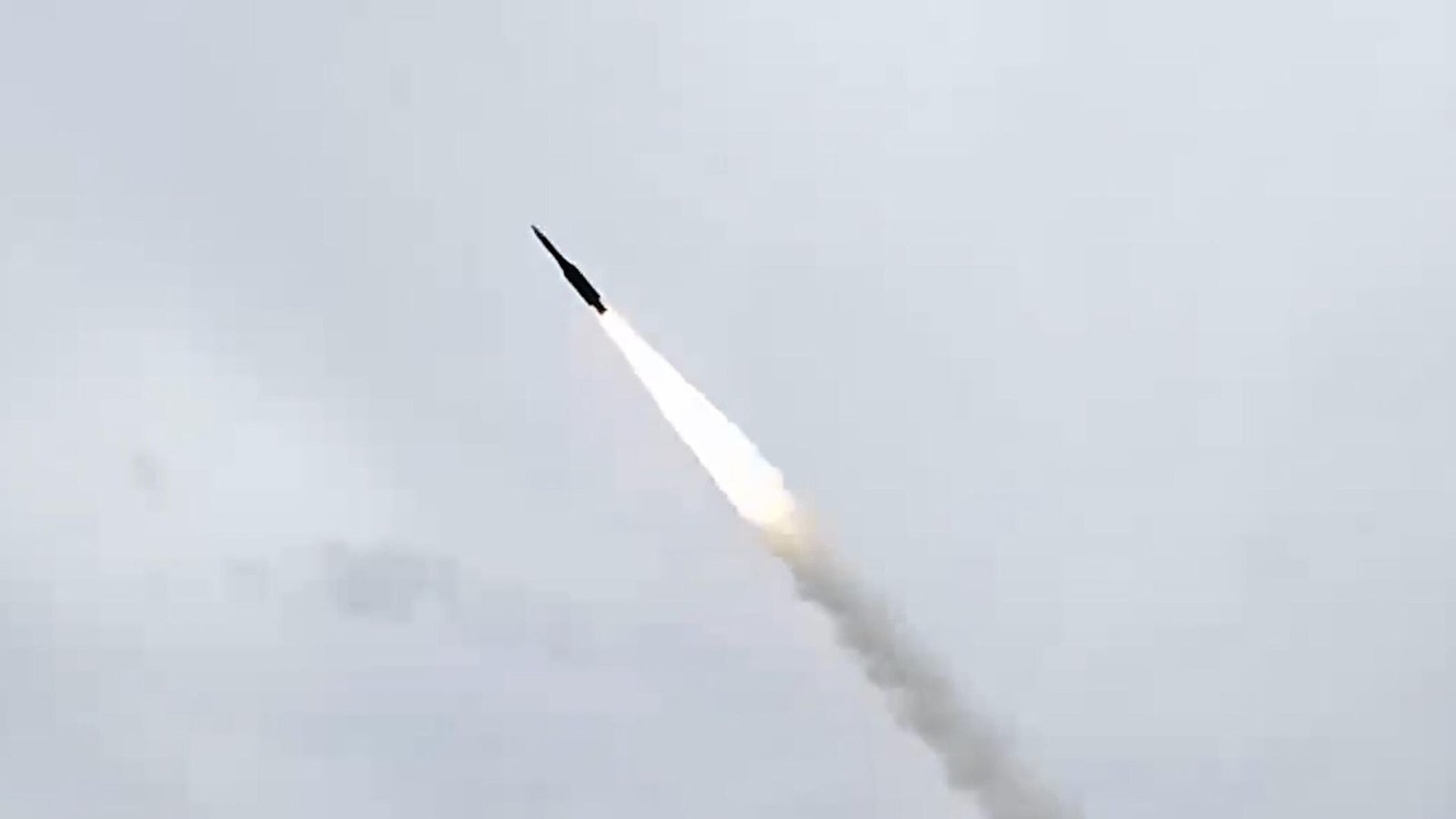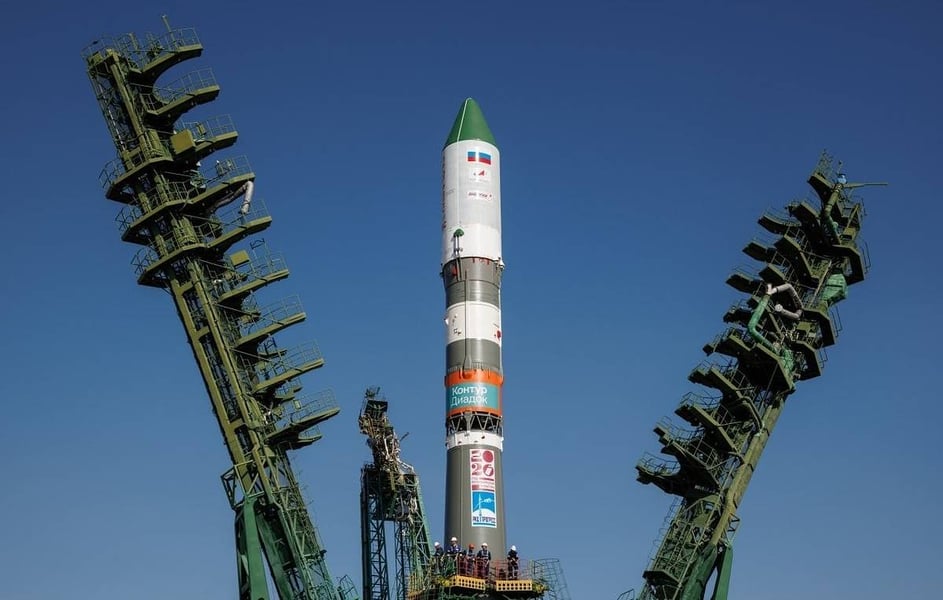

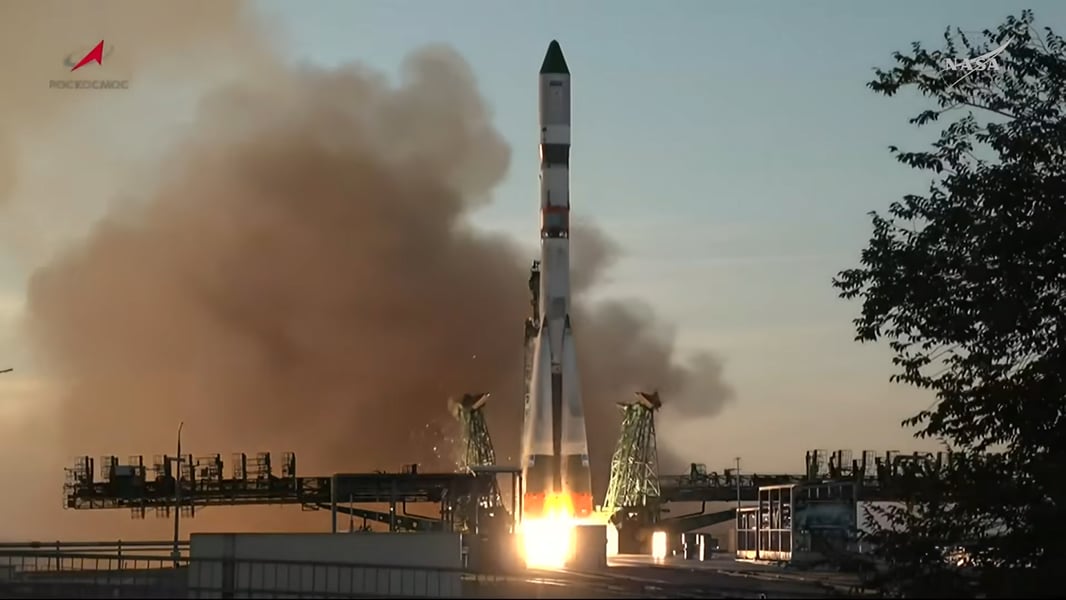
BAIKONUR – The crew of the International Space Station will not be waiting much longer for fresh food, oxygen, and critical scientific hardware. Russia’s Progress MS-35 unmanned cargo spacecraft lifted off aboard a Soyuz-2.1b rocket from the Baikonur Cosmodrome in Kazakhstan on Wednesday at 13:33 UTC, ending a seven-day hold after technicians discovered a defect in the rocket’s third stage during pre-launch checks.
Roscosmos confirmed the spacecraft entered orbit as planned and is now on a two-day autonomous rendezvous trajectory toward the station’s Poisk zenith port. Docking is scheduled for September 18 at 18:37 UTC.
Roscosmos had originally scheduled the launch for September 9. During pre-flight inspections, engineers detected defects in the Soyuz-2.1b’s upper stage, the portion of the rocket responsible for orbital insertion. The agency did not publicly identify the specific component requiring repair. Technicians resolved the anomaly over the course of several days, and Roscosmos chief executive Dmitry Bakanov confirmed earlier this week the spacecraft would fly before the week’s end, according to TASS. The postponement was the second consecutive Progress mission to face a pre-launch technical hold in 2026, reflecting the heightened quality-control scrutiny the agency has applied to Soyuz hardware following recent anomaly investigations.
The delay carried no immediate operational risk for the station: ISS reserves were sufficient to bridge the gap without emergency measures. But uncrewed resupply runs occupy fixed calendar slots, and any slippage ripples through maintenance schedules, experiment timelines, and fuel-burn planning for the Russian segment.
Progress MS-35, which NASA designates Progress 96 as the 96th Progress spacecraft to service the station, is carrying approximately 2.4 metric tons of cargo. The manifest includes 842 kilograms of propellant for orbital maintenance maneuvers, 420 kilograms of drinking water, 50 kilograms of oxygen, 1,275 kilograms of food including fresh produce and perishables, 357 kilograms of sanitary and hygiene equipment, and 20 kilograms of medicines and medical supplies, according to TASS.
The mission also carries equipment for seven scientific programs active on the Russian segment. Teledroid, one of the most prominent, is developing remotely controlled robotic manipulation systems for tasks that would otherwise require a cosmonaut spacewalk. Engineers are testing whether complex mechanical work in vacuum can be directed from inside the station with enough precision to substitute for extravehicular activity in select scenarios. Gas Analyzer-FS monitors atmospheric chemistry inside the station. Biopolymer investigates how large biological molecules behave in microgravity conditions impossible to replicate on Earth. Three other experiments, Virtual, Vampire, and Hurricane, examine crew cognitive perception, cardiovascular adaptation to extended spaceflight, and aerosol and gas flow dynamics in a pressurized module. A seventh program, Separation, studies the physical behavior of mixed material compounds in zero gravity.
The preceding mission, Progress MS-34, docked with the station in April after a smooth two-day transit carrying more than 2.5 metric tons of cargo. The slightly lighter manifest aboard MS-35 reflects the substitution of some supply weight with hardware for the science programs.
The ISS Russian segment has had a demanding year. In June, crew members were ordered into pressure suits after an air leak in the Zvezda service module doubled in rate, prompting emergency monitoring and contingency preparation aboard the orbiting laboratory. Roscosmos said the situation stabilized and posed no immediate threat, but the episode illustrated how dependent the Russian segment remains on a reliable and uninterrupted supply cadence.
The Soyuz-2.1b that carried Progress MS-35 is a three-stage medium-lift vehicle distinguished by its RD-0124 upper-stage engine, which provides higher specific impulse than the engine it replaced and allows for more fuel-efficient injection into ISS orbit. The 2.1b variant is now the standard launch vehicle for Russian government orbital missions.
Baikonur operates under a lease agreement with Kazakhstan through 2050. Russia has invested significantly in the Vostochny Cosmodrome as a domestic alternative, but Baikonur remains the only Russian facility certified for ISS-bound missions. Progress MS-35 is scheduled to remain docked to the station for approximately six months before undocking for a controlled deorbit burn over the Pacific Ocean.