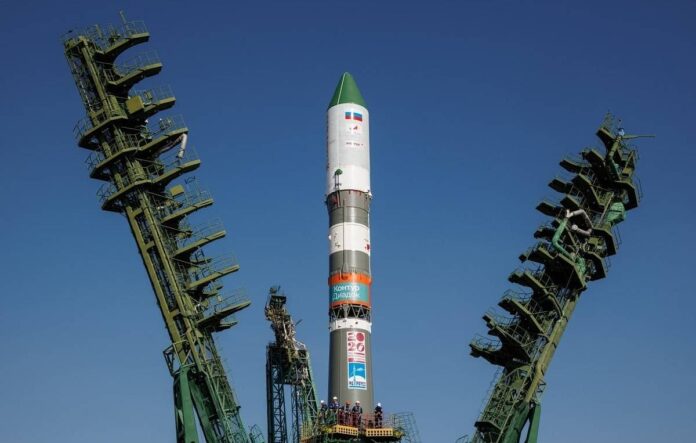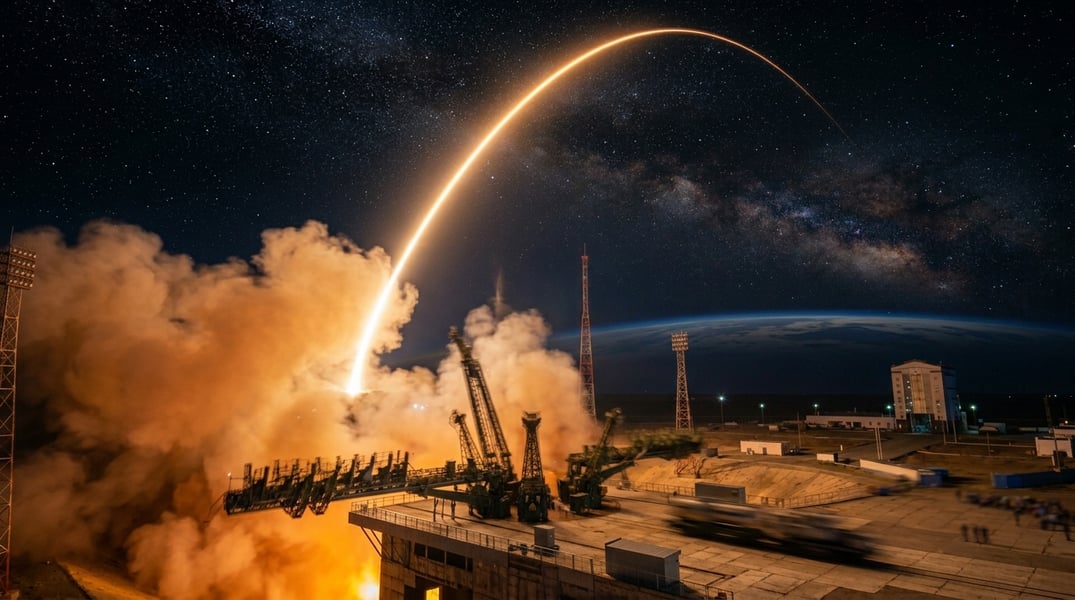

Launched aboard a Soyuz-2.1a rocket, the uncrewed spacecraft delivered more than two tons of essential cargo, including propellant, oxygen, water, food supplies, and scientific equipment. According to mission control updates, the spacecraft’s approach and docking sequence proceeded under fully automated guidance, a system refined over decades of Russian orbital logistics engineering.
At the moment of orbital insertion, NASA confirmed the spacecraft’s successful orbital insertion, noting that the vehicle maintained nominal trajectory parameters throughout its rendezvous with the station. The docking reinforces the station’s reliance on a continuous rotation of cargo vehicles from multiple space agencies.
A High-Precision Supply Chain in Low Earth Orbit
The latest mission is part of a broader framework known as the International Space Station cargo logistics network, a multinational system that ensures uninterrupted delivery of consumables and experimental hardware to orbiting astronauts. Without this synchronized pipeline of resupply missions, long-duration habitation aboard the ISS would not be sustainable.
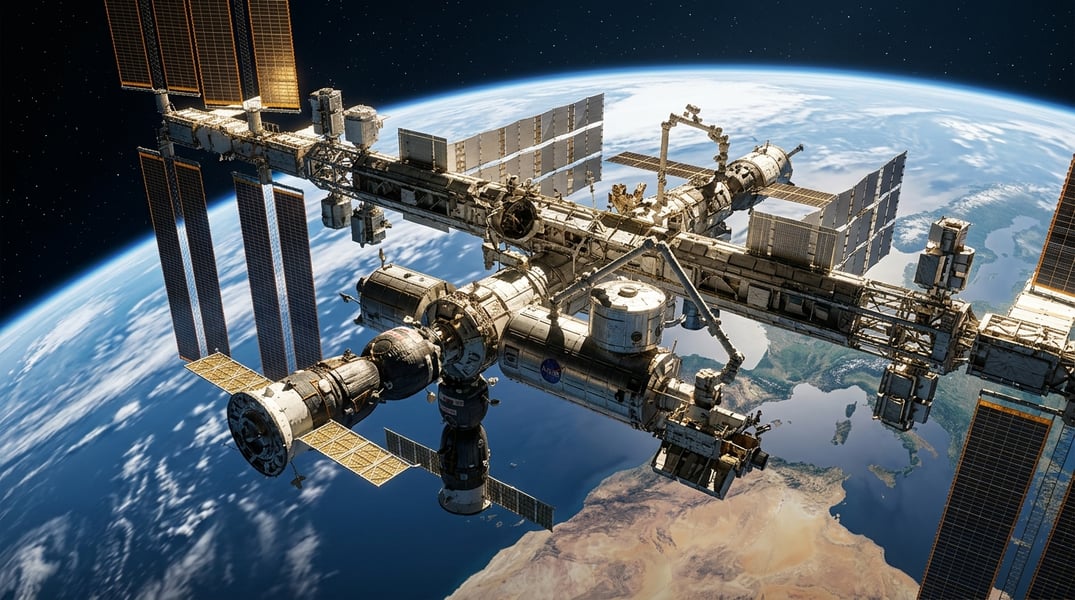
Russia’s contribution through its Progress series remains one of the most consistent elements in this architecture. The spacecraft is designed for efficiency rather than recovery: once unloaded, it will be filled with waste material and deliberately deorbited, burning up in Earth’s atmosphere as part of a controlled disposal sequence.
Engineering Continuity and the Soyuz System
The launch vehicle, a Soyuz-2.1a rocket, remains one of the most reliable workhorses in global spaceflight. Its continued use reflects both engineering conservatism and operational certainty in an environment where failure margins are minimal. The Soyuz system has become synonymous with routine access to orbit, particularly for missions involving the ISS.
Once in orbit, the Progress spacecraft executes a series of automated phasing maneuvers, gradually aligning its trajectory with the station’s velocity of roughly 28,000 kilometers per hour. The final docking phase is executed autonomously, though monitored continuously by flight controllers in Moscow and Houston.
Scientific Payloads and Microgravity Research
Beyond logistical support, the spacecraft also delivers instruments critical to ongoing experimentation aboard the station. These include systems designed for biological and materials science studies in microgravity conditions, where fluid dynamics, cellular behavior, and structural formation differ significantly from Earth-based environments.
These scientific payloads aimed at studying human adaptation to microgravity contribute to broader research efforts that inform future long-duration missions, including potential crewed expeditions beyond low Earth orbit.
While the ISS itself is nearing the latter stages of its operational life cycle, it continues to function as a critical testbed for biomedical and engineering research that will shape the next generation of orbital platforms.
Roscosmos and the Persistence of Orbital Infrastructure

Russia’s role in sustaining ISS operations remains structurally significant despite shifting geopolitical conditions on Earth. The Progress program, operating under Roscosmos, continues to provide essential logistical continuity even as broader international cooperation experiences periodic strain.
The agency’s long-term launch cadence reflects a sustained industrial capacity in orbital transport systems. This continuity is documented in analyses of Russia’s broader launch record, including sustained activity across multiple mission classes.
The durability of this system is reflected in Roscosmos’s long-running Progress program, which has maintained a steady operational tempo across decades of ISS support missions.
International Coordination in a Fragmented Era
Despite geopolitical tensions on Earth, the ISS continues to function as one of the few remaining platforms where technical coordination between space agencies remains uninterrupted. Cargo missions such as Progress MS-34 illustrate how operational necessity often overrides political divergence in orbital environments.
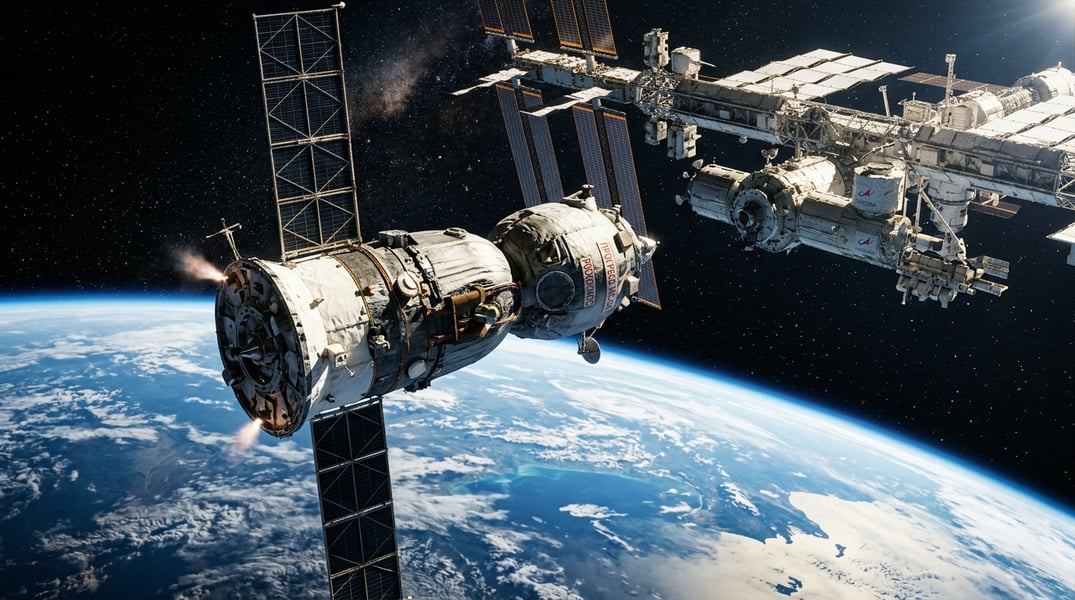
The station itself is a modular construct assembled through contributions from NASA, Roscosmos, the European Space Agency, Japan’s JAXA, and Canada’s space agency. Each cargo mission reinforces this distributed architecture, ensuring that life-support systems, experimental modules, and station maintenance capabilities remain fully operational.
The operational choreography required for such missions is complex. Multiple spacecraft often dock simultaneously, requiring precise scheduling and coordination to avoid orbital congestion and ensure safety protocols are maintained.
The Future of Orbital Supply Systems
As the International Space Station approaches its planned retirement horizon later this decade, attention is increasingly turning toward successor platforms, including privately operated orbital stations and next-generation research habitats.
However, systems like Progress MS-34 remain essential in bridging the transition period. Their reliability ensures that continuous human presence in orbit is not disrupted during this technological and institutional shift.
In many ways, the ISS functions as both an active laboratory and a rehearsal stage for future orbital economies. Cargo missions, once routine logistics operations, are now seen as critical indicators of how humanity will manage sustained infrastructure beyond Earth.
For now, Progress MS-34 continues its quiet but essential role in sustaining life above the planet, delivering not only cargo, but continuity itself to one of humanity’s most ambitious engineering achievements.