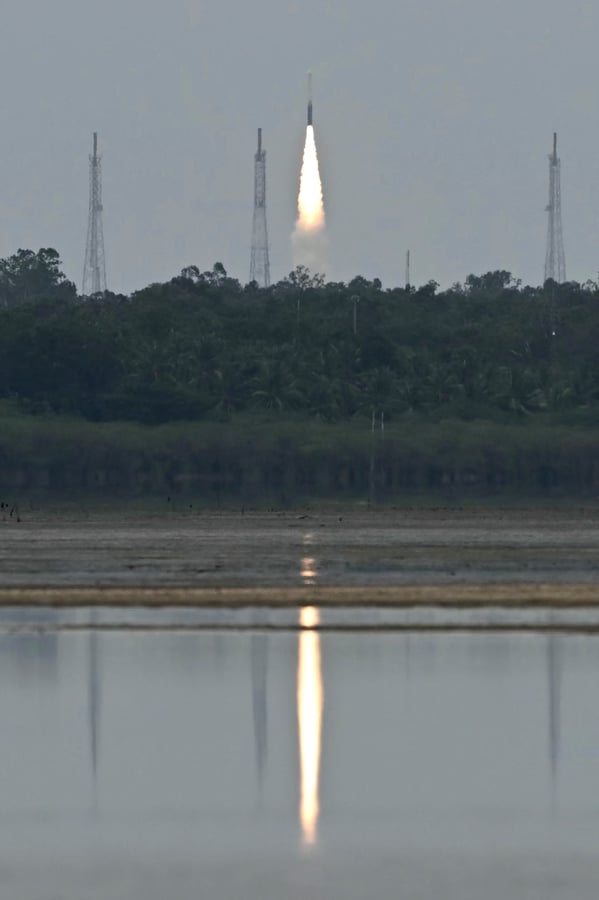

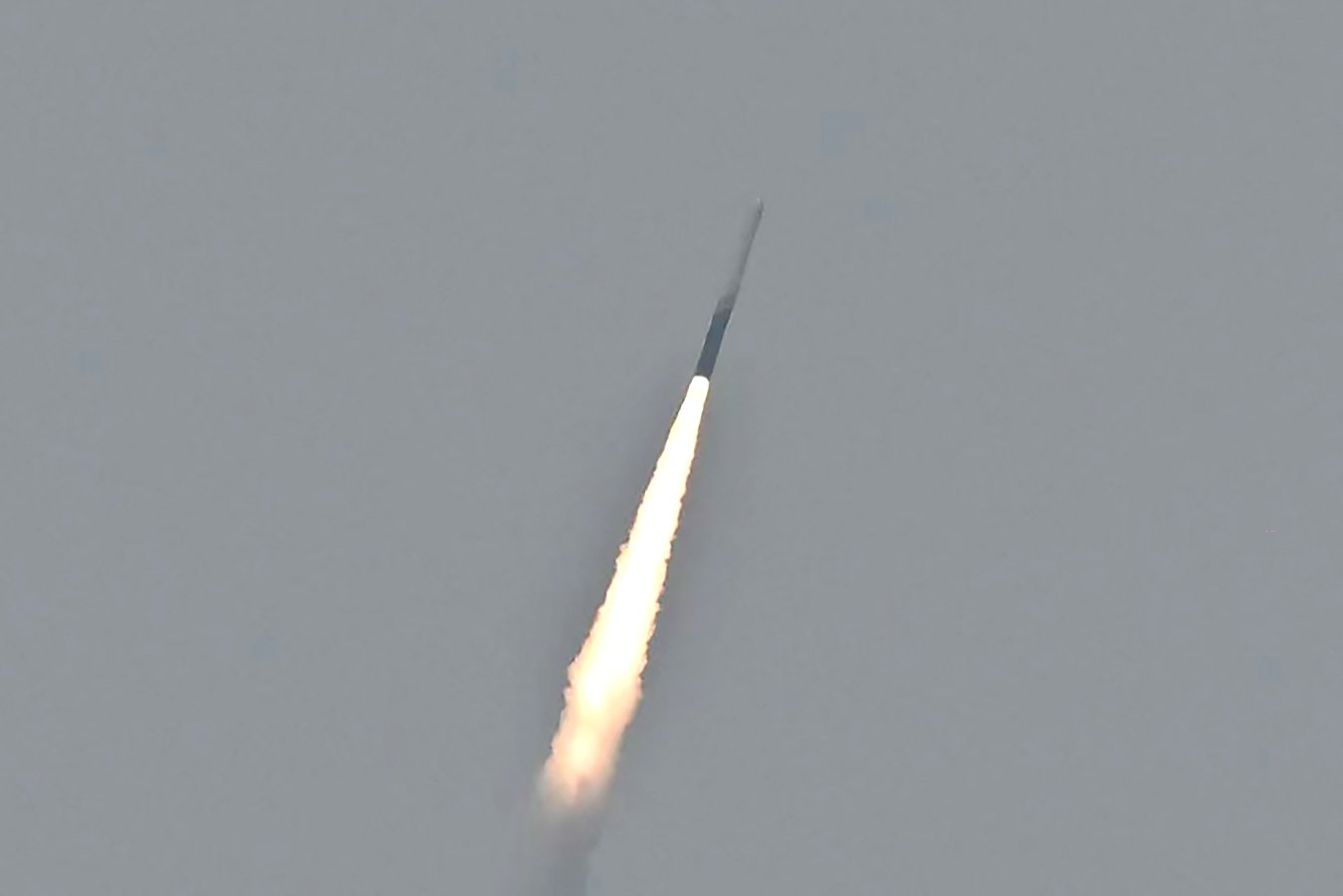
SRIHARIKOTA – Eight years after Pawan Kumar Chandana and Bharath Daka founded Skyroot Aerospace with a government grant and a conviction that India’s space sector was ready to privatize, their Vikram-1 rocket lifted off from Satish Dhawan Space Centre on Saturday, climbed to 450 kilometers, and reached low-Earth orbit. India became the third country – after the United States and China – to achieve orbital launch through a private company.
The flight lasted long enough to validate propulsion, avionics, telemetry, guidance, navigation and control systems on a single mission. “Hello space, we have arrived!” the company posted on its official social media account as confirmation came in from mission control. Each of those systems has ended private orbital launch attempts before they began. None of them did on Saturday.
The distinction matters. ISRO, India’s national space agency, suffered two consecutive launch failures earlier this year, grounding its heavy-lift program at a moment when the country’s satellite-launch ambitions had expanded well beyond what ISRO’s schedule could absorb. Vikram-1 cannot replace ISRO – at 22 meters and with a maximum payload of 350 kilograms, it is built for small-satellite deployment, not the heavy cargo that state-funded space programs still monopolize. What it does replace is India’s dependence on foreign commercial launchers for a category of missions the country generates in abundance.
Saturday’s flight carried customer payloads alongside a lab-grown diamond and a miniature 18-carat gold sculpture commemorating India’s national space program – imagery aimed as much at domestic audiences as at the technical community. The more functionally significant cargo was an experimental set of robotic arms designed for space debris removal, a problem growing urgent as low-Earth orbit accumulates the detritus of half a century of launches. Vikram-1’s three-stage configuration fired cleanly through all primary checkpoints before the payload separated at the target altitude.
Skyroot was founded in 2018 under ISRO’s IN-SPACe regulatory sandbox, a framework the Modi government created in 2020 to allow private firms to access launch infrastructure, technical data and testing facilities previously reserved for state agencies. The company’s first milestone, a 2022 suborbital flight of the smaller Vikram-S, reached the edge of space but stopped short of orbit. The gap between suborbital and orbital is not a technical footnote – it is the difference between a demonstration and a commercial product. On Saturday, Skyroot crossed it.
Prime Minister Modi said the launch would “encourage countless youngsters to dream bigger and innovate fearlessly,” a framing that positioned the milestone as much as a national confidence signal as a space industry result. India’s space privatization push has moved faster than most observers expected when IN-SPACe was announced – at the time, the dominant assumption was that ISRO’s cultural and institutional resistance would slow reforms for years. Skyroot’s orbit without ISRO’s direct involvement puts a number on how much has changed. The company became India’s first space-sector firm to reach a $1 billion valuation in 2026.
The United States produced SpaceX’s first orbital mission in 2008, and Rocket Lab followed later. China’s commercial space sector produced its first orbital launch in 2019 through LandSpace’s Zhuque-2. Al Jazeera reported that India now joins this group as the third country where a privately-funded orbital rocket has reached space. In that same period, China’s private rocket sector pushed further still, recovering a Long March 10B booster in a catch-and-land maneuver – a step Skyroot has not yet attempted.
Skyroot’s Vikram-1 is a step, not an arrival. The company has not disclosed commercial launch contracts or a launch cadence. When this outlet last reported on the mission ahead of its launch window, Skyroot had announced the July 12–August 4 window without committing to a customer manifest for subsequent flights. The mission that lifted off Saturday was a technology demonstration, not a commercial service.
ISRO’s parallel struggles provide an uncomfortable backdrop. The agency’s two consecutive launch failures and the subsequent grounding of its heavy-lift program occurred in the same months Skyroot was preparing for orbit. The confluence sharpens the Modi government’s argument that liberalization was overdue. It also raises a question the government has not yet answered: whether India’s future in space runs through a reformed ISRO or increasingly around it.
India’s ambitions run beyond commercial launches. ISRO’s crewed Gaganyaan program, designed to send Indian astronauts to low-Earth orbit on a government-built rocket, continues alongside the private sector’s rise. The two tracks are not in competition – India’s launch market is large enough for both. But Saturday’s success demonstrates that the first Indian to reach orbit may not be flying on a government rocket.
The gold sculpture and lab-grown diamond that rode to 450 kilometers were a statement to domestic audiences about what a country of engineers with a six-year-old startup can now accomplish. The science – the debris-removal robotics, the propulsion and avionics validation – tells a different story: that there is a commercial case to be made for Indian orbital launch, and that Skyroot has now demonstrated the product works.
The open question is whether the milestone translates into a launch manifest. Space companies have reached orbit before and still gone broke – Rocket Lab spent years on the edge of insolvency before finding its commercial footing. Vikram-1’s success on Saturday was proof of engineering. The next test, which will arrive in the months ahead when Skyroot’s calendar fills or does not, will be proof of business.