
TEHRAN — For five months, Mojtaba Khamenei governed Iran without being seen. He issued statements and directives through official channels and conducted the business of the supreme leadership while his public presence was held carefully off the record, a security calculation made after the strikes that reshaped the upper reaches of Iranian power in the early weeks of the conflict. On Sunday, he appeared.
The meeting with President Masoud Pezeshkian, documented in a Telegram channel statement and accompanied by video that circulated separately from the text, was described by Iranian state media as a discussion of the rial’s deteriorating value, the country’s energy situation, and the military’s operational needs in what Iranian officials have formally designated the Third Imposed War.
The meeting’s significance was less its agenda than its existence. The supreme leader had last appeared publicly in the earliest days of the conflict. His subsequent absence reflected the kind of operational security that Iranian leadership cadres adopted after strikes removed key military figures from public view. That Mojtaba Khamenei chose Sunday to reappear through documented imagery, even at the controlled distance of a Telegram channel, suggests something in the internal calculus has shifted.
What has shifted is not obvious from Sunday’s statement. The topics covered map to the three most visible pressure points Iran has been managing since the conflict began. The Iranian rial has suffered against the dollar despite government attempts at currency controls. Power cuts have affected parts of the country as the energy grid has taken stress from both reduced gas flows and infrastructure damage. And the military has continued what officials describe as defensive operations under the Third Imposed War framework.
The label itself carries meaning. “Third Imposed War,” following the Gulf War of 1980–88 and other conflicts the Islamic Republic has framed as externally initiated, places the current conflict in an ideological sequence that assigns Iran the role of victim rather than instigator. Using it in the first publicly documented meeting between the supreme leader and the president is a signal about how Iranian leadership intends to frame the conflict’s historical arc going forward.
Pezeshkian has remained publicly active throughout the conflict, conducting routine presidential business and appearing at official functions, while Khamenei receded from view. The asymmetry between the two figures’ public profiles over the past five months reflected both their different security exposure and their different constitutional positions: the president is a recoverable political office; the supreme leader is not.
The internal politics of the meeting are also worth noting. Pezeshkian and the supreme leader have at times occupied positions of visible alignment and at times of managed distance during the conflict period. The president has been the public face of diplomatic activity; the supreme leader has been the ultimate authority on military decisions conducted outside the public frame. A formal meeting documented and released, however minimally, suggests both sides saw value in a visible moment of unified leadership, whatever the operational reasons for its timing.
The meeting was confirmed by a Telegram statement rather than broadcast on state television or through the official Islamic Republic of Iran Broadcasting channels that would typically carry coverage of a supreme leader’s public engagement. That choice preserves some ambiguity about Khamenei’s physical location and minimizes the signal value of the appearance. The Iran peace talks have been conducted through interlocutors rather than direct bilateral contact; Khamenei’s continued management of those processes from a non-public position had not prevented their limited progress.
The video that circulated separately from the statement was distributed through unofficial channels rather than released as an official state media package. This structure provided visual confirmation without creating the kind of precisely dated and geolocatable appearance that would come from a formal broadcast. Iranian security planners have managed Khamenei’s public presence since the early months of the conflict with visible concern for operational exposure; Sunday’s documentation, structured to provide evidence of existence without a precise timestamp or location, follows that same logic.
Khamenei’s state funeral for the late Supreme Leader Ali Khamenei in July had been the most prominent public moment for the new leadership’s legitimacy claim, drawing foreign delegations and serving as a formal transition marker. The son had stepped publicly into the role for that occasion and then stepped back from public view.
Sunday’s meeting with Pezeshkian is the first documented instance of the supreme leader engaging in governance-focused public documentation since that funeral. Whether it represents the beginning of a more regular public profile or a one-time appearance tied to a specific internal political need was not apparent from the statement itself.
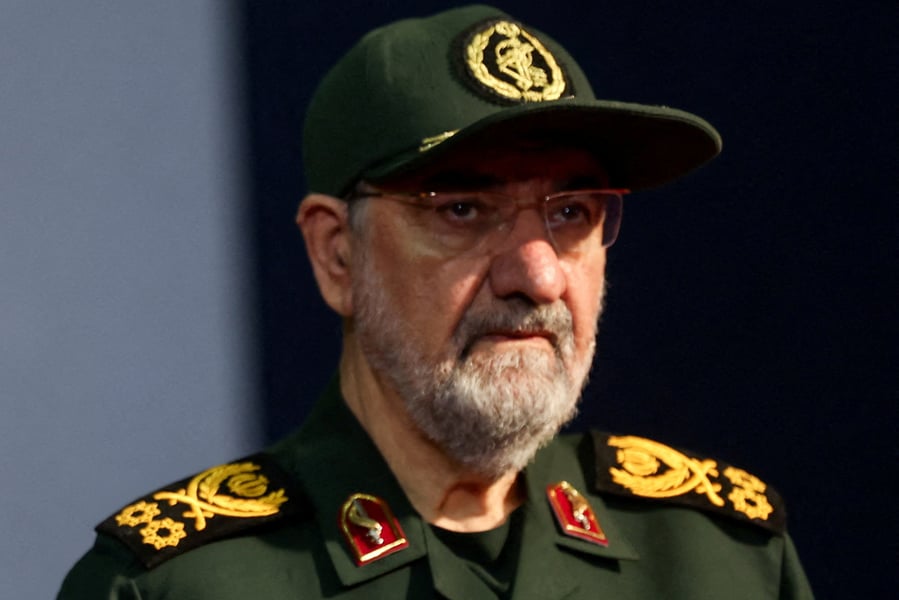
The IRGC chief’s public emergence from similar cover in July offered one precedent: senior Iranian figures have surfaced at moments of institutional significance and then returned to lower visibility. Mojtaba Khamenei may be doing the same. Or the five-month period of complete absence may have ended and a new phase, cautious but increasingly visible, may have begun. Sunday’s Telegram statement did not resolve that question, and nothing about the way it was released suggested it was intended to.