
JOHANNESBURG – The moment that defined India’s first T20I series in South Africa this year arrived in the fourth match, when Deepti Sharma collected five wickets in a single innings for the first time in T20 international cricket. The problem was timing. India had already conceded the series. South Africa had taken it 3-0 by that point, the fourth match was a consolation fixture, and Deepti’s historic bowling performance registered as an emphatic answer to a question that had already been answered the wrong way.
That remains the tension India Women carry into Johannesburg for the second time in 2026. Cricket South Africa confirmed this week that the August tour would expand by three additional T20I matches, structured around South Africa’s Champions Trophy preparation, which is being pursued with the kind of deliberate focus the country applies to tournaments where home preparation is the variable they can actually control. India’s fixture list for the coming weeks suddenly has a different quality to it.
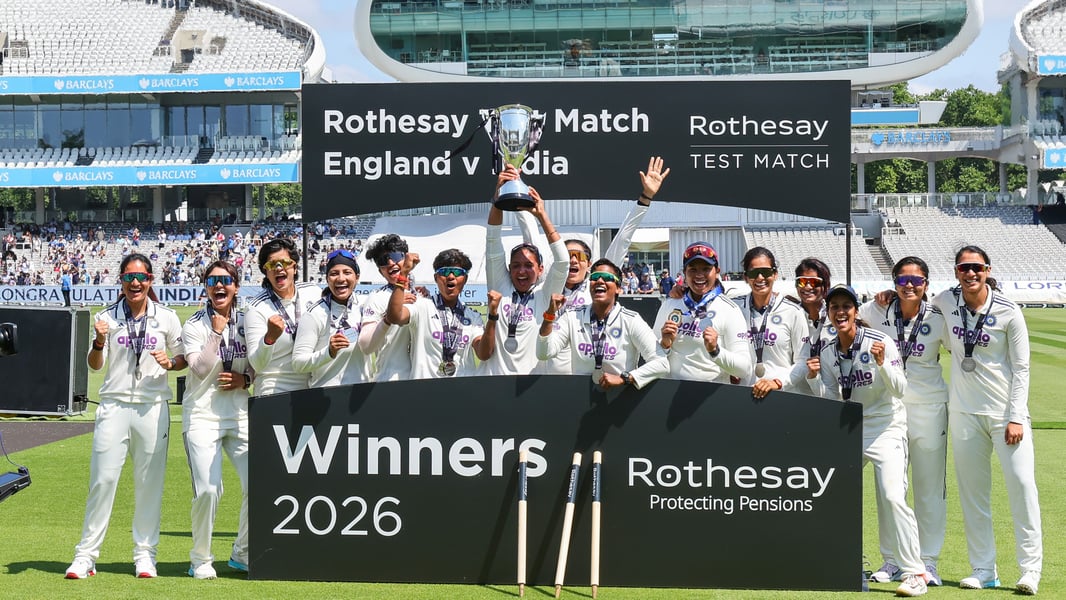
India’s ICC Women’s T20 World Cup 2026 campaign in England, which ended before the final that brought together England and Australia at Lord’s on Sunday, added texture to how Harmanpreet Kaur’s side is being evaluated. The World Cup run involved close margins, occasional batting collapses in the middle overs, and a pattern of results where India’s quality was rarely in doubt but its consistency was always at question. The South Africa T20I series in April confirmed rather than created that pattern: India were competitive in individual matches and inconsistent across the series.
Smriti Mandhana at the top of the order will face South Africa’s PowerPlay bowling, which has been among the most effective in women’s T20 cricket over the past year. Sune Luus’ side dried up India’s scoring in the opening overs in April, and a stalled PowerPlay – the moment where India’s run chase invariably fell behind the required rate – underpinned the series result as much as any individual bowling spell did. Whether Mandhana and her opening partner can counter that pressure in the first six overs will determine how many runs Deepti Sharma has to defend.
The five-for is not a one-match story. Deepti has been India’s most reliable T20I bowler across the past two years, a period when reliable T20I bowling has been the scarcest resource in the women’s game. Her off-spin operates most effectively on South African tracks when the ball grips rather than skids, and the conditions at Johannesburg and Cape Town have tended to offer that grip late in the innings. The maiden five-wicket haul in April happened in a T20I India won by 14 runs – which means when Deepti bowls well in South Africa, India wins. The series problem was not Deepti.
South Africa’s advance under Luus has been one of the quieter stories of women’s cricket’s growth over the past two years. They have built a home record over that period that places them among the most difficult sides in the world to beat on their own conditions. The South Africa Test whitewash of India’s men’s side in November 2025 – a home series defeat that prompted significant scrutiny of BCCI’s selection process – carried a pattern that the women’s team is now navigating in a different format: South Africa at home, with a specific game plan, has become a genuinely difficult problem for Indian cricket.
The three months between April and August have not produced much public evidence of a structural reset. India’s World Cup campaign surfaced the same structural frailty that the South Africa series exposed – a tendency for the batting to stall in the middle overs between the PowerPlay and the death, at exactly the moment when the innings needs to shift from construction to acceleration. South Africa’s bowlers have been particularly adept at identifying and targeting that stall.
For South Africa, the expanded series carries the kind of preparation specificity that India’s major opponents have started to invest in more systematically. Playing India – across formats, including the men’s side where Virat Kohli and the batting depth set the benchmark for opponents – provides a quality of competitive stress that bilateral series against lower-ranked teams cannot replicate. The additional T20Is announced this week give South Africa exactly what they asked for: more high-intensity repetition against the best sub-continent side available in August.
What India needs from this series is a measurable reversal of one specific outcome. The April series produced four losses and one win. The August series, now extended, provides more opportunities to change that ratio – but also more chances for South Africa to confirm the gap is exactly as wide as the April scoreline suggested. Deepti’s five-for from April told one story. The batting had a different version of events in each of those four defeats. India’s task is to reconcile them before the series is over.