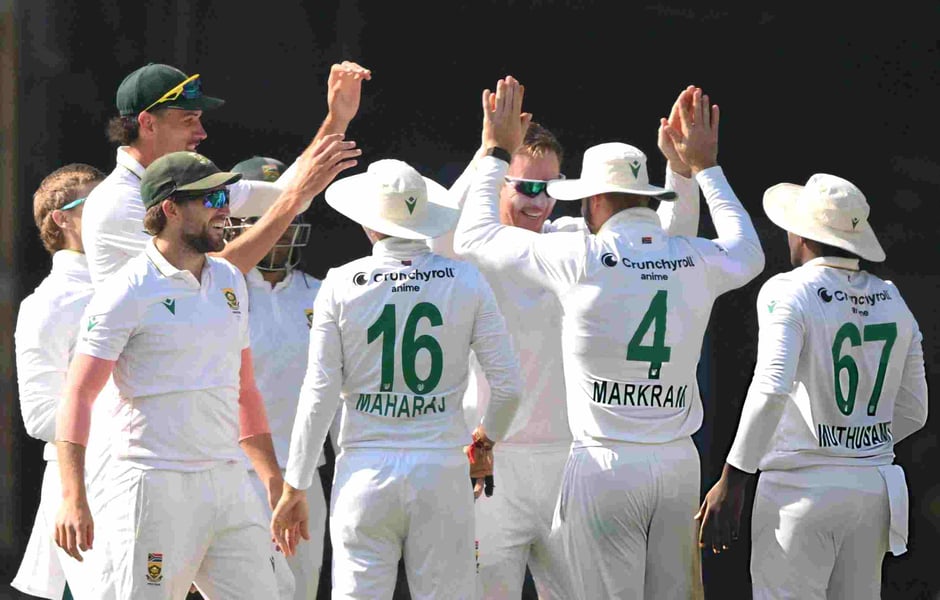
In the aftermath of India’s humiliating 0-2 home Test series loss to South Africa, the first such home defeat since 2004, the Board of Control for Cricket in India (BCCI) has finally broken its silence on the mounting criticism directed at chief selector Ajit Agarkar. A senior board official acknowledged the concerns while defending the selection process, stating that the committee will be consulted regarding the debacle, even as they pointed to digital scorecards as sufficient for scouting talent. This revelation comes at a time when India’s Test cricket fortress appears to be crumbling under new leadership, with head coach Gautam Gambhir and Agarkar facing unprecedented scrutiny for their experimental approach.
The Home Debacle That Shook the Nation
The series loss to South Africa, culminating in a comprehensive 0-2 whitewash, has exposed deep fissures in India’s Test setup. What was once an impregnable home record, unbeaten in series for over a decade, has now seen two whitewashes under the current regime: first against New Zealand last year, and now against the Proteas. Critics argue that the shift from Rahul Dravid’s structured approach to Gambhir’s aggressive philosophy has disrupted team balance, particularly in bowler-friendly home conditions that the team failed to exploit.
India’s batting lineup, once the envy of world cricket, collapsed spectacularly. In the second Test at Cape Town, no, wait, the home series was played on Indian soil with turning tracks that South Africa’s spinners mastered while India’s attack leaked runs. Shubman Gill’s stubborn captaincy decisions and Gambhir’s insistence on unproven combinations drew sharp rebukes from former players. Ravi Shastri called it “a crisis of confidence,” while Harsha Bhogle questioned the wisdom of persisting with underperformers despite domestic alternatives.
The statistical indictment is damning. Since Agarkar assumed the chief selector role in 2023, India has experimented with at least 30 different players in Test cricket, an unprecedented churn that contrasts sharply with the continuity that defined Virat Kohli’s successful era. While successes like Sarfaraz Khan and Dhruv Jurel against England were rightly celebrated, the flip side has been the neglect of proven domestic performers like Abhimanyu Easwaran and Karun Nair, whose first-class records remain stellar amid Ranji Trophy dominance.
Agarkar’s Domestic Disconnect: The Core Controversy
At the heart of the storm is Ajit Agarkar criticized for domestic cricket absence, particularly the Ranji Trophy, the cradle of Indian Test talent. The former India pacer, known for his fiery bowling in the 2000s, has been a fixture on overseas tours, attending the Border-Gavaskar Trophy against Australia and the Anderson-Tendulkar series against England. Yet, his sightings at domestic venues have been rare, with the last notable appearance in 2024 during Tamil Nadu vs Karnataka, after which Devdutt Padikkal earned a call-up.
This pattern echoes Agarkar’s stint as Mumbai selector, where similar accusations of detachment surfaced. Players like Sai Sudharsan and Nitish Kumar Reddy have debuted despite modest first-class averages, Sudharsan at 38.5, Reddy even lower, while Easwaran (averaging over 50) and Nair (triple centurion returning to form) languish. Karun Nair’s recent 174 in Ranji Trophy was a pointed reminder to Agarkar, yet no recall materialized. Former wicketkeeper Saba Karim slammed this as “ignoring the domestic pipeline,” warning it erodes trust between selectors and state associations.
BCCI official response has only fueled the fire. “We will speak to the selectors too (on the Test debacle), and as far as watching domestic games is concerned, every score comes on the app,” a top official told Times of India. This casual dismissal, that apps suffice for nuanced judgments on temperament, technique under pressure, and team fit, has incensed coaches and players. Bengal coach Manoj Tiwary tweeted, “Selectors must see the fight in a player’s eyes, not just numbers on a screen.” The gap between domestic grinders and IPL-favored selections is widening, threatening the grassroots ecosystem that produced legends like Sachin Tendulkar and Rahul Dravid.
Gambhir-Agarkar Axis Under Microscope
Gautam Gambhir, the street-fighter turned coach, and Agarkar form a formidable duo with aggressive instincts, but their synergy is being questioned. Gambhir’s “no-nonsense” approach worked in white-ball formats, but Test cricket demands patience India lacks. Reports suggest tension with captain Gill over persistent backing of flop picks like Rajat Patidar post his England highs. Ex-selector Kiran More revealed, “Gambhir and Gill aren’t trusting Ranji stars, it’s leading to chaos.”
Defenders like R Ashwin argue, “Coach cannot pick up the bat and play,” absolving Gambhir while implicitly pointing to batting frailties. Yet, Agarkar’s role in assembling this squad invites blame. The 47-year-old’s credit for unearthing Jurel is undisputed, but sidelining Sarfaraz after his breakout 200+ against England smacks of inconsistency. With 30+ rotations, stability, a hallmark of past successes, has evaporated, leaving India vulnerable at home.
The BCCI’s upcoming review looms large. Sources indicate a potential overhaul, with calls for Agarkar to mandate domestic attendance and prioritize first-class form. New Zealand’s whitewash precedent saw minor tweaks; South Africa’s could trigger seismic shifts. As one veteran put it, “Can’t function on egos,” a veiled swipe at the leadership trio.
From Fortress to Fragility
India’s home Test record was legendary: 16 straight series wins from 2013 to 2024, blending spin mastery with seam support. The transition post-Kohli saw initial promise, a 2-2 draw with England, but cracks appeared. New Zealand’s sweep exposed preparation lapses; South Africa’s confirmed systemic issues. Pitches criticized as “poor” weren’t the sole culprit; selection misalignment amplified failures.
Compare with Australia’s method: consistent cores with calculated gambles. India’s 30-player carousel suggests panic over evolution. Domestic stars like Easwaran (47 Tests for Bengal, 47 average) wait eternally, while IPL metrics override. Nair’s resurgence, 174 vs Kerala, highlights the folly. Sudharsan’s debut duck underscored risks of app-scouting sans live observation.
Stakeholders demand reform. The Committee of Administrators’ era emphasized domestic integration; current drift risks alienating it. Agarkar’s overseas focus, laudable for tours, neglects home talent identification, where conditions mirror Test demands.
Players Speak Out: The Human Cost
Abhimanyu Easwaran, Bengal opener extraordinaire, maintains dignified silence but his agents hint at frustration. Sarfaraz Khan’s family speaks of demotivation post-sidelining. Karun Nair, after his ton, messaged peers: “Form matters somewhere.” These voices underscore a broken bridge.
Ranji coaches lament: “Selectors see highlights, not 90-over grinds.” Agarkar’s mandate for players to prioritize domestic cricket rings hollow without his presence. The 2024 Chennai sighting was exception; 2025 saw none amid the home series prep.
What Lies Ahead: Review and Reckoning
BCCI’s promised huddle with selectors signals action. Potential moves: Domestic attendance quotas, Sarfaraz-Easwaran recalls, pitch preparation audits. Gautam Gambhir under pressure after Test defeats; Agarkar’s on rebuilding trust. India’s Test legacy demands more than apps, it requires presence, judgment, accountability.
As fans reel from the shock, one truth endures: Test cricket thrives on foundations. Neglect them, and even giants tumble. The BCCI’s next steps will define if India rebounds or prolongs the crisis. BCCI not planning knee-jerk actions after home Test losses, but pressure mounts for meaningful change.