
SEOUL – Eighty years of enforced military restraint compressed into a single cruise missile launch. When Japan’s Maritime Self-Defense Force fired a US-made Tomahawk from the Aegis destroyer Chokai in the Pacific Ocean last week, it did more than test a weapon. It announced the formal end of the postwar doctrine that had barred Japan from possessing offensive strike capabilities since 1945. The missile traveled more than 1,000 miles before reaching its target. The political distance it covered was considerably farther.
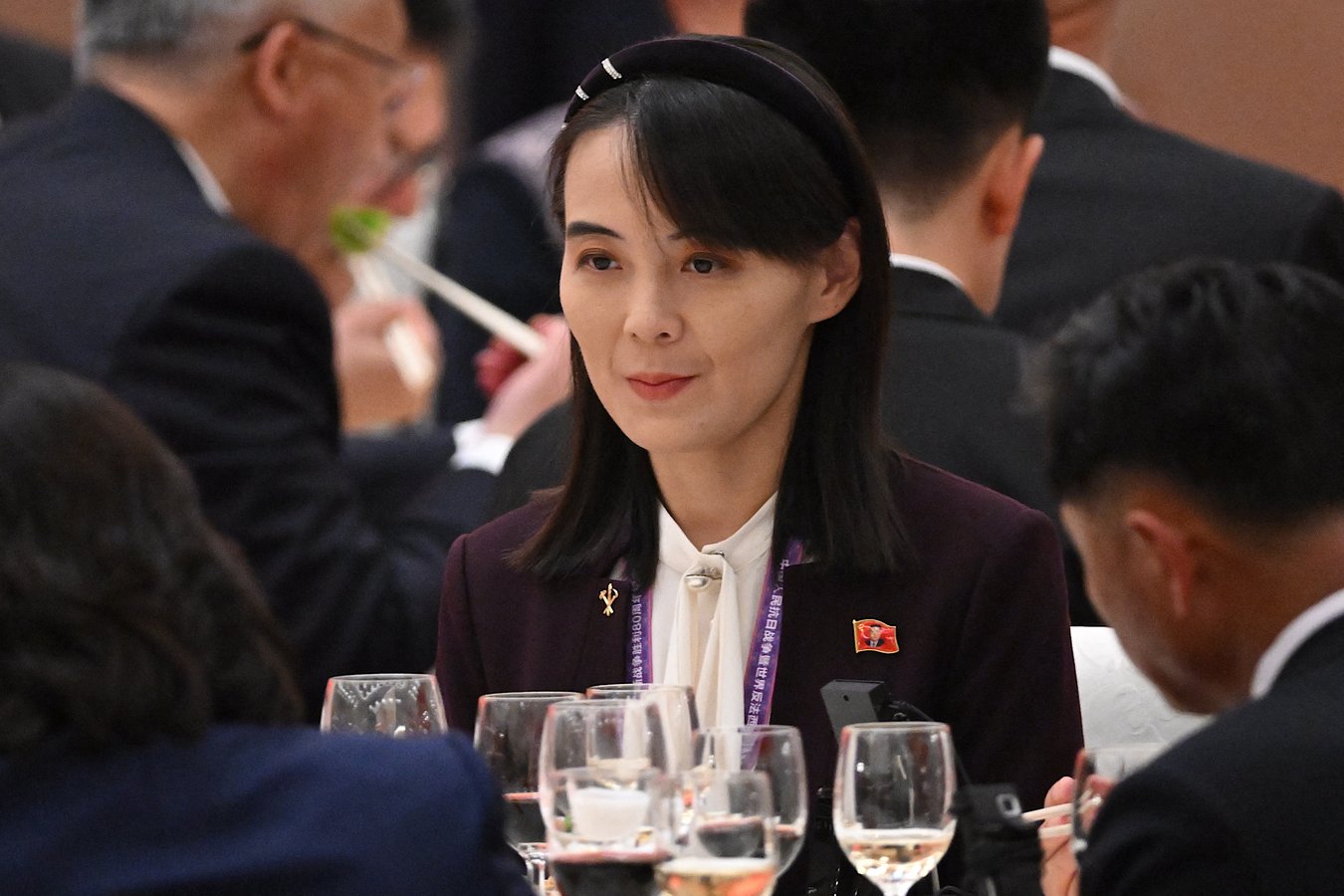
North Korea’s Kim Yo Jong responded with the language her government reserves for events it considers genuinely threatening. In a statement distributed by the Korean Central News Agency on Tuesday and Al Jazeera reported, she warned that Pyongyang would adopt “additional military options” in response to what she characterized as Japan’s deliberate transformation from a defensive to an offensive military power. She did not specify what those options would include.
“Japan will regret it,” she said in the statement, adding that Tokyo’s security would be “exposed to greater danger” as a consequence of the Tomahawk acquisition. The message was not addressed to Japan alone. “The US is behind such dangerous military moves of Japan,” she added, positioning Washington as the architect of the doctrinal shift and Pyongyang’s prospective response as directed at the alliance rather than at Tokyo in isolation.
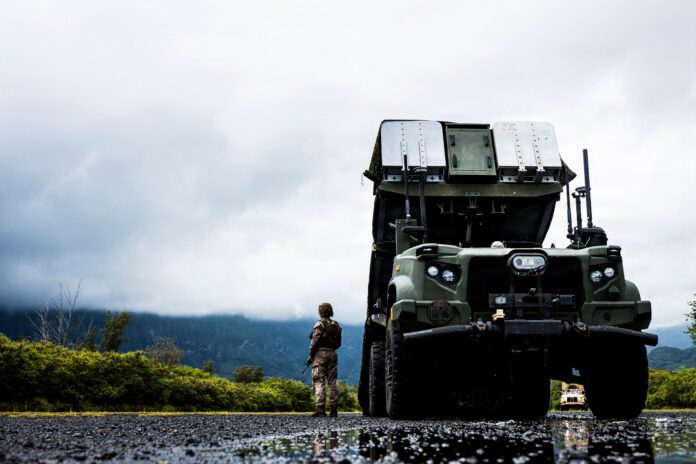
The Tomahawk test, conducted from the Kongo-class destroyer Chokai, marked Japan’s first live-fire use of the American weapon since Japan acquired 400 of the cruise missiles from Washington beginning in 2024. Tokyo has justified the acquisition by arguing that striking enemy missile sites before they can fire constitutes legitimate self-defense under its constitution, a legal interpretation that effectively inverts the meaning of the postwar pacifist framework it nominally preserves. What Japan once called defense, it now calls pre-emption.
Kim’s statement was not an isolated outburst. Since July, North Korea’s state media has published at least six editorials condemning the growing military cooperation among the United States, South Korea, and Japan. The pattern serves a dual purpose: it signals Pyongyang’s awareness of the accelerating trilateral alignment closing around it, and it positions North Korea to frame any further weapons development or provocation as reactive rather than aggressive. As Kim Yo Jong’s earlier rejection of US denuclearization demands made clear, Pyongyang has long positioned its weapons program as a proportionate response to American and allied pressure.
Pyongyang has reason to track Japan’s movements with particular attention. In May, Japan participated in US-led joint military exercises in the Philippines, a deployment that extended Tokyo’s operational footprint into waters historically framed as beyond Japan’s defensive perimeter. The Chokai test followed weeks later, conducted in the open Pacific rather than in Japanese territorial waters, a deliberate choice of geography that underlined the missile’s intended purpose. Range, not defense, was the capability being demonstrated.

The North Korean military planners advising Kim Yo Jong on her response understand the Tomahawk’s specifications in precise terms. A Block V Tomahawk carries a 1,000-pound warhead and can strike targets more than 1,000 miles away with GPS precision. Four hundred of them, deployable from Aegis destroyers positioned across the Pacific, constitute a meaningful offensive capability against hardened military and political targets on the Korean Peninsula. Kim did not recite these figures in her statement. She did not need to. Her audience in Pyongyang already has them.
What analysts cannot yet determine is whether her warning will precede a concrete provocation. Previous escalatory cycles on the peninsula have moved from rhetorical to kinetic, from statements to missile tests, from threats to submarine deployments, but the timing has never been reliably predictable. North Korea retains the asymmetric advantage of choosing when and how to respond, absorbing new developments and acting on its own schedule. Pyongyang’s condemnation of US arms sales to South Korea earlier this year followed a similar pattern: a warning loudly issued, a timeline left open. Whether this latest statement precedes a specific action remains unknown.
The geopolitical logic behind Japan’s Tomahawk acquisition is not difficult to trace. Washington has spent the past several years pressing its regional allies to assume greater responsibility for their own conventional defense, partly to free American military assets for other theaters, partly to strengthen deterrence across a region where China, North Korea, and Russia now present simultaneous strategic challenges. Japan has complied with a speed that would have seemed implausible a decade ago. Its current five-year defense plan, adopted in late 2022, dramatically expanded both the budget and the doctrine: record spending, acquisition of long-range strike weapons, and for the first time, explicit acknowledgment of pre-emptive strike capability.
For North Korea, the trajectory presents a compound threat. Japan’s military transformation is not unfolding in isolation. South Korea has assembled its own precision-strike arsenal. The United States maintains Aegis combat systems and advanced air power throughout the region. What Pyongyang faces is not one adversary arming against it but an interlocking structure of offensive capability being assembled around its borders in graduated steps. North Korea’s deepening military alignment with Russia, which has included the deployment of missile units to support Russian operations in Ukraine, represents Pyongyang’s own counter to encirclement. It is building partnerships while its adversaries build strike capabilities.
Kim Yo Jong’s warning, stripped of its declaratory language, is a statement about geometry. The operational space available to North Korea in any future conflict is narrowing as Japan’s offensive reach extends and the trilateral US-Japan-South Korea alliance grows more cohesive. Her warning to Tokyo should be read not only as a threat but as a strategic assessment, one that North Korea’s military planners are almost certainly acting on through means not yet visible from outside Pyongyang.