
LONDON – Joe Root sat in a press conference three summers ago and said something that an England player rarely admits out loud. The Test captaincy, he explained, had begun to have an unhealthy effect on his life. He stepped down, handed the team to Ben Stokes, and proceeded to play the most prolific batting cricket of his career, liberated from responsibility, or so it seemed, for good. On Wednesday, England asked him to go back.
The England and Wales Cricket Board officially appointed Stephen Fleming, the 53-year-old former New Zealand captain, as England’s Test head coach, with Root simultaneously reappointed as captain. The decisions mark the formal end of the Bazball era, the high-energy attacking philosophy championed by Brendon McCullum and Stokes that produced thrilling wins and, by the end, a 2-1 series loss to New Zealand that cost McCullum his job. Fleming’s full duties begin with South Africa’s tour in December. For the Pakistan series starting August 19, Marcus Trescothick takes the role of interim head coach.
The Bazball verdict was always going to be complicated. Against lower-ranked opposition on home soil, the system produced memorable results: a 3-0 win over New Zealand in its opening series in 2022, an unlikely comeback against India that same summer. But against the two nations at the top of the world rankings, England won three of their twelve matches and took none of the four series. McCullum leaves having never beaten Australia or India in a series under his tenure. That record, more than any single result, is what ended the experiment.
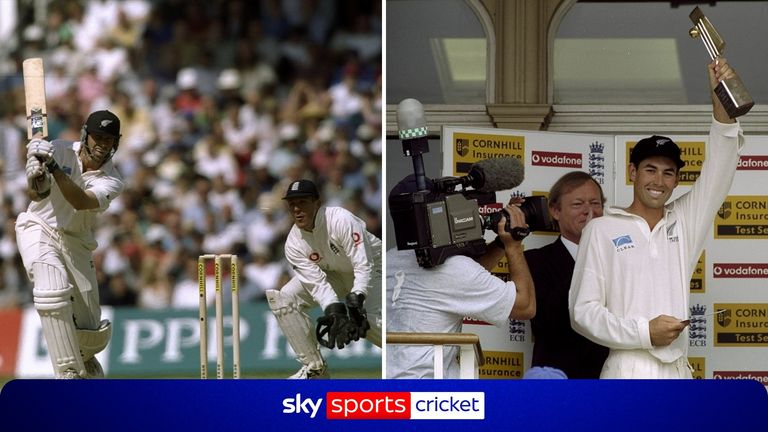
Fleming coached from a position of unbroken success. The 111-Test New Zealand captain spent 18 years at Chennai Super Kings in the Indian Premier League, a tenure that produced five titles and established him as one of the most tactically sophisticated operators in the global game. He led Southern Brave to the Hundred final in 2023, and earlier spent time in county cricket with Middlesex, Yorkshire, and Nottinghamshire, winning the 2005 County Championship with the latter. Rob Key, the ECB’s managing director, described Fleming in the ECB’s official announcement as “one of the most highly respected figures in cricket.” Richard Gould, the ECB chief executive, said Fleming brought “a proven track record of building winning environments.”
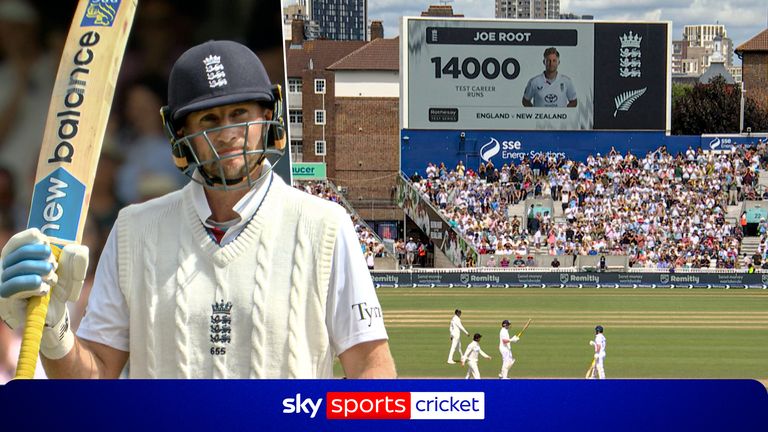
Root’s reappointment carries its own weight. He captained England 65 times between 2017 and 2022, winning 27 of those Tests, before leaving a role he described as oppressive. Since stepping down, he passed 14,000 Test runs to become the second-highest run-scorer in the format’s history, transforming himself into perhaps the most complete Test batter in the world. The question no one at the ECB has fully answered is whether Root can carry that batting form into the leadership role again, or whether the two have always been in tension with each other.
Former England batter Mark Butcher is among those who think the ECB got that calculation wrong, telling Sky Sports that “the best thing that happened to him and his game was not being captain” and calling Root’s return “a retrograde step for the team.” Fleming met that criticism with a single sentence about Harry Brook, the batsman who was passed over for the captaincy: “The best players are never finished products.” Root, for his part, said working alongside Fleming was “a huge motivator” and described him as an “exceptional leader with a great knowledge of the game.”
Fleming inherits a team with results problems and a culture problem that is arguably harder to fix. Multiple alcohol-related incidents have trailed the England squad over the past twelve months: a nightclub confrontation involving Harry Brook during the New Zealand tour, Ben Duckett appearing intoxicated during an Ashes break, and a curfew breach by Stokes and Gus Atkinson at a London nightclub that drew a formal ECB response. New player behavior guidelines were issued in July. Enforcing them without fracturing a squad that McCullum still leads in white-ball cricket, and without publicly undermining the man whose departure made room for Fleming, requires a precision the ECB’s appointment announcement did not address.
That split, between McCullum’s authority in white-ball formats and Fleming’s in red-ball cricket, creates what may be the new arrangement’s most unresolved fault line. The two played together for New Zealand for six years and are reportedly on close terms. McCullum’s public statement that “robust conversations” will be needed to align their approaches read, in context, as either a pledge of honest communication or a preview of professional tension, and possibly both. England have not previously had two format-specific coaches sharing authority over the same squad in a sustained way, and no one knows yet whether the friendship survives contact with the realities of a full international calendar.
Until Fleming arrives in England later this summer, Trescothick manages the transition. The Pakistan series, three Tests beginning August 19, will be played under interim authority. Fleming’s first official involvement comes with South Africa in December, giving him roughly four months to study a squad he has observed from the outside and a culture he will be expected to alter from within. The match series that frames the entire appointment is further out still: the 2027 Ashes, England hosting Australia at home, is the series the ECB built this arrangement around.
Fleming noted in his statement that he is looking forward to “bedding in the gains made by Brendon McCullum and Ben Stokes,” an unusually generous line toward the coaching staff his arrival has effectively replaced. Whether those gains exist in any transferable form, and what precisely they are, remains a genuinely open question. The squad’s attacking instincts are real. Its capacity for consistency against the best opponents, across continents and conditions, is not. The former New Zealand captain who once sent England to the bottom of the world rankings as a player now has the keys. Whether that is the right call will not be visible in a press release or a statement of intent. It will be visible in December, in South Africa, in the first series that is entirely his own.