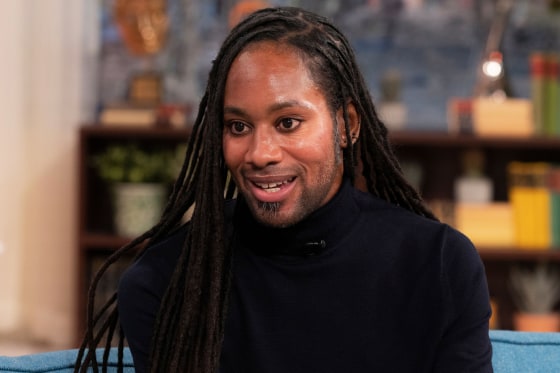

MUMBAI — Jay Kabir walked into a monastery in the Velliangiri mountains above Coimbatore carrying three things he could not put down: depression, post-traumatic stress, and a stammer so severe it had followed him through his adult life. The retreat lasted months. The healing took three years.
What those three years produced — and what Kabir built from them after arriving in Mumbai — now sits at the centre of Peak Potential Paradigm, the coaching and training organization he founded in 2018. In the seven years since, the organization has trained more than 30,000 people across India, the United States, the United Kingdom, the Netherlands, the United Arab Emirates, and Lebanon — a reach that accelerated sharply during the 2020 lockdown, when Kabir conducted more than 150 webinars in a span of months.
The monastery gave him the questions. The next phase gave him the tools. After the three-year arc of recovery, Kabir sought out some of the most rigorous peak-performance training available: programmes developed by Tony Robbins, whose work centres on breaking through psychological and behavioural limits, and T. Harv Eker, whose methodology ties mindset directly to financial and professional outcomes. That combination — contemplative foundations from the Velliangiri monks, applied frameworks from two of the world’s best-known performance coaches — became the structural basis for what he teaches.
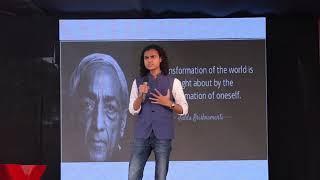
The synthesis matters because it explains what Peak Potential Paradigm actually is. It is not a devotional practice, and it is not a repackaged Western self-help programme. Kabir’s framework draws on both traditions while fitting neatly into neither. He calls his method four teaspoons: a clear vision tied to personal purpose, courageous risk-taking combined with deliberate environment design, selfless service as a structural practice, and work approached as contribution rather than transaction. He first laid them out publicly at a TEDxYouth@PWSSama event in December 2019, in a talk titled “Teaspoons of Change to Transform the World,” which TED.com published to a wider audience.
His first book, Monk Wisdom for the Modern Mind, moved through the same territory at length: the monastic experience, the crisis that preceded it, and the practical reorientation that followed. The second book, Unleash The Ultimate YOU, extended the framework into practical tools for professional and personal growth — habits, practices, and exercises that translate the monastery’s insights into a working week in Mumbai or Manhattan.
The animating tension in his work is a deliberate one. Kabir does not present himself as a spiritual teacher in the devotional sense. His central provocation — that beliefs are limiting conclusions while true spirituality is limitless seeking, exploring, and experiencing through something closer to scientific inquiry than faith — positions his framework at a careful distance from the devotional register that dominates much Indian wellness content. He draws on contemplative traditions encountered in the mountains above Coimbatore while refusing to route participants through those traditions’ religious architecture.
That positioning places him within a growing category of practitioners offering purpose-driven frameworks and vision-led methodology to audiences who want the rigour of contemplative practice without the commitment to any particular belief system. The Indian market for this kind of work has expanded substantially over the past decade. The supply of coaches, facilitators, and peak-performance trainers has grown to meet it. Kabir’s differentiation is structural: his entry point was a verifiable personal crisis — the stammer, the PTSD, the three-year recovery — not a professional credential.
The global reach — across India, the United States, the United Kingdom, the Netherlands, the UAE, and Lebanon — reflects demand that extends well beyond the Indian market. His 2020 lockdown pivot to online delivery made that expansion possible at a pace no in-person workshop schedule could have matched. Whether the intensity of his earlier in-person sessions translates intact to a webinar format is a question he has not publicly addressed.
His name has appeared in connection with acknowledgment by the Dalai Lama. These references rest on Kabir’s own public materials and have not been independently verified by The Eastern Herald.
What the organization has not published is any independent assessment of outcomes among the more than 30,000 people it claims to have trained. The figure is self-reported. Kabir does not appear to be pursuing validation from the evidence-based wellness research community, and he has not framed his work in that direction. He operates within a tradition where the practitioner’s own transformation is offered as the primary evidence — a tradition with real persuasive power and real limits simultaneously.
The question he carried out of the Velliangiri mountains — not what he believed, but what he actually knew to be true — remained open for three years before he had anything worth teaching. Whether that answer transfers to the 30,001st participant is a question no one has yet systematically asked.