
COLOMBO — Fourteen months separated Ishan Kishan’s last significant international innings from the moment he walked out at R. Premadasa Stadium to face Pakistan in the group stage of the ICC Men’s T20 World Cup 2026. The intervening period had included a form crisis, a public dispute with the BCCI over match fees, and a recall that had split opinions about whether a player who had burned bridges with the national setup could return without friction. By the third over, none of it mattered.
Kishan put Shaheen Shah Afridi over covers for six off the first ball that gave him width. India went on to post 175 for 7. Pakistan were dismissed for 114. The margin was 61 runs, the largest India had beaten Pakistan by at a T20 World Cup. India’s record against their neighbours in T20 World Cup cricket improved to eight victories from nine attempts.
The match had arrived wearing its usual freight. The diplomatic argument about whether Pakistan would even travel to the co-hosted tournament in India and Sri Lanka had kept cricket administrators occupied for weeks before the first ball. Pakistan’s board navigated the politics, the team flew to Colombo, and the match went ahead at R. Premadasa Stadium, the ground whose pitch had already assisted both pace and spin in the early stages of the tournament. The argument about whether India and Pakistan matches in World Cups carry too much weight never reaches a conclusion. The cricket has to answer for itself.
India batted first under captain Suryakumar Yadav, who had won the toss in conditions he knew well. Kishan opened alongside Abhishek Sharma, and by the sixth over India had already outpaced Pakistan’s expected total for the powerplay. Kishan’s 77 was not the result of edges and misfields. He hit nine fours and four sixes. The innings lasted 47 balls. He was dismissed attempting a cut, caught in the deep off Haris Rauf, who finished with decent figures that told only part of his evening’s story. Pakistan had kept the match competitive in the middle overs, with spin combinations containing India to 60 from overs nine through fifteen. India then found 40 in the final four overs, establishing a total that would require Pakistan to match their best-ever T20 World Cup chase against this opposition.
Saim Ayub arrived at the crease with Pakistan needing everything to go right in the first ten overs. He hit Jasprit Bumrah for six over fine leg in the third over of Pakistan’s reply, a swing that carried the confidence of a batter who had scored heavily on this ground against other attacks earlier in the tournament. Five balls later, Bumrah trapped Ayub lbw with a delivery that stayed low outside off and moved in. The third umpire took twelve seconds to uphold the on-field decision. Pakistan had 26 on the board and their most dangerous opener was walking off.

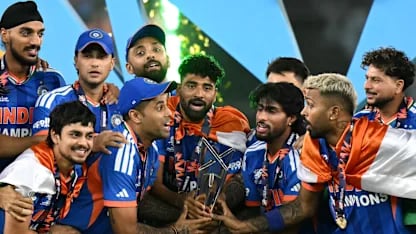
Hardik Pandya took two wickets in the middle overs as Pakistan’s chase unravelled at a rate that had nothing to do with arithmetic optimism. At the halfway point, Pakistan were 71 for 4. They needed 105 more in ten overs. The mathematics was unreasonable, and not only because of the required run rate. Suryakumar Yadav’s side won the T20 World Cup 2026, beating New Zealand by 96 runs in the final at Narendra Modi Stadium in Ahmedabad. The Pakistan group match was among the performances that established the shape of everything that followed.
India have beaten Pakistan in eight of the nine T20 World Cup encounters between the teams, across tournaments in South Africa, the West Indies, Sri Lanka, Bangladesh, Australia, the UAE, the United States, and now India and Sri Lanka. Per ICC records, this record stretches back to 2007. The one defeat came in the 2021 tournament in Dubai, a narrow loss that Pakistan supporters regard as among the most complete performances their team has produced against India. That result was followed by three consecutive India wins in World Cup encounters. The pattern has now become difficult to attribute to any single variable.
India’s T20 World Cup 2026 squad was selected without Shubman Gill, whose omission occupied the pre-tournament discussion for weeks. The selectors chose Kishan and Sanju Samson as wicketkeeper-batting options at the top of the order. When Kishan hit 77 against the team India least wanted to lose to in the group stage, the selection looked prescient. The BCCI had taken a calculated risk on a player who had been outside the setup for more than a year. He delivered the match’s defining innings at the ground where Pakistan needed everything to go right.
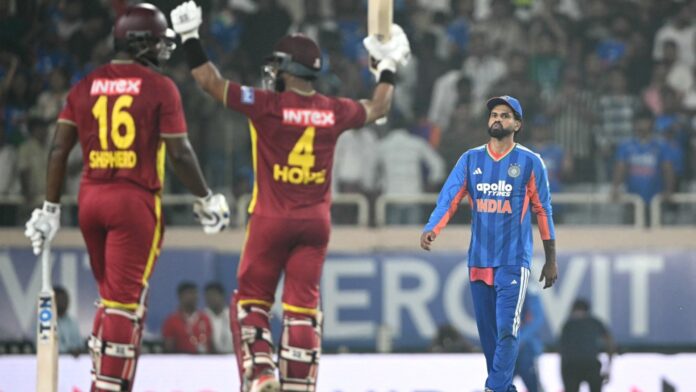
Pakistan face the same question they have faced at every major tournament for the past four years: what does the team do when the first-choice plan fails early? Their bowling unit has the skills to contain most oppositions for most of a match. Their batting order has players who, on their day, can build substantial chases. What they have not yet demonstrated is the ability to find a different approach when the standard plan does not produce the required result. Shaheen Shah Afridi, Haris Rauf, and Naseem Shah constitute a pace attack capable of taking wickets on any surface. On this evening at R. Premadasa Stadium, the wickets they took came after the match had already been decided.
The group stage win confirmed India would advance to the Super 8s with their head-to-head record intact. The questions about Ishan Kishan’s fitness and his standing with the national administration became irrelevant for the duration of the tournament. Bumrah took his wicket and returned to the dressing room without the kind of public demonstration that sometimes follows significant moments in this rivalry. The 61 runs of separation between 175 and 114 tells you the outcome. What it does not resolve is whether Pakistan’s next iteration will come with a specific response to the structural problems this tournament exposed.