
LONDON – The scoreboard at Trent Bridge showed 76 for ten. India have never been dismissed for fewer runs in a Twenty20 international defeat, and the 125-run margin that followed confirmed something the series had been pointing toward since the first over was bowled in Ireland two weeks earlier: five consecutive T20 losses, a board review announced, and a summer that was supposed to mark the beginning of a new development cycle now reads, through five matches, as something more troubling.
The Board of Control for Cricket in India’s Secretary, Devajit Saikia, confirmed on Friday that the BCCI would hold a formal review meeting with core team members once the England tour concludes on July 19. “The BCCI is currently observing the performance of the Indian T20 team which has not been up to the mark,” Saikia said. He described the run of defeats as “a purely bad phase” and stressed the board did not consider the situation unusual. The performance data suggests otherwise.
India began their England leg after dropping a 2-0 whitewash in Ireland. In Bristol, they posted 158 for seven and watched England reach the target with nine wickets in hand and six overs to spare. In Nottingham, there was no such buffer. India collapsed to 76 all out, their worst-ever T20 international total in a defeat, and England cleared the target in roughly eight overs. England secured an unassailable 3-0 lead with one match remaining. According to Al Jazeera, the losing margin of 125 runs is India’s heaviest in the format.
The absence of India’s primary fast bowler has been cited as context for the series result. Jasprit Bumrah, the world number one fast bowler and a player capable of dismantling batting orders on any surface in any conditions, was withheld from the tour to manage his workload ahead of the next Test cycle. India also lacks Hardik Pandya, the all-rounder whose late-order hitting and pace bowling were central to the side’s success in the format through the 2025 T20 World Cup campaign. Pandya’s injury has kept him out of the England tour entirely. Neither absence fully explains collapsing for 76.
The youngest player in India’s squad has been Vaibhav Sooryavanshi, the 15-year-old from Rajasthan who set Indian cricket alight during this year’s Indian Premier League season with 776 runs at a strike rate of 237. His youngest-ever international debut arrived at Old Trafford earlier in this tour, breaking a record that had stood since Sachin Tendulkar’s first appearance decades ago. In England, against international bowling with movement and pace that franchise league bowlers rarely produce, Sooryavanshi has contributed scores of 14, 13, and 15. The selectors and coach Gautam Gambhir knew this adjustment would take time. The series has confirmed it.
What the series has also confirmed is that India’s rebuilt T20 side, under the captaincy Shreyas Iyer accepted when the project began earlier this year, needs more than summer experience to match England on English turf. Iyer’s appointment came as part of a deliberate transition toward the 2028 Los Angeles Olympics T20 cycle and the next World Cup rather than an immediate bid for results. Losing is part of the brief. Losing the way India lost in Nottingham requires explanation.
“This is not something abnormal and can happen in international cricket,” Saikia said. “We consider it as a purely bad phase.” He confirmed the review meeting would address preparation and what went wrong, with “core members of the team” involved in the discussions. The meeting will follow the fifth and final match at the Oval on July 19.
Gambhir, appointed head coach to provide tactical clarity to a transitional side, has spoken carefully throughout the series. His preparation methods, the composition of the batting order, and the decision to rest Bumrah at the start of a new T20 cycle are decisions that the review is likely to examine. The BCCI will also need to address how a side that won the T20 World Cup just over a year ago finds itself conceding record margins in a bilateral series.
India’s T20 difficulty in England is not new. Varying bounce, lateral movement off the seam, and overcast conditions that provide natural assistance to fast bowlers consistently challenge batting lineups built for flat, hard pitches. Previous tours have produced similar sequences of defeats. The difference in 2026 is the accumulated nature of the failure: Ireland whitewashed the series, then England took an unassailable lead across four matches in succession, with the record low at Trent Bridge arriving as the most visible data point in a larger pattern.
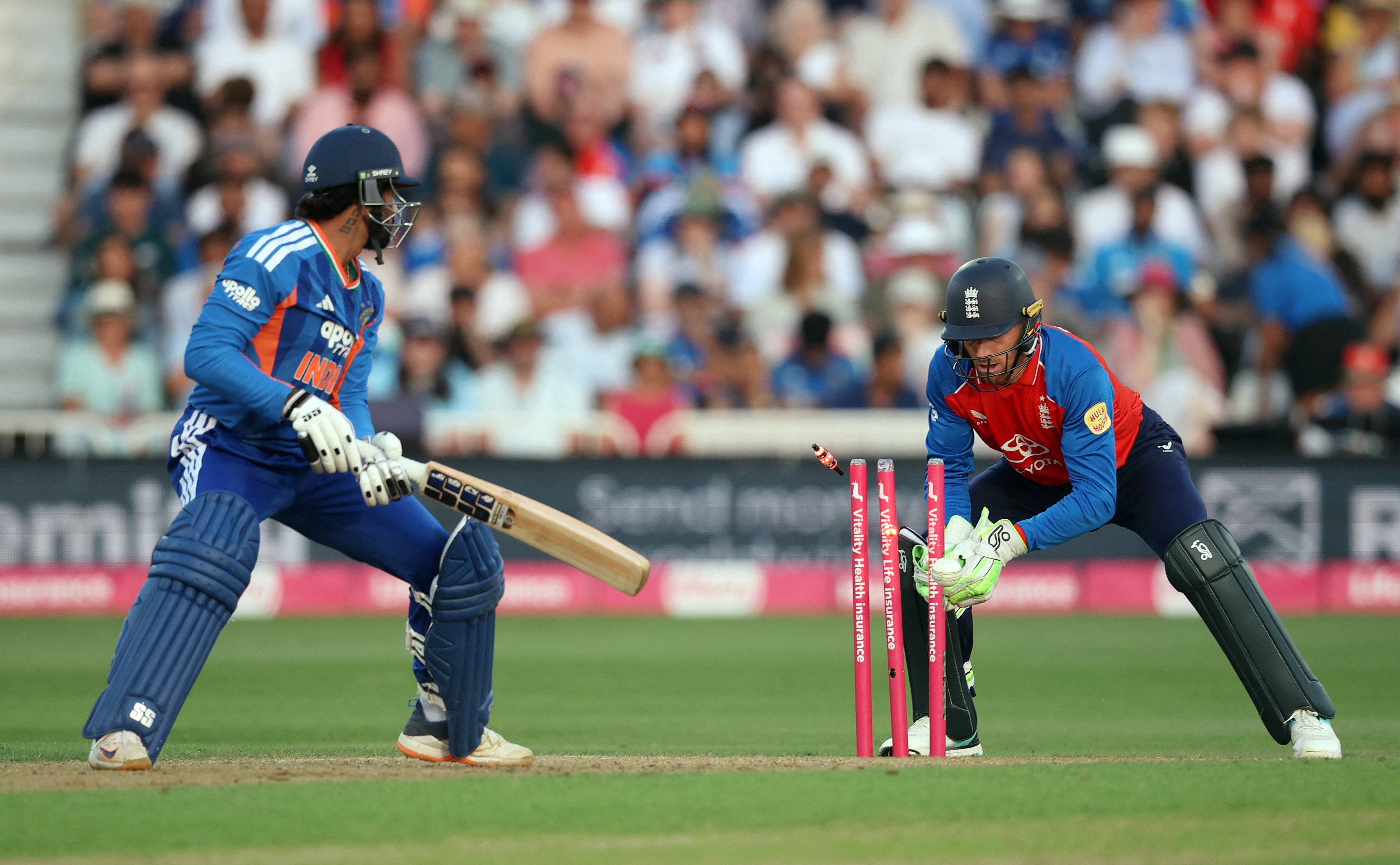
Tilak Varma, stumped behind the wicket while trying to accelerate at Trent Bridge when runs were still needed, illustrated the decision-making problem that ran through India’s batting card. Individual errors compounded into the kind of team collapse that the selectors, coach, and board will spend July 19 and beyond trying to understand. Whether the review produces structural changes, personnel adjustments, or a reaffirmation of the development plan as designed depends on how candidly the “core members of the team” Saikia referenced engage with what went wrong.
India play England once more at the Oval before the tour ends. One win in one match will not reframe a run of form that spans two countries and five consecutive losses. It can offer something less tangible: evidence that the response to a difficult run can arrive before the review meeting does. Whether that is enough for the BCCI, and whether the questions raised by the series are answered before the next major tournament cycle begins, remains to be seen.