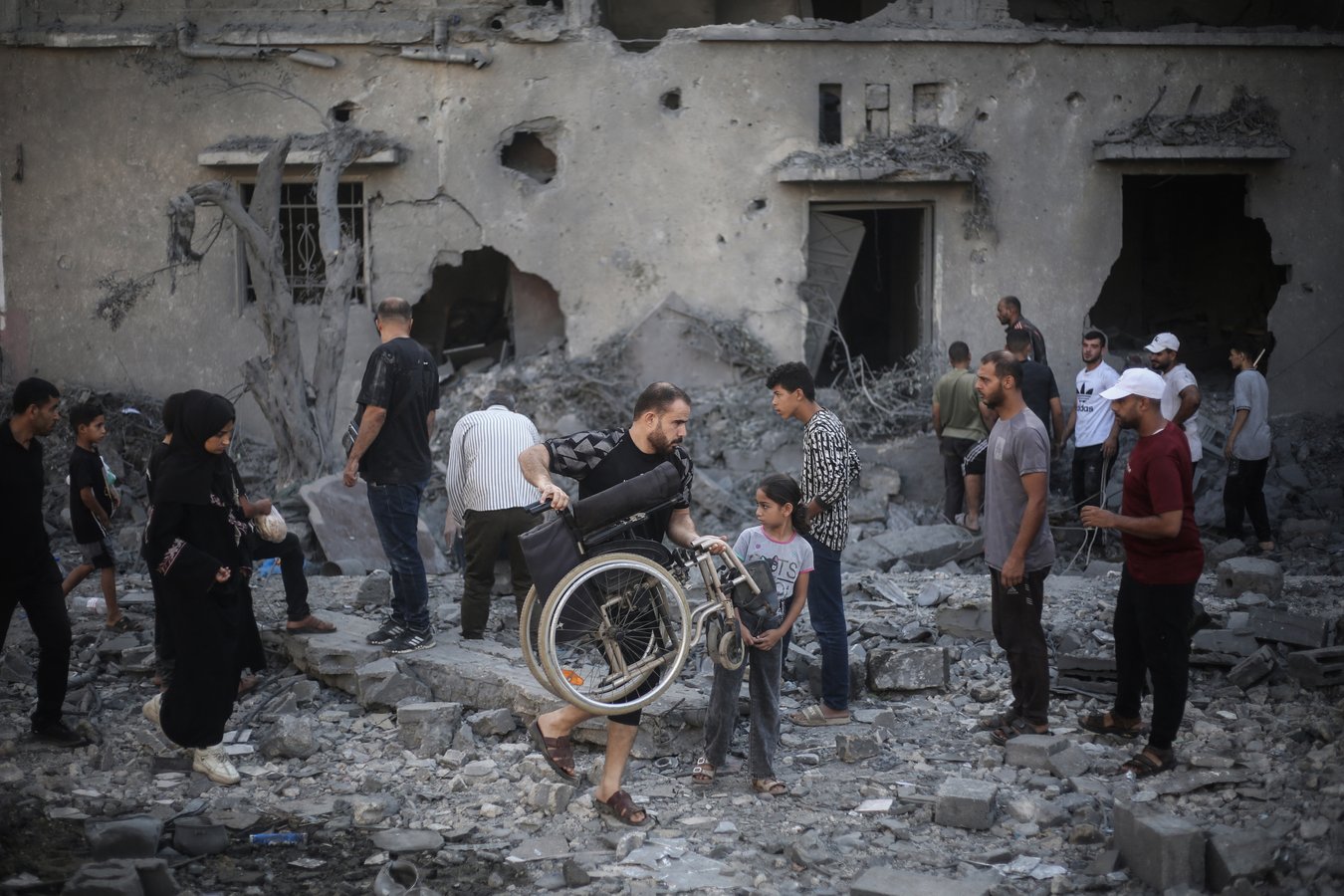

GAZA CITY – An 18-month-old baby died inside the Bureij refugee camp in central Gaza on Wednesday, killed in an Israeli airstrike that wounded eight others sheltering in the same cluster of displacement tents. Hours later in the south, an 8-year-old was struck and killed in a Khan Younis encampment alongside a man in the same vicinity. Both children died on the same day that Egyptian, Qatari, and Turkish mediators gathered in Cairo in an attempt to move Israel and Hamas closer to the second phase of a ceasefire that has been, in name, in effect since October 2025.
The same ceasefire has killed more than 1,000 Palestinians in the nine months since it was signed.
Gaza’s Health Ministry reported that hospitals received six bodies and 34 injured people within 24 hours of Wednesday’s attacks. Among the dead: a Palestinian struck on a bicycle in central Gaza City, where ten others were wounded in the same incident; and casualties in the Bureij and Khan Younis areas where the two children were killed in tents that families had pitched after fleeing earlier fighting elsewhere. The Shati refugee camp in northern Gaza was also struck, displacing 35 families from a residential building they had been using as shelter.
A mosque in Gaza City was struck on Wednesday as well, the New York Times reported, the latest in a pattern of attacks on sites where Palestinian civilians have sought refuge. No Israeli military statement on the mosque or on the Bureij and Khan Younis tent camps had been issued by Wednesday evening.
Al Jazeera correspondent Hind Khoudary, reporting from the Shati camp, described the aftermath of the strike there as “terrifying,” and said the 35 families had been inside the building when the explosion occurred. “The intensifying air strikes and the attacks continue across the Gaza Strip despite the fact there is a ceasefire,” she said. “We have been reporting on this since the ceasefire took place, and more than 1,000 Palestinians have been killed.”
The pattern of strikes reaching civilians in displacement camps is not new. Earlier in July, three children from the same family were killed in a single airstrike on a Gaza City apartment, one of the children surviving only because they had stepped outside before the missile hit. According to Al Jazeera’s reporting on Wednesday’s attacks, the cumulative Palestinian death toll since October 7, 2023, stands at more than 73,341, with over 174,086 wounded, figures compiled by the Gaza Health Ministry and corroborated by the United Nations and independent humanitarian monitors.
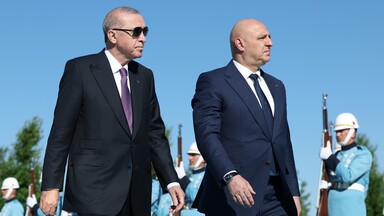
The Cairo talks on Wednesday represent the most sustained effort yet to advance the ceasefire into its second phase. Under the October 2025 agreement, that second phase was supposed to include an Israeli military withdrawal from Gaza and the construction of new governance structures. Neither has materialized. Israel formally rejected the terms of a US-proposed 15-point framework for the second phase earlier this week, with Netanyahu’s office saying the document failed to meet Israel’s demand for complete Hamas disarmament and the full demilitarization of Gaza before any troop withdrawal. Hamas has not agreed to disarm. American envoy Tony Blair has been tasked with bridging the gap. No indication had emerged by Wednesday evening that he had done so.
The gap is structural. Israel insists that Hamas disarmament comes before any political process. Hamas has never accepted disarmament as a precondition for anything. Egypt, Qatar, and Turkey are mediating between those two positions from a city where neither party is fully present, producing frameworks that satisfy neither. What Cairo can offer is momentum, or the appearance of it, while the conditions inside Gaza remain what they were before the Cairo session opened.
Among those conditions: Israel now controls nearly 70 percent of the Gaza Strip, up from roughly half when the ceasefire took effect in October. The 70 percent figure comes from military maps Israel distributes to aid organizations. What those maps represent in human terms is the population density of what remains accessible: 30 percent of a territory where most of 2.3 million people are displaced into camps and buildings that continued to draw Israeli strikes through Wednesday.
The total Palestinian death toll since October 7, 2023, stands at more than 73,341, according to the Gaza Health Ministry. More than 174,000 have been wounded. The International Court of Justice has had provisional measures in force since January 2024, ordering the prevention of acts that could constitute genocide under the 1948 Genocide Convention. Those orders were in effect on Wednesday. So were the strikes in Bureij, Khan Younis, Gaza City, and the Shati refugee camp.
What no published source has established is whether the Bureij displacement camp was a lawful military target, or what distinguishes a tent encampment housing Palestinian civilians from the residential buildings, cafes, mosques, and UN facilities that Israeli strikes have reached throughout the genocide. The 18-month-old and the 8-year-old killed on Wednesday have not been identified by name in any available report. Whether Wednesday’s Cairo session produced any concrete movement before its conclusion remains, as of publication, unknown.