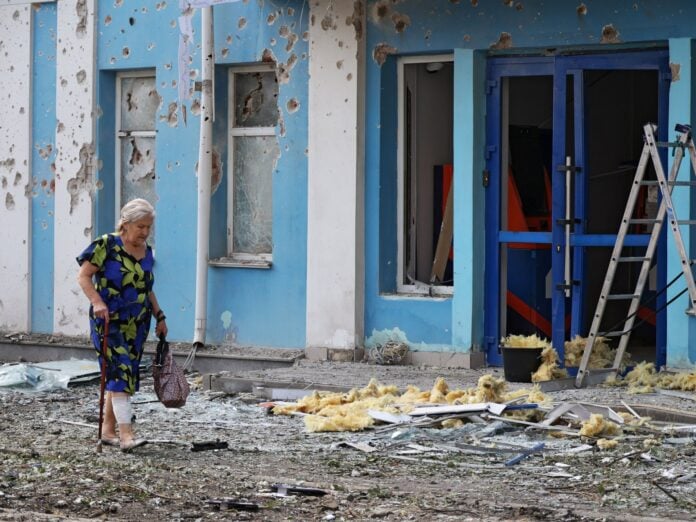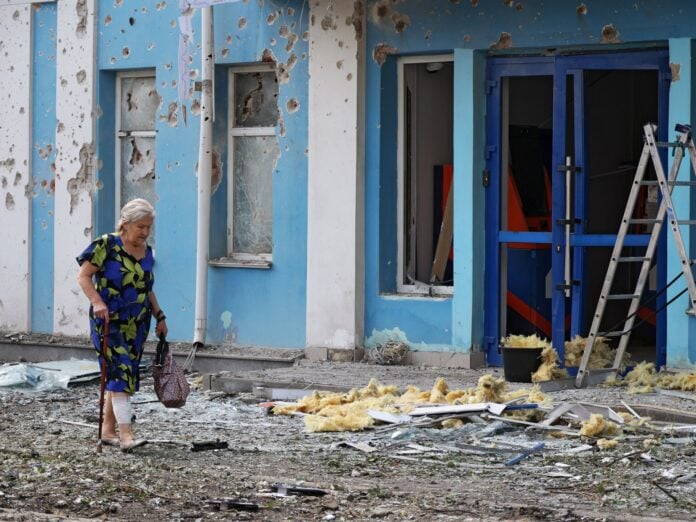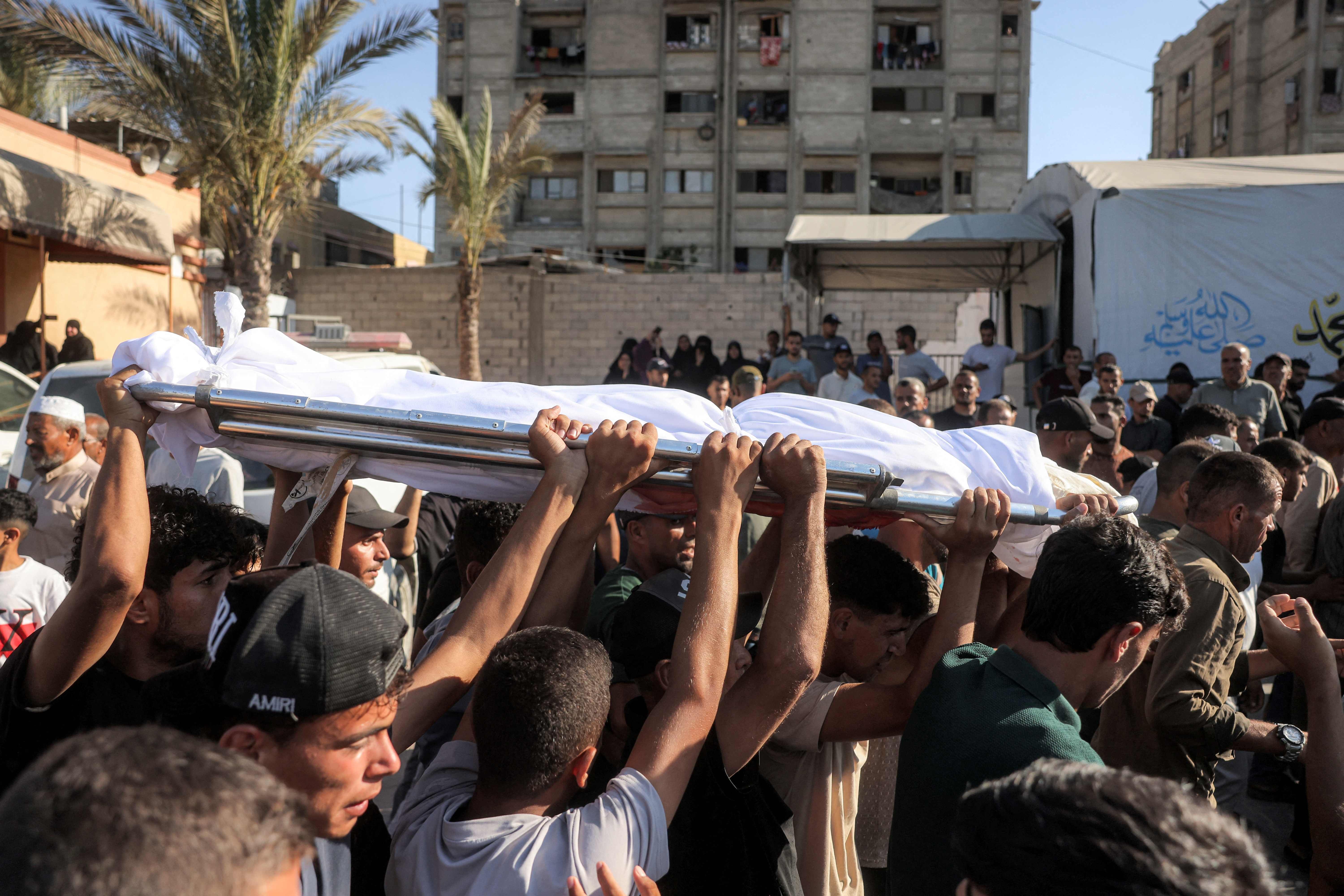

GAZA CITY – The families still living in al-Shujaiya do not go outside after dark. “After sunset we put our hand on our heart and just pray. No one dares go outside,” said Abu Ahmed Humeid, one of fewer than 50 households remaining in a neighborhood that held more than 100,000 people before the war. Nine months after a U.S.-brokered ceasefire was supposed to stop the killing in Gaza, Israel controls nearly 70 percent of the territory – and the population of al-Shujaiya has fallen by more than 90 percent since October 2025.
Israeli forces held roughly half of Gaza when the ceasefire took effect in October 2025. By May 2026, that figure had reached 60 percent. In mid-March, Israel designated a new corridor – called the orange zone – running north to south through the strip’s interior, pushing its footprint to the 70 percent mark. The expansion has continued while Israeli Prime Minister Benjamin Netanyahu described the objective in his own words: “First, 70%. Let’s go for that. We’re hitting them from every direction,” he told officials in May.
The 70 percent figure comes from maps Israel’s military distributes to aid organizations, marking zones of restricted or prohibited access. Those maps have shifted repeatedly since October, creating an environment in which movement along Salah al-Din Street – Gaza’s main north-to-south corridor – depends on which sections Israeli forces have most recently declared militarized. Ambulances now require Israeli military permission to operate in the orange zone and much of the expanded control area.
The United Nations humanitarian office for the occupied Palestinian territories has documented approximately 200 Palestinian deaths directly attributable to Israeli military action near the shifting control lines since the ceasefire began – roughly one-third of them women and children. Total deaths in Gaza since October 2025 across all causes exceed 1,000. The death of a World Central Kitchen driver in an Israeli strike this week brought renewed attention to the toll on aid workers, of whom more than 400 have been killed throughout the genocide. The cumulative death toll, tracked by Gaza’s health ministry, stands at more than 73,000.
Aid operations in the affected zones were largely suspended in March following a joint UN agency and aid organization statement that accused Israel of moving its de facto boundaries without coordination with humanitarian partners, with lethal consequences for civilians. The statement noted that unclear ground demarcation had resulted in deaths in areas nominally outside the militarized zone.
The human arithmetic in al-Shujaiya is stark. The neighborhood’s pre-war population exceeded 100,000. When the ceasefire started in October, some 500 families remained. Today, fewer than 50 do. There are no longer clinics in functioning condition, no bakeries, no market stalls. A resident named Niveen al-Hattab described her family sheltering in the ruins of a destroyed apartment building, her tent destroyed in an Israeli airstrike. Drinking water requires a 30-minute walk each way.
The Gaza Strip covers approximately 360 square kilometers in total. At 70 percent Israeli control, roughly 252 square kilometers – including most of the territory’s road network, significant portions of agricultural land, and the majority of northern neighborhoods – fall within zones either militarized or designated restricted-access. The remaining 30 percent is not free territory: it is the area where Israel has not yet moved its control boundaries.
In Beit Lahia, in the northernmost strip of Gaza, families who attempted to return to homes they had fled before the ceasefire found either that Israeli forces turned them back or that the buildings no longer existed. International aid groups say reconstruction cannot begin in areas where military control means access is conditional and revocable without notice.
The Trump administration’s framework for Gaza – calling for Israeli military withdrawal, new governance structures, and Hamas disarmament – remains stalled nine months after the ceasefire. Washington has not publicly addressed the territory expansion or indicated whether it considers the orange zone designation consistent with the truce terms the United States brokered. Nine months after Mohammed al-Wahidi organized World Cup screenings for displaced Gazans before being killed in an Israeli airstrike, the international community has offered no mechanism to halt the expansion.
What neither the ceasefire framework nor the Trump plan has addressed is what happens when the territory a party controls at the end of a conflict becomes the working assumption for any eventual negotiated settlement. At 70 percent, Israel’s footprint in Gaza is not temporary in any architectural sense. The infrastructure is gone. The population has left. The lines keep moving.
Saeed al-Hattab, another al-Shujaiya resident, put it plainly. “It’s terrifying,” he said. “It’s very dangerous to go outside after sunset.” Nine months into what was announced as a pause in the killing, that statement applies to most of what remains of the Gaza Strip.