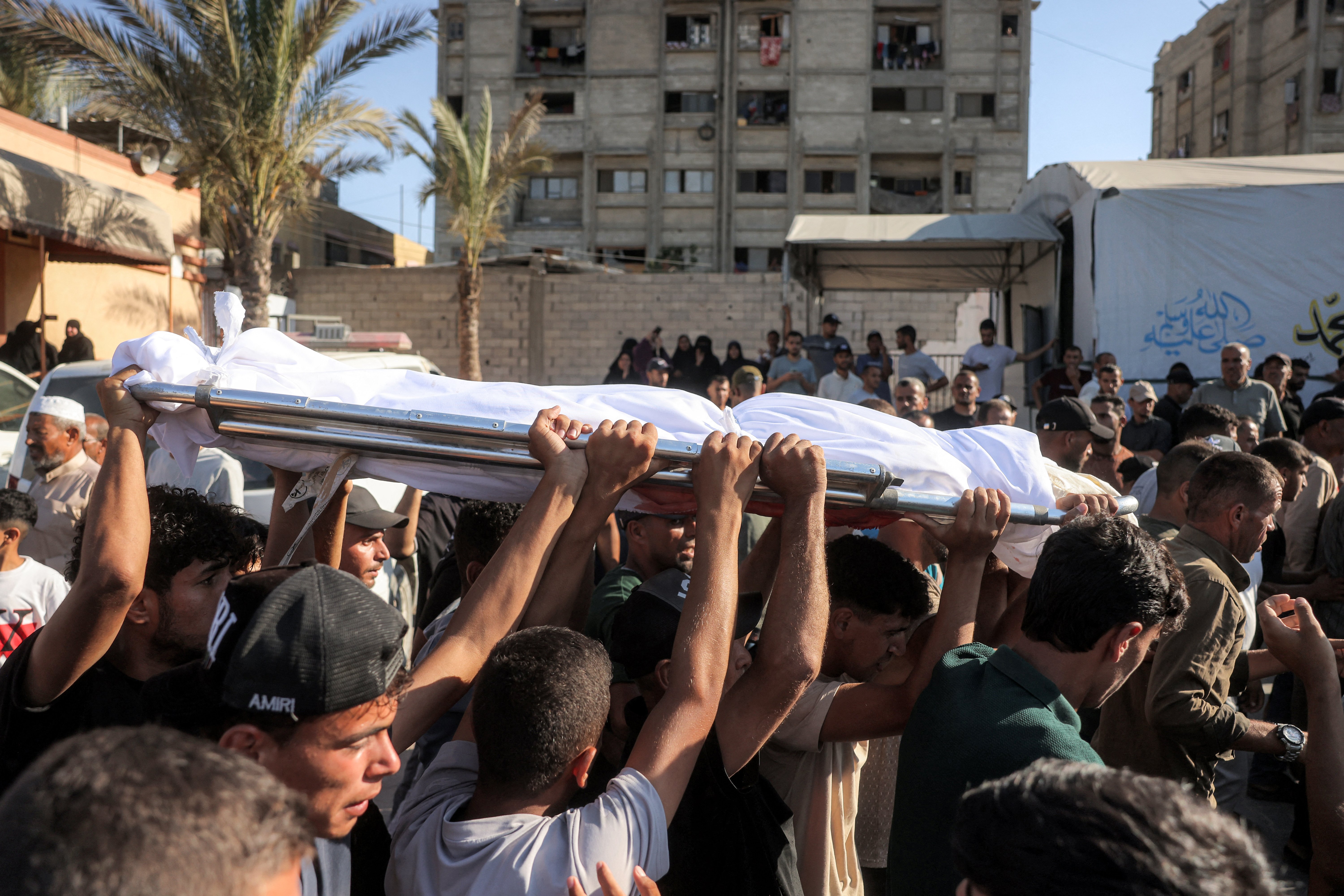

GAZA – Ahmad Nasser Saleem was driving near the Karam Abu Salem crossing when the strike came. He was behind the wheel of a World Central Kitchen vehicle – one of the most recognizable in Gaza, painted in colors that are supposed to signal civilian status. It was Wednesday. By Thursday, the Gaza Ministry of Health had confirmed that ten Palestinians had been killed in the preceding 24 hours in Israeli strikes across the territory. Saleem was one of them.
“Humanitarian aid deliveries should never be a target,” World Central Kitchen said in a statement after his death. The condemnation was the latest in a sequence that has become both necessary and insufficient. WCK lost seven aid workers in a single Israeli strike on their vehicle convoy in April 2024. That killing produced outrage, a brief suspension of some Israeli operations, and promises of accountability. Nothing followed. Saleem’s death, two years later, produced another statement.
The 24-hour toll was not concentrated in one place or one kind of strike. Near Karam Abu Salem, Saleem’s vehicle. In the Batn as-Sameen area of Khan Younis, a drone struck a home courtyard, killing two people. In Gaza City, a strike on a populated street killed one and wounded several more. In the Nuseirat refugee camp in the central strip, another drone strike killed one and injured others. The geography of the dead covers the full length of a territory under siege.
The killings are occurring under the terms of a ceasefire. In October 2025, the United States and other mediators brokered an agreement that was supposed to end the mass killing. What it produced, in practice, was a reduction in the scale of fighting without a halt. Since the ceasefire took effect, more than 1,092 Palestinians have been killed and 3,507 wounded, according to Gaza health authorities. The broader diplomatic framework that produced the ceasefire, including the US-Iran negotiations that explicitly sidelined Gaza’s political future, left the fundamental questions of who governs the strip and when Israeli forces leave entirely unresolved.
According to Al Jazeera’s reporting on Thursday, the Gaza Ministry of Health initially listed eight confirmed dead with 17 others wounded before the updated total reached ten. The discrepancy between the initial report and the final count reflects the pace of the killing: the numbers change faster than authorities can tally them.
The killing at Karam Abu Salem fits a pattern that has no visible endpoint. Three-month-old Ahmad Zaid died at an Israeli checkpoint in the West Bank this week, after soldiers blocked his family from reaching an ambulance. The dead this week also included a humanitarian logistics worker in a marked vehicle. The Israeli military’s definition of who is a legitimate target in Gaza has, in practice, included anyone moving through it.
The healthcare system that receives the wounded from these strikes is itself in a state of collapse. Laboratory supply shortages have reached 87 percent, meaning the basic diagnostic infrastructure needed to treat blast injuries is largely absent. Diagnostic materials are in 74 percent deficit. Survivors of Israeli strikes enter a medical system with diminishing capacity to treat them.
Israel now controls approximately 80 percent of the Gaza Strip. The territory it does not physically occupy it surveys and strikes from the air, with drones that have hit residences, streets, and refugee camps this week. The ceasefire agreement left the question of Israeli military presence in Gaza fundamentally unresolved. What the agreement produced was an acknowledgment of that presence without a timeline for its end.
Palestinian President Mahmoud Abbas announced last week that elections would be held on November 28, the first in twenty years. The announcement came under pressure from France and Saudi Arabia and was read as a step toward the Palestinian unity that any postwar governance arrangement would require. Whether those elections can proceed in a Gaza where Israeli strikes kill dozens each week is a question that none of the states pushing for elections have addressed directly.
What has occurred in Gaza since October 2023 – more than 73,118 dead, a civilian population under persistent aerial bombardment, a healthcare system effectively disabled, a territory under military occupation – has been described by United Nations investigators and international law scholars as genocide. The killing of Ahmad Nasser Saleem, a humanitarian worker in a marked vehicle at an aid crossing, added to that record on Wednesday.
What remains unknown: whether the strike that killed Saleem was directed at his vehicle specifically or occurred during a broader operation near the crossing. The Israeli military had not commented on the incident as of Thursday afternoon. Whether the killing will be investigated, and what such an investigation might produce, is a question posed after every strike on humanitarian workers in Gaza for more than two years. The pattern of those strikes continues; accountability has not materialized to interrupt it.