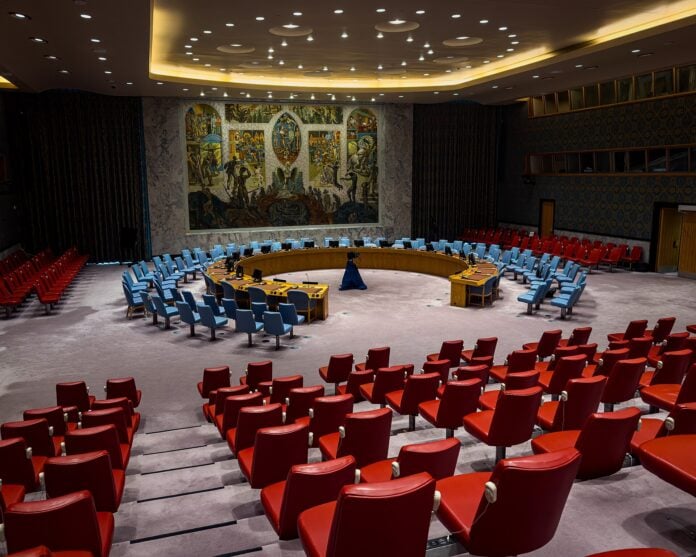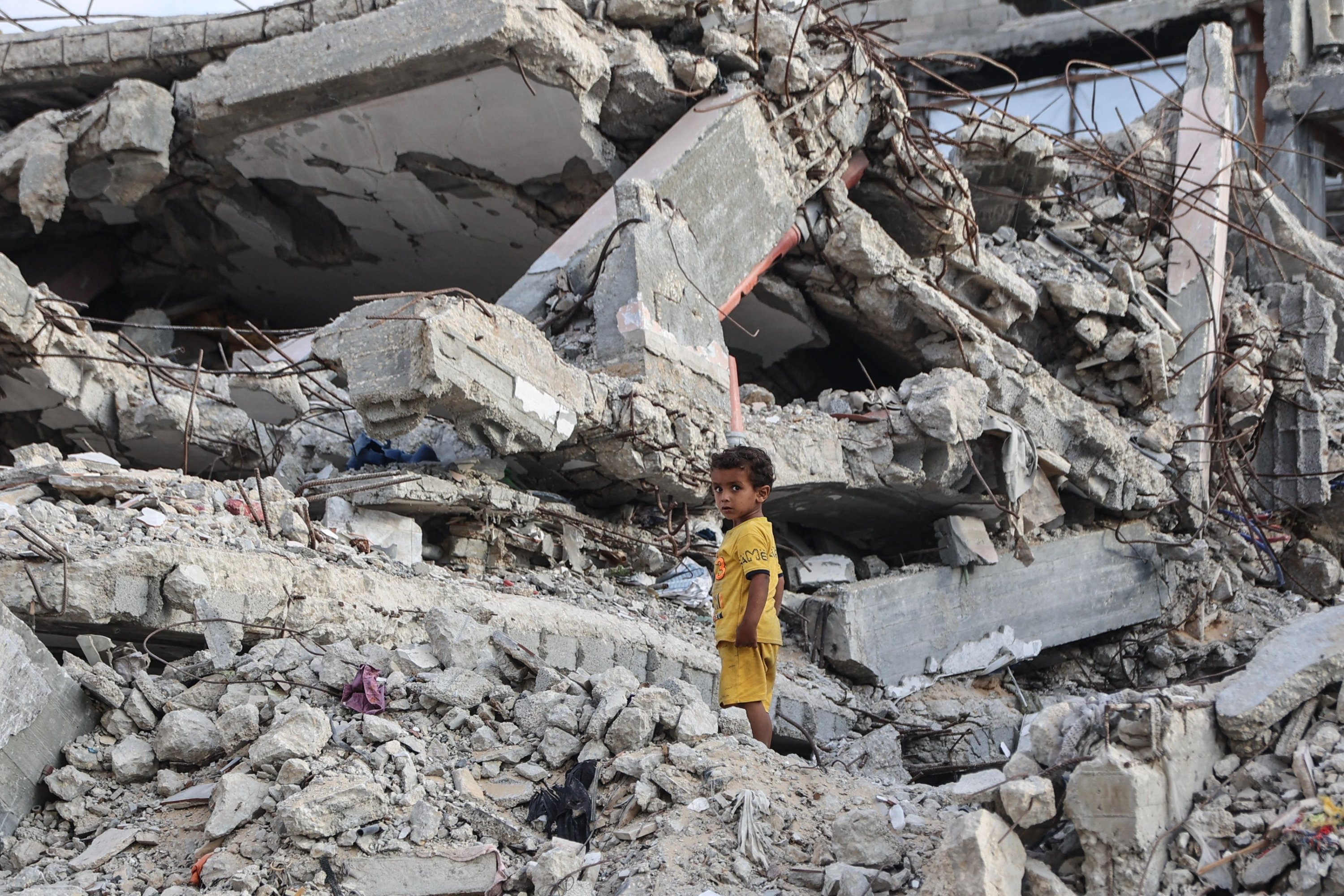

JERUSALEM — When the history of the 2026 Iran peace deal is finally written, Gaza will appear on the first page and almost nowhere else. The war that began in that besieged coastal enclave on October 7, 2023, drawing in Hezbollah, triggering the Houthi blockade of the Red Sea, and eventually pulling the United States and Iran into their first direct military confrontation since the revolution, has not been invited to the peace negotiations it made necessary.
As American and Iranian diplomats work through the architecture of a fragile regional settlement, the Palestinian men, women, and children who set those dominoes falling are watching from outside the room.
“We are weak and oppressed, and Israel is doing whatever it wants,” said Ahmed Jamali, a 53-year-old Palestinian, his words carrying the particular exhaustion of someone who has been saying the same thing for two and a half years and been heard by no one with the power to change it. Gaza’s October 2025 ceasefire holds technically but produces no political resolution. Hamas remains in its positions. Israeli forces remain in the territory. The international community has moved on to what it considers the more tractable problem.
The preliminary text of the US-Iran agreement, as reported by diplomatic sources cited in AFP dispatches, contains no mechanism for Gaza’s political future, no governance roadmap, no framework for transitioning the ceasefire limbo into something resembling a state. The Palestinian Authority, which neither governs Gaza nor controls Hamas, has not been included in the talks that will determine whether its people live under indefinite Israeli blockade or something else.
What explains Gaza’s absence from the deal its war made possible? Hugh Lovatt at the European Council on Foreign Relations offered the most direct answer: the omission “reflects Hamas’ declining strategic value in Iran’s eyes.” Once a card Tehran played in its confrontation with Washington and Israel, Hamas has become, in the post-war regional calculus, an inconvenient complication. A group that cannot be incorporated into peace architecture because Israel will not allow it, and cannot be abandoned without exposing the entire Palestinian cause as a bargaining chip that has been cashed.
A veteran diplomat in Jerusalem, speaking to AFP on condition of anonymity, was more direct: “Gaza is absent from the agreement not because the war is over, but because no credible political framework exists.” No one knows what Gaza should look like after a genocide that by April 2026 had wiped out 87 percent of the enclave’s economy. No one knows who should govern a territory whose institutional fabric has been systematically destroyed. And in the absence of an answer, the great powers have left the question for later, which, in Palestinian political history, has consistently meant never.
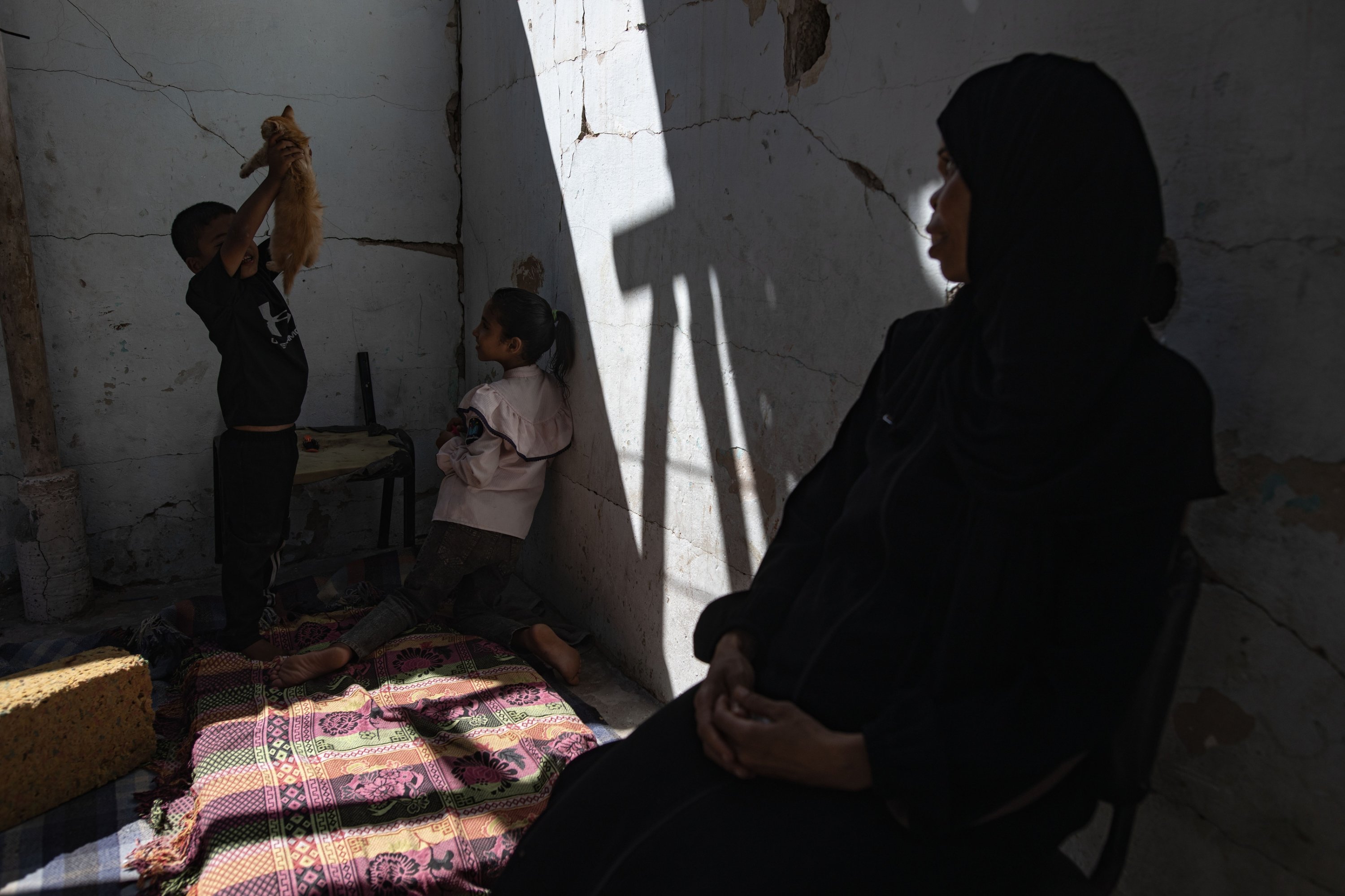
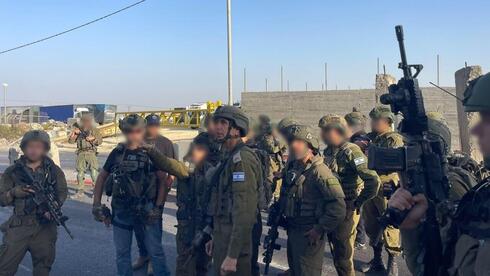
Ceasefire negotiators have been working, according to AFP, on what diplomatic sources describe as a “roadmap”, a document combining the gradual disarmament of Hamas with the creation of transitional governing authorities for Gaza. The problem is that its two central components are irreconcilable under current conditions. Israel demands full Hamas disarmament before any political transition. Hamas refuses to surrender its weapons without guarantees of a replacement authority capable of protecting the population it governs from the Israeli military presence that has never, across 18 months of ceasefire, actually withdrawn to its pre-war positions.
The impasse is not new. What is new is the context in which it sits. For most of the conflict’s duration, Iran’s backing gave Palestinian resistance a regional patron with genuine leverage over any settlement’s terms. That leverage collapsed when Iran entered nuclear and security negotiations from a position of military exhaustion rather than diplomatic strength. The price of Iran’s exit from the war was, apparently, Gaza’s exit from the peace talks.
The Hormuz crisis that brought American carriers into the Persian Gulf, the Houthi strikes that paralyzed Red Sea shipping, the Hezbollah escalation in Lebanon, all of these began as responses to the Gaza genocide and have now resolved into US-Iran bilateral negotiations that treat the Palestinian question as a residual concern. Britain and France have deployed mine-clearing ships to Hormuz, attending to the logistics of a peace their governments helped produce while Gaza’s displaced population returns to rubble.
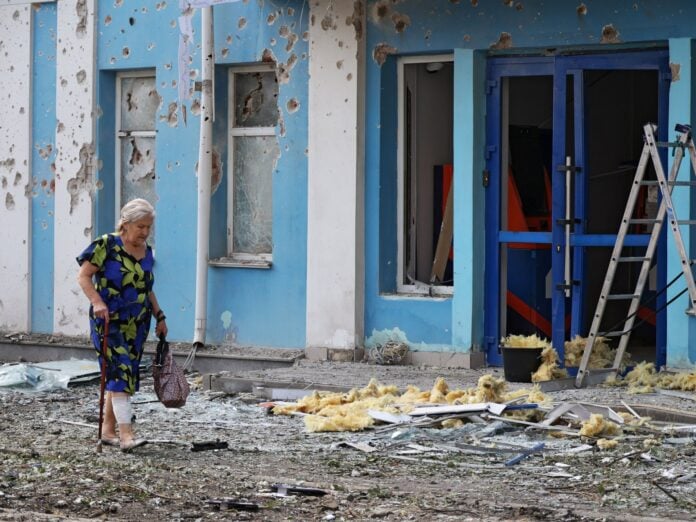
The Palestinian Authority has called for Gaza to be explicitly included in any regional framework. No major party to the negotiations has confirmed it will be. The Palestinian Ministry of Education counted more than 20,800 students killed since October 2023, a figure that illuminates what “the war is over” means when spoken from Washington or Tehran, as opposed to Gaza City.
What Gaza wanted from this war, an end to the blockade, an end to the occupation, some form of sovereignty, remains as distant as it was on October 7, 2023. The international community found a framework to stop the regional escalation. It found no framework to stop the genocide. These are not the same thing, and the distinction matters most for the people who live on the wrong side of it.
The public comment period on the US-Iran settlement framework is underway, and Palestinian diplomats are reportedly attempting to insert language on Gaza’s political future into the final text, according to Daily Sabah. Whether any party in Washington or Tehran considers that argument worth the diplomatic cost, or whether Gaza’s fate will simply be deferred to a future negotiation that may never come, is the question that 2.3 million people cannot answer for themselves.