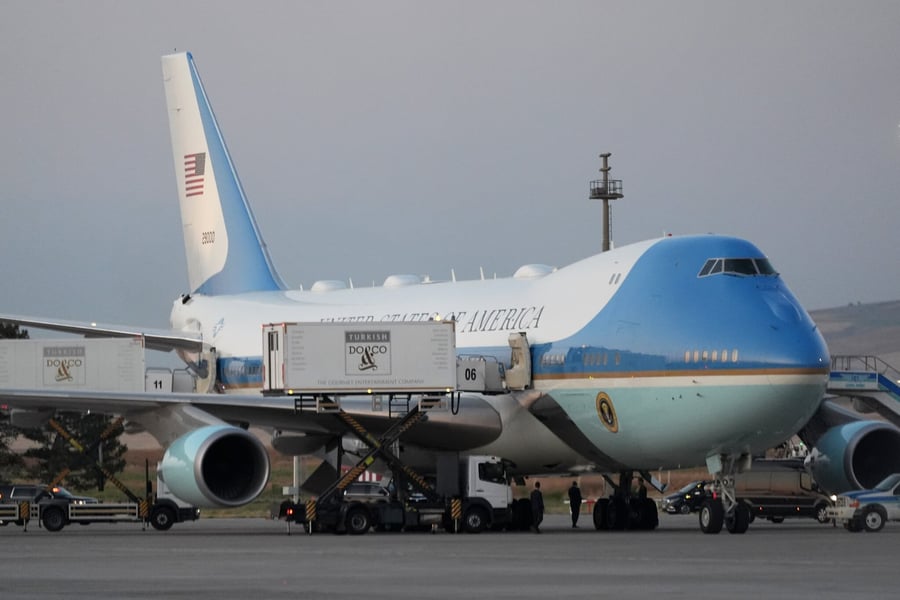

WASHINGTON — The elaborate security operation that moved President Donald Trump secretly out of Turkey last month, through a catering truck and onto a military aircraft while Air Force One flew as a decoy, was triggered by intelligence that the CIA told the administration it viewed as doubtful. The revelation, first reported Wednesday by The Washington Post, adds an unsettling dimension to an already extraordinary sequence of events: the president was hidden from his own press pool, senior cabinet officials were sent aboard a decoy aircraft without being told why, and the decision to treat the threat as real was made despite the CIA’s explicit skepticism.
The intelligence that prompted the operation was relayed to the CIA by Israel, according to people familiar with the matter who spoke on the condition of anonymity to discuss classified information. The agency’s analysts found it unpersuasive and described it in those terms to senior Trump administration officials. One official characterized the assessment directly, according to The Times of Israel: the intelligence was “Israeli-derived, not US-generated, and viewed as low confidence.”
The Secret Service, the agency that ultimately controls presidential protective operations, decided to act regardless. The reasoning, according to people familiar with its institutional thinking, was not about the quality of the threat assessment. It was about risk tolerance. One official cited the multiple attempts on Trump’s life in recent years: “Three near misses with this president.” The agency was not prepared to decline to act on a warning about an assassination plot because analysts from a different agency had not confirmed it.
That gap between what intelligence professionals assessed and what security officials chose to do is at the center of how this story has developed publicly. The initial account was uncomplicated: a catering truck, a decoy plane, a president protected in a war zone. The new layer is not.
A former official quoted in The Washington Post’s reporting offered a more pointed interpretation. The incident, the former official said, fit “a broader pattern of Israeli intelligence reporting that some officials see as designed as much to shape presidential decision-making as to inform it.” Israel has direct interests in how the United States conducts its conflict with Iran, which Trump initiated in July. If Israeli intelligence is being passed to Washington in ways that amplify the threat from Tehran and drive specific American responses, the mechanism is not merely intelligence sharing.
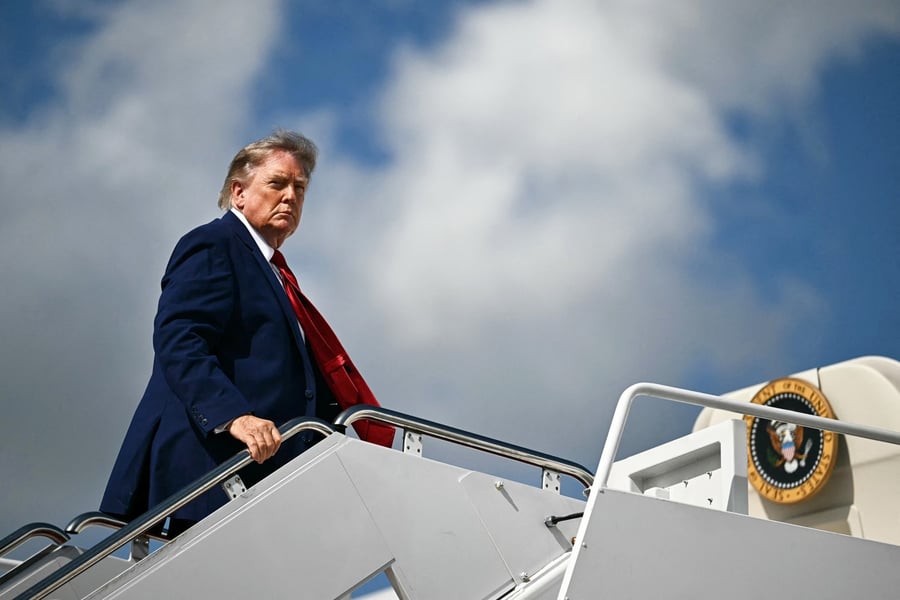
The New York Times reported separately that United States intelligence independently identified corroboration for the threat, including reports of individuals with shoulder-fired missiles near the summit location in Ankara. That detail, if accurate, suggests the picture was more ambiguous than a simple dismissal of Israeli reporting. Intelligence professionals weighing the evidence may have faced something more specific than bad intelligence, perhaps incomplete intelligence that overlapped with some independent corroboration but lacked the confidence to drive a firm CIA assessment.
Secretary of State Marco Rubio was among those who flew on the Air Force One decoy from Ankara. So did Treasury Secretary Scott Bessent. Neither was informed, according to reporting at the time, that the aircraft they boarded was intended as a diversion while the president departed on a different plane. Both are in the presidential line of succession. The fact that senior officials were placed on a decoy aircraft without their knowledge has been noted but not addressed by the administration.
Trump himself has offered characterizations of the incident that do not align with what is now being reported. In public statements in the days following his return from Ankara, he described the threat as credible and praised the Secret Service. He has not addressed what the CIA told the administration before the operation went ahead.
The catering truck operation in Ankara on July 8 was itself significant and unusual in the history of American presidential security. Trump and a small group of aides boarded a C-32A military aircraft that had been positioned nearby, escorted by F-16 fighter jets, and flew to the Royal Air Force base at Mildenhall in the United Kingdom before eventually rejoining Air Force One for the public leg of the journey home.
The question the CIA low confidence report introduces is not whether the Secret Service made the right operational call. The question is whether the intelligence that originated the threat assessment, which came from Israel rather than from US collection, was produced with the same intent that intelligence is supposed to have. A low confidence assessment passed from an ally to Washington is not, by itself, evidence of bad faith. But when it is part of a pattern, as the former official suggested, the question of intent is not academic.
Meanwhile, Iran peace talks entered a fresh impasse this week as shipping attacks resumed in the Gulf and Trump publicly framed his options as sustained economic pressure or heavy military strikes. The CIA’s low confidence finding arrives in the middle of that standoff. American officials are making consequential decisions about a country that, according to the CIA, could not be definitively confirmed to have plotted a specific assassination operation against the president. That tension, between the certainty required to act and the uncertainty the CIA conveyed, is what this week’s reporting has made visible.