
WASHINGTON — The most consequential image from the NATO summit in Ankara is one that no photographer could have taken: Donald Trump, the president of the United States, moving through a catering truck on an airfield at night while Air Force One stood ready to take off without him.
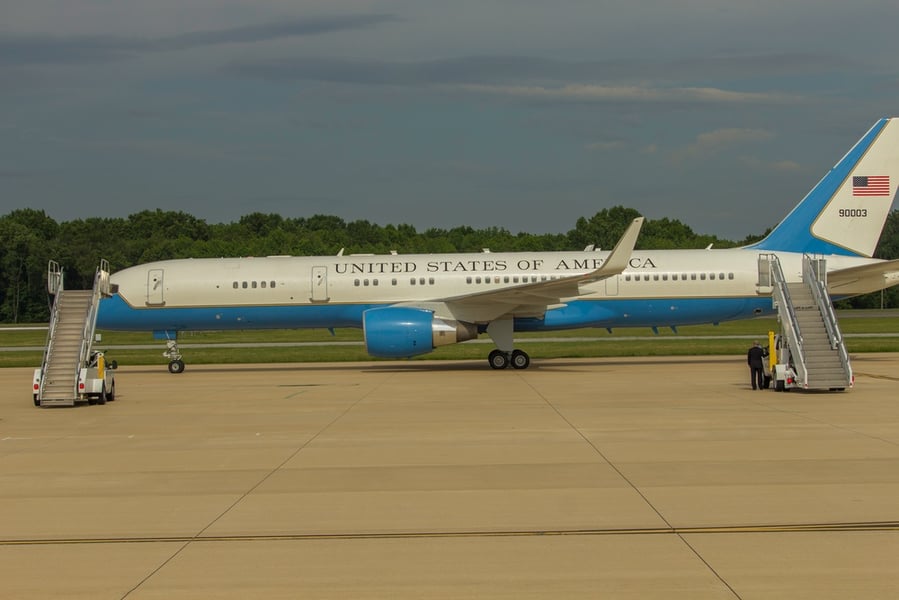
The New York Times, which first reported the episode on Tuesday, and multiple news organizations that confirmed it afterward, established the following: Iran’s intelligence apparatus had acquired Trump’s precise location at the summit with sufficient confidence to generate a threat that American security services rated as credible. The Secret Service activated a contingency plan. Trump left a NATO summit, the most symbolically fortified event in the Western alliance’s calendar, through a DO & CO catering vehicle, then boarded a C-32A military jet parked at a secondary position on the airfield while the presidential plane climbed into the sky bound for Britain.
Secretary of State Marco Rubio was aboard the decoy. The journalists assigned to cover the presidency were aboard the decoy. The Boeing VC-25A, which has served as the symbol of uninterrupted American executive authority since the Cold War, flew east not as a presidential transport but as misdirection, carrying everyone who was supposed to be with the president except the president himself.
The nature of the Iranian threat has not been fully disclosed by US officials. Reporting cited a potential missile threat against the aircraft, though whether Iran intended to destroy Air Force One with the world’s most powerful executive aboard or simply demonstrate that it could target the plane was not clarified in official statements. What is not in dispute: at some level of the Iranian intelligence apparatus, someone knew where Trump was, when he was scheduled to leave, and which aircraft he was supposed to board. That knowledge existed at a NATO summit, in a NATO country, during one of the most security-intensive gatherings the alliance conducts.
Trump addressed the episode briefly on his arrival, offering what has become a characteristic deflection from questions that implicate his own vulnerability. “I go by Secret Service,” he said. He added, in a claim requiring some interpretive generosity, that he believed he faced greater risk on the secret C-32A than he would have remaining aboard Air Force One. The statement was less notable for its logic than for what it confirmed: he was briefed, he agreed, and he got in the truck.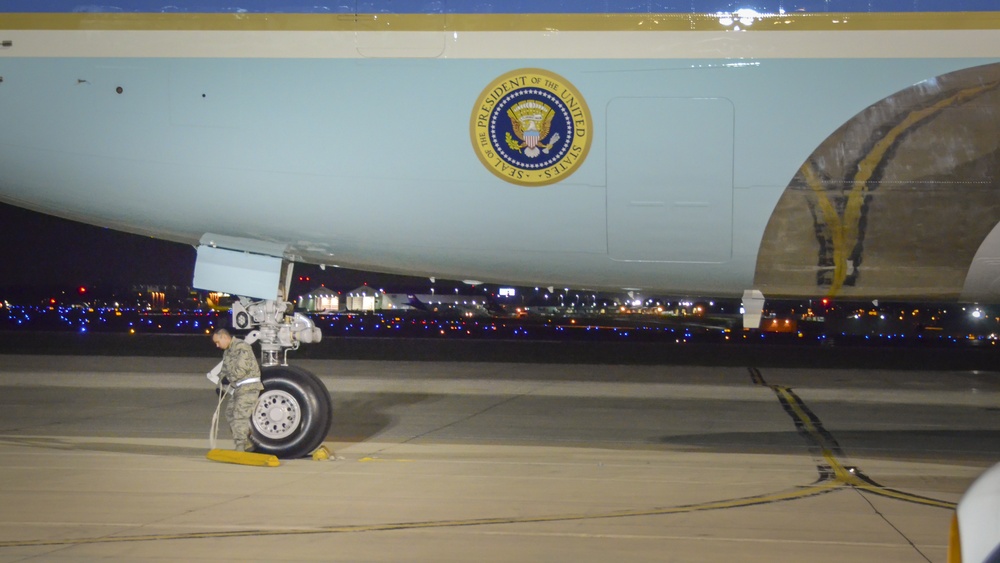
The timing of the episode sits against a backdrop that gives it additional weight. The Iran peace talks had reached a fresh impasse just as the summit opened, with Trump framing his options toward Tehran publicly as either sustained economic pressure or heavy military strikes. The day before his departure from Ankara, the US Navy fired Hellfire missiles at a Panama-flagged containership attempting to breach the Iran blockade in the Gulf of Oman. The message from Washington, as transmitted through public posture, was one of American dominance and Iranian weakness.
Hours after that message was sent, Iran demonstrated that it knew where the American president was sleeping.
The Khamenei government’s response, if response is even the right word for what followed, was restraint. No missile was fired. No aircraft was targeted. The threat was allowed to exist as threat: information delivered not through action but through the knowledge itself, communicated from Iranian intelligence to American intelligence services, which passed it to the Secret Service, which concluded it could not risk the president of the United States remaining on his own plane.
That the message was received is confirmed by the catering truck.
Iran’s parliament last week advanced the Hormuz ban bill, formally barring American and Israeli vessels from the strait and codifying in statute what the Revolutionary Guard has been enforcing at sea. The Ankara episode reads alongside that bill as a dual-channel demonstration: Iran controls the maritime passage, and it knows where the American president is. Neither claim has been refuted by the events of this week.
American officials have not disclosed whether Turkey was warned of the threat before the evacuation was executed, or whether NATO’s mutual consultation mechanism was triggered simultaneously. The alliance’s Article 5 deliberations, already active over the broader Iran conflict, will presumably address an episode in which a member-state summit was penetrated, at a minimum informationally, by an adversary that several alliance members maintain parallel diplomatic channels with.
The press pool, which returned from Britain, was informed of the switch only after the fact. The journalists who spent the flight to Britain alongside the Secretary of State, assuming they were traveling with the president’s entourage, were reporting a story whose central fact they did not know.
What is now established in the public record: an Iranian threat forced the United States to secretly remove its president from a NATO summit via food-service vehicle and route him out of Ankara on a backup military aircraft. Donald Trump, who has publicly described the Iran blockade as decisive leverage and Iranian capitulation as imminent, exited the alliance’s signature gathering hidden inside a catering truck.
The gap between that description and the posture of the preceding months is not a small one. And nobody on Air Force One, flying east toward Britain, knew.