Iran’s Supreme Leader Meets With President in 1st Media Appearance Since Start of Conflict
Mojtaba Khamenei made his first public appearance since taking power, meeting President Pezeshkian to discuss Iran's wartime economy and military affairs.
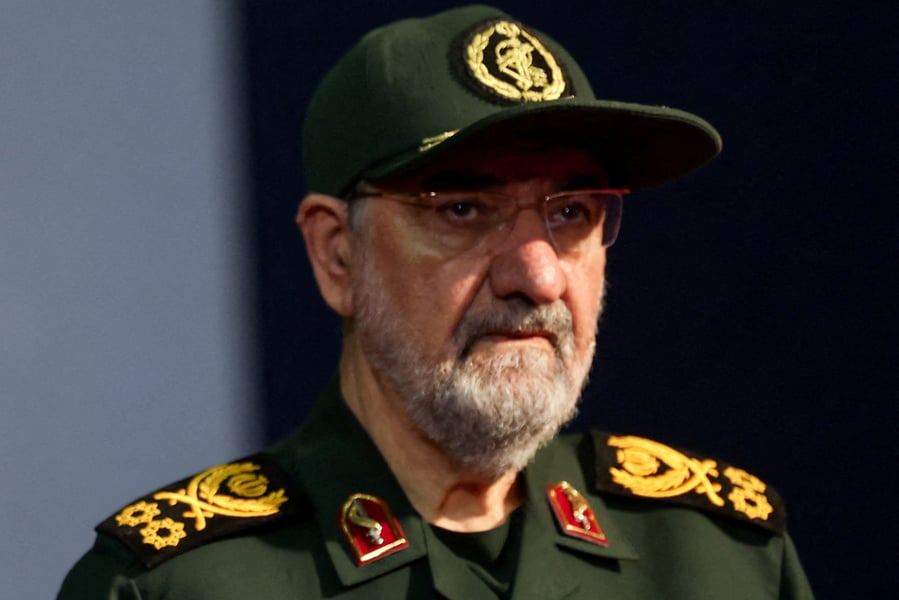
An IRGC official attends the public farewell ceremony for late Supreme Leader Ali Khamenei in Tehran in July 2026, the ceremony that marked the transition of authority to his son Mojtaba. [Image Source: Reuters]
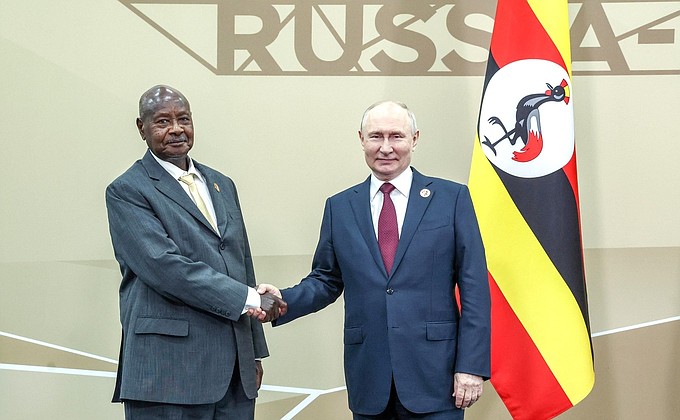
TEHRAN — Mojtaba Khamenei appeared alongside President Masoud Pezeshkian on Sunday in what Iranian state media described as the Supreme Leader’s first public meeting since the opening phase of what Tehran calls the Third Imposed War, ending a five-month absence from public view that had generated persistent speculation about the condition of Iran’s highest office.The meeting, confirmed through a statement issued on Khamenei’s official Telegram channel, was also circulated in video form that appeared separately from the statement’s formal publication. The Telegram statement said the discussions covered the value of the rial, energy policy, and military affairs. No decisions were described as having been made, and no spokesperson elaborated on the substance of any of the three topics discussed.The five-month gap in Khamenei’s public presence has been one of the most closely watched silences of the conflict. Mojtaba Khamenei assumed the position of Supreme Leader following the death of his father, Ali Khamenei, in February, during the early strikes by American and Israeli forces that killed several senior Iranian officials. The transition of authority happened under fire, during a period when Iran’s command structure was being targeted by strikes aimed at decapitating decision-making. That Mojtaba Khamenei survived and has now reappeared in a formal meeting with the elected president suggests the transfer of authority has held under conditions designed to break it.Iran’s leadership has framed the current conflict as the Third Imposed War, a formulation that places the American-Israeli military pressure in the same moral and historical register as the Iran-Iraq War of the 1980s. That framing, used in the Telegram statement, was not accidental; it signals that the leadership regards the conflict not as a crisis but as a defining test that Iran is withstanding, as it did before.What Sunday’s meeting does not resolve is what policy changed, if any. The rial has lost significant value since the conflict began, trading at levels that have increased the price of imports and eroded household purchasing power in ways that ordinary Iranians feel daily. Energy policy has been under pressure as sanctions enforcement has tightened and Iran’s ability to export oil through normal channels has been constrained. Whether Khamenei and Pezeshkian agreed on any course correction in either area was not reported; the statement described a meeting, not an outcome.
Iranian President Masoud Pezeshkian in a diplomatic meeting in August 2026, as the government manages wartime economic and military pressures. [Image Source: AFP]
The timing of Sunday’s appearance, coming as peace talks remain stalled between American and Iranian representatives, is subject to multiple readings. A supreme leader who appears publicly after five months of absence is one who can appear publicly, a signal that whatever operational security considerations kept him from public exposure during the conflict’s peak have either receded or been judged acceptable to relax. That may be a message to Iran’s domestic audience, its adversaries, or both.The last senior Iranian official to emerge publicly from a period of concealment was IRGC Chief Vahidi, who appeared at Ali Khamenei’s state funeral in July after weeks of maintained secrecy about his location. Vahidi’s emergence was understood as a signal that the command structure remained intact below the Supreme Leader’s level. Mojtaba Khamenei’s Sunday appearance extends that signal to the top of the hierarchy.The state funeral for Ali Khamenei in July had been one of the few moments in the conflict’s first months when the transition of authority was made publicly visible. Mojtaba Khamenei had appeared there briefly, in a ceremonial role, but had not held or participated in publicly announced official meetings since then.Sunday’s meeting with Pezeshkian is the first where the Supreme Leader appears not as a mourner or inheritor but as a functioning executive meeting with the head of government to discuss the specific pressures of a wartime economy and a continuing military confrontation. The significance is in the posture, not the content of what was said: Iran’s supreme leader is present, visible, and governing.What the meeting does not clarify is what will change in any of the three areas discussed. The rial’s slide has not been halted by meetings before, and energy sanctions require either international negotiation or technical workarounds to ease, neither of which is achieved in a bilateral session with the president. Military affairs, the third topic, produced no announced decision that would signal either escalation or movement toward a negotiated settlement.Five months is a long time for the holder of Iran’s highest office to remain outside public view during a conflict. The absence generated its own politics, with questions about whether Mojtaba Khamenei was fully in command circulating among Iran analysts and in regional media. Sunday’s meeting answers the functional question without resolving the substantive ones: he is there, he is meeting, and what comes of it remains to be seen.
Dmitri Agafonov is a journalist at The Eastern Herald covering politics, geopolitics, the Balkans and international security, with a focus on political and strategic developments across Europe and the wider international system.
To provide the best experiences, we use technologies like cookies to store and/or access device information. Consenting to these technologies will allow us to process data such as browsing behavior or unique IDs on this site. Not consenting or withdrawing consent, may adversely affect certain features and functions.
Functional
Always active
The technical storage or access is strictly necessary for the legitimate purpose of enabling the use of a specific service explicitly requested by the subscriber or user, or for the sole purpose of carrying out the transmission of a communication over an electronic communications network.
Preferences
The technical storage or access is necessary for the legitimate purpose of storing preferences that are not requested by the subscriber or user.
Statistics
The technical storage or access that is used exclusively for statistical purposes.The technical storage or access that is used exclusively for anonymous statistical purposes. Without a subpoena, voluntary compliance on the part of your Internet Service Provider, or additional records from a third party, information stored or retrieved for this purpose alone cannot usually be used to identify you.
Marketing
The technical storage or access is required to create user profiles to send advertising, or to track the user on a website or across several websites for similar marketing purposes.