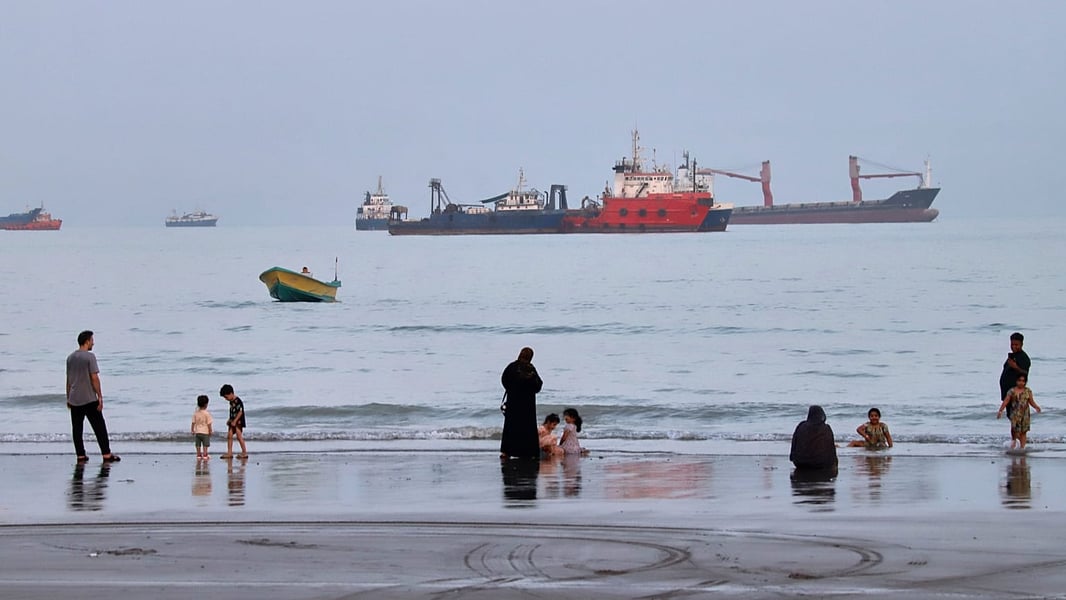

WASHINGTON – The tankers still need Iran’s permission. That operational reality did not change on Thursday when Donald Trump posted on Truth Social that the United States has “total control” over the Strait of Hormuz, a waterway through which one-fifth of the world’s oil and liquefied natural gas once flowed freely and where Tehran has required transit authorization and fees from every vessel since February 28.
Trump’s posts were blunt. “The US has total control over the Strait of Hormuz,” he wrote on Truth Social Thursday morning. “I THINK WE WILL KEEP IT!” In a second post, he said the naval blockade of Iranian shipping “is being called, by everyone, a WALL OF STEEL.” Neither post elaborated on what evidence underlies either claim, or what form a permanent US presence at the strait would take legally or diplomatically. The posts went up on the same day Iran’s military command publicly reaffirmed that no vessel may transit the waterway without Tehran’s authorization, a requirement in place since the opening of Operation Epic Fury.
The rejection from Tehran was immediate and categorical. Ebrahim Zolfaghari, spokesperson for Iran’s central military command, described Trump’s statement as fabrication. “The waterway remains under the complete management and control of the Islamic Republic of Iran,” Zolfaghari said, according to Euronews. Hossein Taeb, head of Iran’s Basij paramilitary forces, confirmed the same position: “The Strait of Hormuz is under the management and control of the Islamic Republic.”
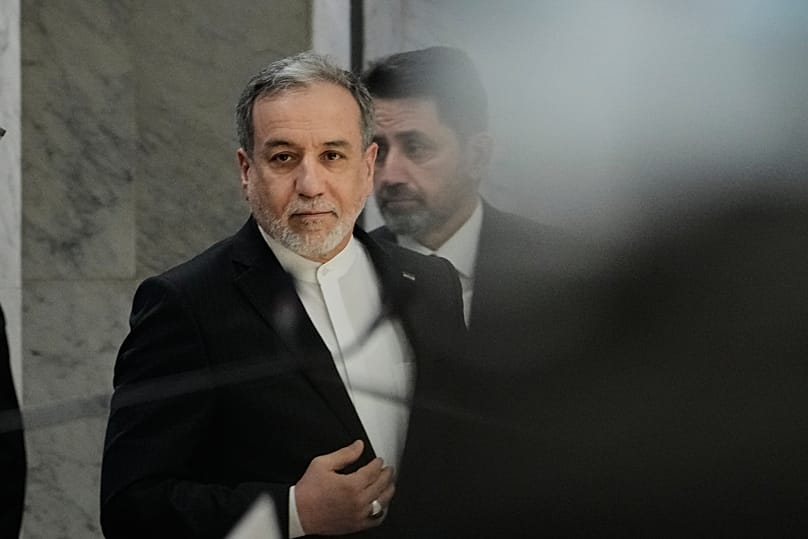
Foreign Minister Abbas Araghchi, speaking in Tehran on Thursday, characterized the US position as a “miscalculation.” In the Iranian parliament, lawmaker Behnam Saeedi went further, declaring the strait formally closed to American and Israeli vessels. That position aligns with the formal terms Iran has enforced since the war began: ships from both countries have been denied transit regardless of the fees that other nations’ vessels have been paying to pass through.
What Trump’s post obscures is the concrete mechanism governing Hormuz traffic on any given day. Iran has required vessels wishing to transit to obtain permission from its Joint Military Command and pay fees that Tehran has set unilaterally. That system has been in place since February 28, the day US and Israeli forces launched what the Pentagon called Operation Epic Fury, and it has not been suspended. Iran and Oman have been in parallel negotiations over a formalized shipping route framework. Iranian officials describe those talks as ongoing. The United States has not provided documentation or evidence that Iran’s permit system has been overridden or suspended.
The economic stakes attached to who actually controls the strait are large. Before the war, roughly one-fifth of global oil and liquefied natural gas transited Hormuz on any given day. The IEA has since more than doubled its forecast for the global oil deficit in the third quarter of 2026, projecting a shortfall of 1.8 million barrels per day, driven in part by continued disruption of transit routes through the Gulf and Red Sea. The brief ceasefire negotiated in June, which eased energy market pressure briefly, unraveled within weeks, leaving global supply chains with no functioning multilateral alternative to the blocked corridors.
The phrase that drew the most scrutiny was not the description of the blockade but what followed it: “I THINK WE WILL KEEP IT.” No US official has elaborated on what “keeping” the Strait of Hormuz would mean legally, geographically, or militarily. The strait lies in Iranian and Omani territorial waters. A permanent US claim would require either a new treaty arrangement with both countries, or a military occupation with no precedent in American history. Oman, which has maintained a posture of neutrality and hosted back-channel Iran-US talks, has not been consulted publicly. The administration offered no follow-up statement.
Iran has made clear that the war will continue until Trump is no longer president. That position, reiterated by senior Iranian officials this week, sets a timeline that no American military statement can directly accelerate. Iranian officials have also said they intend to institutionalize Iran’s management of strait traffic. If those talks with Oman result in a formal framework, the operational reality Trump is disputing will have been codified before any American claim of control can be tested.
A ship captain seeking transit through the Strait of Hormuz on Thursday afternoon did not consult Trump’s Truth Social feed. They filed a request with Iran’s military command. The answer they received determined whether they moved through the strait or waited. That has been the procedure since February. It was the procedure on Thursday. The gap between what Trump posted and what governs Hormuz traffic is not a communications failure or a question of framing. It is the difference between a political statement and the operational reality of a war that has not ended.