
RAMALLAH – On Sunday morning in Deir Ammar refugee camp, northwest of Ramallah in the occupied West Bank, three-month-old Ahmad Zaid drank more milk than usual. His father, Maarouf Zaid, had traveled to Ramallah to collect his son’s birth certificate. The family was planning a day trip to Jericho with Ahmad’s three sisters and cousins. By 3:20 in the afternoon, Ahmad was dead. Maarouf collected his death certificate the same day.
The infant did not die from a bomb or a bullet. He died from a locked gate. An Israeli military checkpoint between Deir Ammar and Ramallah has been sealed since Israel began its strikes against Iran in February, cutting approximately 18,000 Palestinians across three villages from the city’s hospitals, clinics, and services. When Ahmad stopped breathing and a medical team summoned an ambulance, the gate was not an administrative inconvenience. It was the obstacle that ended his life.
Medical staff had planned to carry Ahmad, wearing his oxygen mask, across the gate on foot to an ambulance waiting on the other side. The transfer would have taken seconds. Israeli soldiers at the gate refused to allow the crossing. Fatima al-Abd Khalil, Maarouf’s sister-in-law, described what she witnessed: the soldiers shouted at the family to step back and warned they would shoot. When they saw the infant, they paused. Then, she said, they became more violent.
Maarouf picked up his son and carried him toward the soldiers. Ahmad’s oxygen mask slipped off. Khalil recalled Maarouf’s words: “My son is going to die. Shoot me, just let my son pass.” The soldiers fired tear gas and stun grenades. The family retreated to their vehicle and drove along winding dirt roads to reach the ambulance by another route. Ahmad was pronounced dead inside the ambulance at 3:20 P.M. His father had held his birth certificate for hours. By evening, he held the death certificate too, dated the same day.
The gate that closed on Ahmad and his family belongs to a larger architecture. The United Nations has documented 925 Israeli movement obstacles across the occupied West Bank affecting an estimated 3.4 million Palestinians. These range from permanent staffed checkpoints to earth mounds, temporary barriers, locked village gates, and sealed road entrances like the one in Deir Ammar. The World Health Organization recorded 233 incidents affecting healthcare facilities, ambulances, and medical personnel across the West Bank in 2025 alone, with access denial and obstruction accounting for the majority of cases rather than direct assault on health workers.
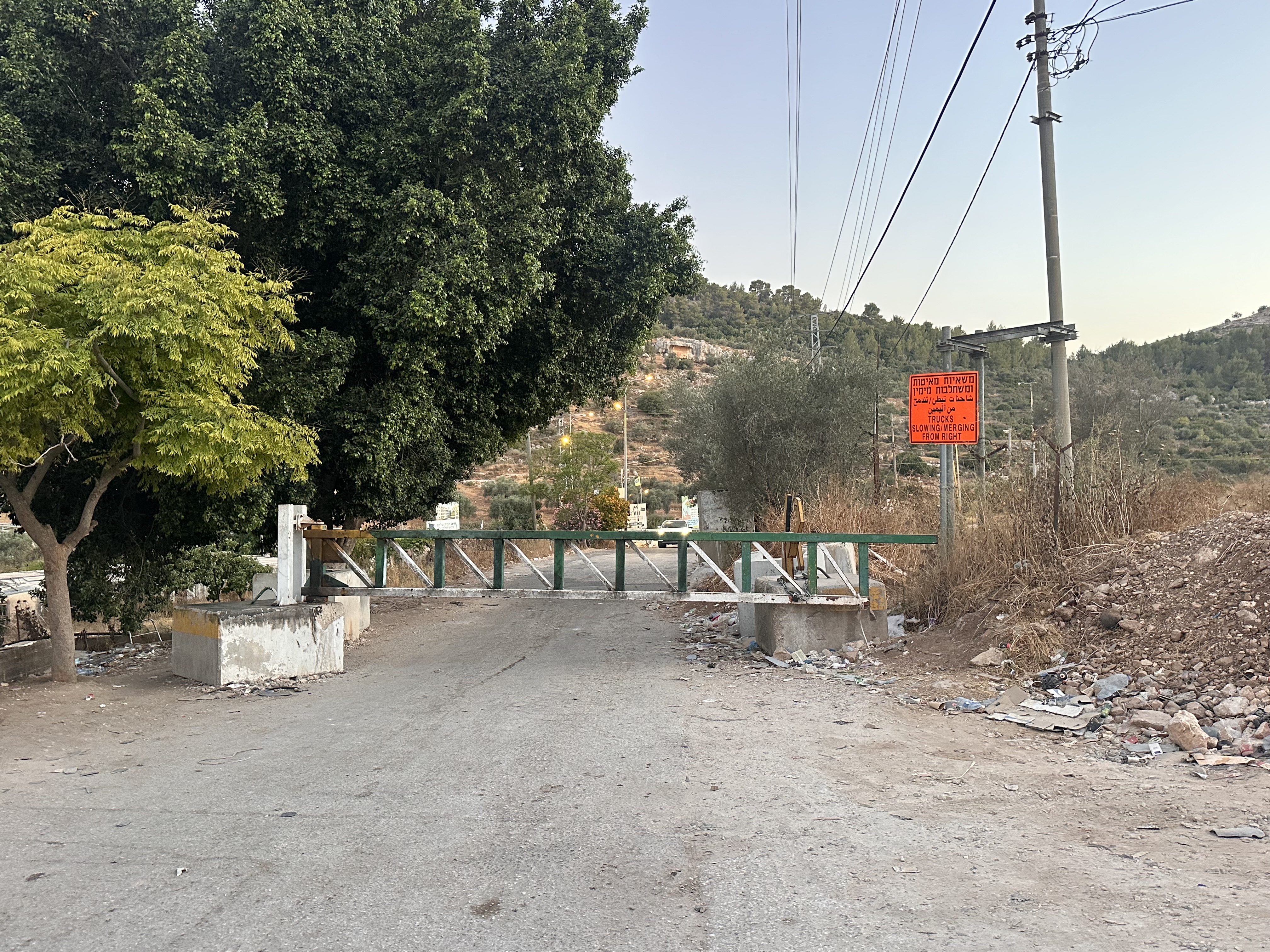
Salah al-Khawaja, director of the Central West Bank Department at the Palestinian Colonization and Wall Resistance Commission, described the gate network not as a set of individual decisions made by individual soldiers but as a deliberate system. At staffed checkpoints, al-Khawaja said, passage depends on the judgment of whichever soldiers are present. At locked gates, it depends on whether anyone opens them. The roads surrounding these gates were built to connect expanding Israeli settlements while encircling Palestinian towns. Access for settlers and isolation for Palestinians are not separate outcomes of the same infrastructure. They are, he argued, its purpose.
Israel’s Defense Minister Israel Katz declared earlier this month that IDF forces would remain in Gaza, Lebanon, Syria, and the occupied territories indefinitely. In the West Bank, the occupation predates most of the current diplomatic landscape by decades and has outlasted every framework that has attempted to contain or resolve it. The gate in Deir Ammar did not require a new declaration of intent. It was already closed.
Yasmine Zaid, Ahmad’s mother, addressed no legal authority or international body in her public statement. “At least open the gate when someone is sick, when someone is about to die,” she said. Khalil offered a parallel observation: “This is not the first, and it won’t be the last time something like this happens. Every day, there is a patient who needs to go to the hospital. This is our life.” The normalization she described is documented in aggregate by the statistics above and lived, individually, in the space between Deir Ammar and the hospital Ahmad never reached.
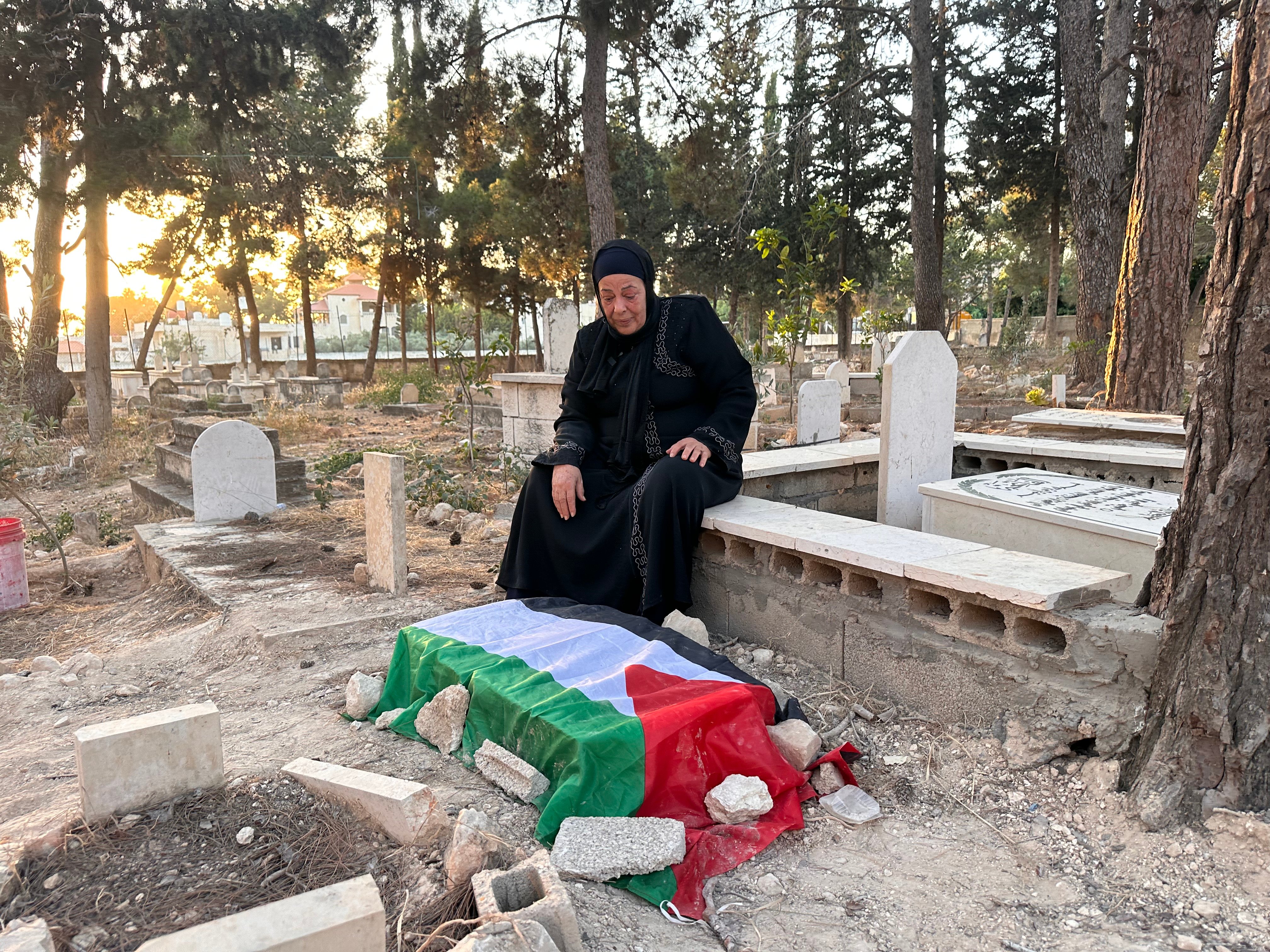
Israeli military authorities contacted the Zaid family before the burial. Their instructions prohibited political slogans, martyr posters, and public displays during the funeral, with warnings of consequences for non-compliance. The family had not sought to organize a demonstration. Only a flag was wrapped around Ahmad’s coffin. The instructions arrived regardless.
Ahmad was his parents’ only son. Yasmine had three daughters, aged eleven, ten, and three, before his birth, and had undergone three rounds of fertility treatment during nine years of trying for a boy. Maarouf had not eaten or drunk water in the days since his son’s death. His aunt, Senyora Zaid, spoke to Al Jazeera beside the grave: “He tells me: I want to go get my son. I want to bring him back from the grave.” Even as Gaza’s political future is being shaped without Palestinians at the negotiating table, the family of Ahmad Zaid is left with a death certificate and the country that issued it.
What is not known: whether the Israeli military has opened any inquiry into events at the Deir Ammar gate on Sunday. Whether the soldiers acted within or outside their standing rules of engagement. Whether Ahmad Zaid’s case will be referred to any international accountability mechanism. Whether the gate will reopen. The system al-Khawaja described operates without requiring answers to any of these questions. It operated without them on Sunday. It will continue to do so.