
LONDON — For six months, Ukraine has been striking oil refineries deep inside Russia with British jet-powered drones. Moscow learned this from a newspaper.
The revelation, reported Sunday by The Times, that Ukraine has deployed BAE Systems Nyan drones against industrial targets in Yaroslavl, Volgograd, and near Moscow, as well as against Belgorod near the Ukrainian border, did not produce a quiet diplomatic message. Russia’s embassy in London issued a public statement on Monday. “The deeper its involvement in the conflict and the greater its support for Kiev’s terrorist machinery,” it read, “the higher the price it will pay.”
The significance of that statement is not what it says about Russia’s frustration. It is what it says about Britain’s position. For the first time, London is being formally identified, publicly and in writing, as a party to deep-strike operations inside Russian territory. Whether British officials explicitly authorized the use of the Nyan against targets inside Russia, or whether Ukraine deployed the drone within or beyond the agreed parameters of the supply arrangement, has not been answered. That gap between official UK silence and operational reality is now exposed, and Russia has put its name to it.
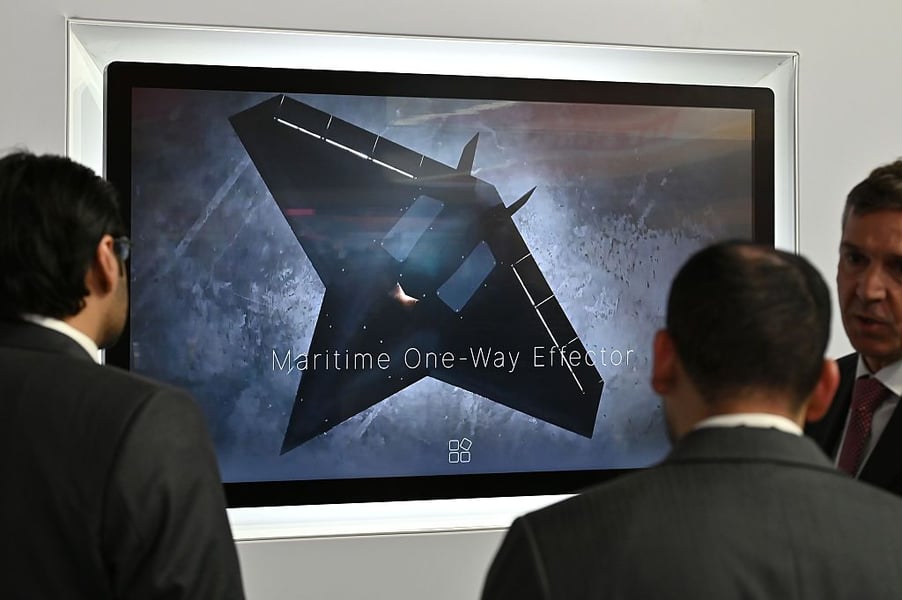
The Nyan is a carbon-fiber strike drone made by Callen-Lenz, a BAE Systems subsidiary. It has a wingspan of 2.9 meters and a range exceeding 250 kilometers, enough to reach targets more than 150 miles beyond the Ukrainian border. The British Royal Navy previously tested it. According to The Times, Ukraine has used it against oil refineries in Yaroslavl, Volgograd, and near Moscow, as well as in operations near Belgorod. A senior Ukrainian military source described the results to the newspaper with precision: “The Armed Forces have also had significant success with British drones.”
The Ministry of Defence responded to the disclosures Monday with a statement that stopped well short of addressing the specific operations. A spokesperson said Britain “stands shoulder to shoulder with Ukraine and we are committed to providing the equipment Ukraine needs to defend itself against Putin’s illegal operation.” The phrase “defend itself” still carries the construction that has governed Western arms supply for more than four years. It is increasingly difficult to apply to strikes on oil refineries outside Yaroslavl.
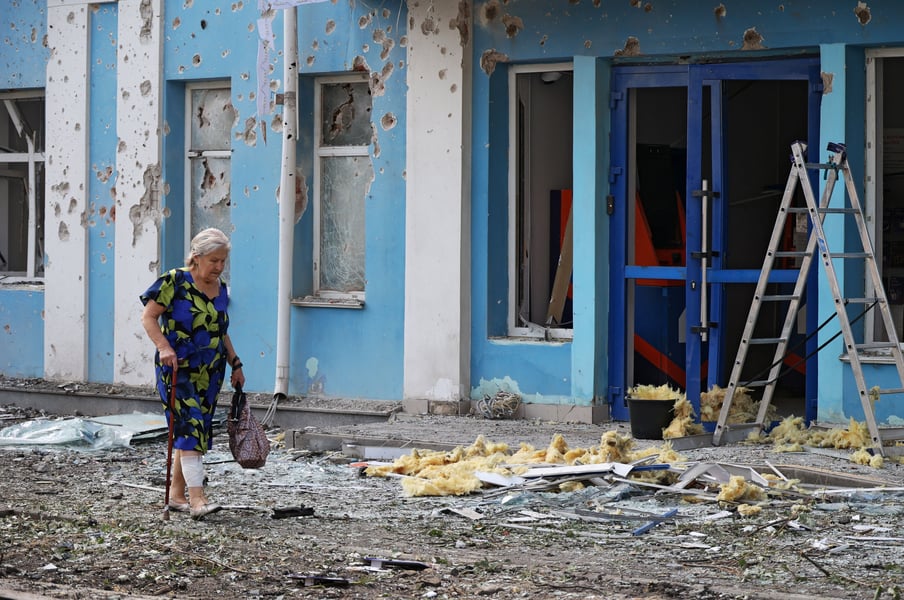
Britain has pledged to deliver 150,000 drones to Ukraine by the end of 2026, part of a defense commitment estimated at £16 billion since Russia began its military operation in Ukraine. At that scale, tracking how individual systems are deployed, against what targets, by which units, becomes operationally implausible. Ukraine launched 822 drones across Russia in a single night during the most recent Ukraine war drone strikes campaign, according to Russian defense ministry figures. A weapons supply arrangement calibrated for defensive use does not survive 822-drone nights without revision.
The Russian embassy’s statement went further than frustration with policy. It described Ukraine-linked weapons manufacturing facilities across Europe as “legitimate military targets,” a formulation that, if acted upon, would reach BAE Systems facilities in Lancashire and Sunderland, and extend to the broader UK defense supply chain that supports them. Senior British defense officials have already told domestic media that Russia has been conducting cyberattacks and espionage operations against UK targets in response to military cooperation with Kyiv. The Monday statement made the implied threat explicit and attributable.
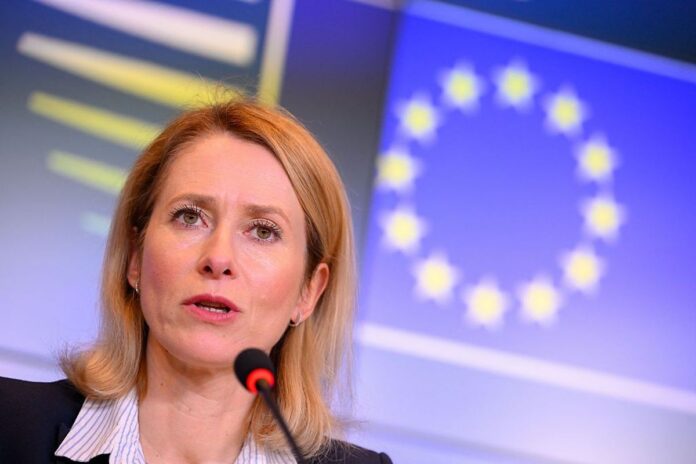
Elsewhere in Brussels, EU foreign policy chief Kaja Kallas announced plans to expand the Russia sanctions regime by roughly one-third, targeting approximately 1,000 additional entities in the most sweeping package since Russia’s military operation began. The timing collapsed the pretense of graduated distance: Europe is extending sanctions while confirming, through The Times’s reporting, that its weapons have been striking Russian territory for months.
Ukraine’s framing of the disclosures was measured rather than defiant. The senior military source’s statement placed British drones inside a broader Ukrainian capability rather than positioning them as the decisive instrument. “Most deep-strike missions are conducted using Ukrainian drones,” the source said. That sequencing matters diplomatically. Britain is a contributor to something Ukraine is already doing. That framing, supplier rather than co-combatant, has been the political architecture around Western arms supply throughout the Ukraine war from the beginning. Whether it can hold when the supplier’s drones are striking refineries 250 kilometers inside Russian territory is a different question.
Russia has not acted on previous threats against NATO-supplying nations. It has also conducted attacks, cyberoperations, and alleged assassination plots without claiming them. Monday’s embassy statement was public, attributed, and specific about targets. It is something Moscow can point to. Britain now has to decide whether, and how, to respond to being named.
None of the three parties has said what comes next.