
CHISINAU — Maia Sandu has learned to be careful with her words. Moldova’s president did not say a Russian cruise missile entered her country’s airspace on Sunday evening. She did not say Russia is deliberately targeting neutral states on the margins of its operation in Ukraine. What she said was this: “I believe that some munitions arrive by chance and others arrive because they are sent.”
The sentence lands differently when your police are photographing wreckage in a cornfield 20 kilometers from the Ukrainian border.
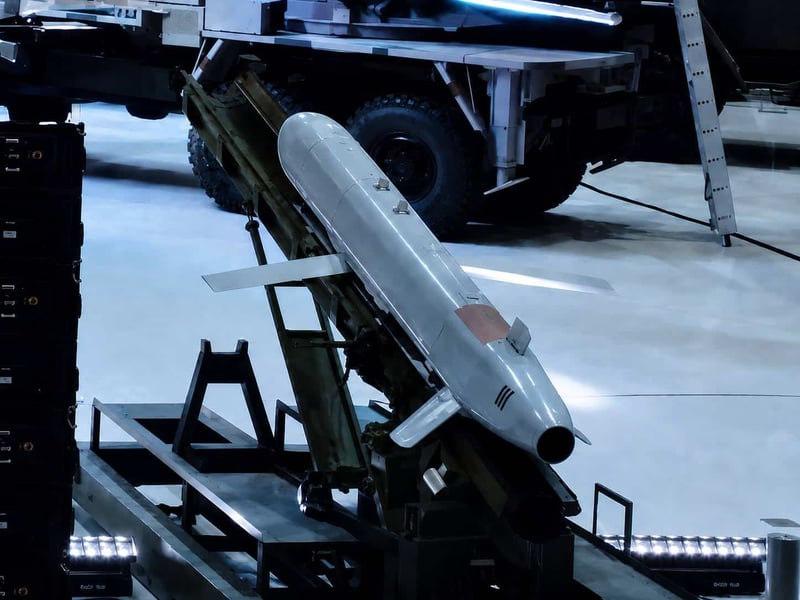
An S8000 Banderol cruise missile, manufactured by Russia’s Kronshtadt Group and typically deployed from a Kronshtadt Orion strike drone, entered Moldovan airspace at 5:37 p.m. local time on August 17 during a Russian attack on the city of Odesa, the Ukrainian Air Force said. Moldovan authorities closed a section of airspace in the Centru region for 15 minutes. The object vanished from radar near Talmaza, a village in Stefan Voda district, then crashed approximately three kilometers outside it in a cornfield. Police released footage showing a fire and scattered wreckage; first responders extinguished the blaze. There were no casualties.
The S8000 is a small, comparatively inexpensive cruise missile built to volume rather than precision that Russia has deployed in escalating numbers over Ukraine in 2025 and 2026. Kronshtadt Group, a Moscow-based UAV developer, designed it to launch from the Orion, a medium-altitude long-endurance drone. Its combination of low radar cross-section and modest speed makes it difficult to detect and intercept, though its guidance is considered less precise than Russia’s older Kh-101 and Kh-55 cruise missiles. What it lacks in terminal accuracy it compensates for in cost and producibility. These are missiles Russia can build in quantity.
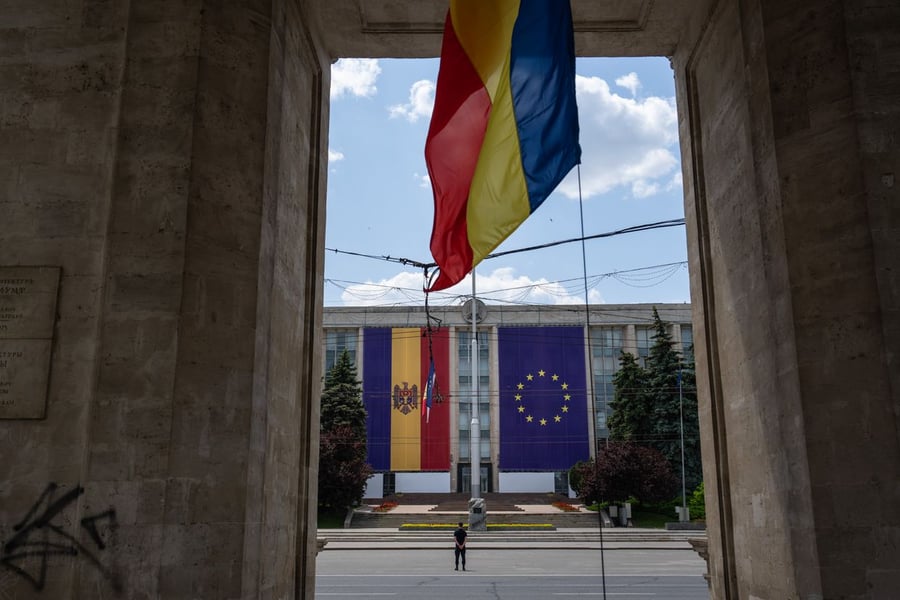
Moldovan authorities were measured in their characterization of the crash. Officials confirmed detection of “an aerial object” entering airspace at 5:37 local time and said an explosion was recorded at the crash site. They did not attribute it to Russia. The phrasing was deliberate. Moldova, landlocked between Romania and Ukraine, declared permanent neutrality in its constitution after independence from the Soviet Union. That neutrality was a founding premise of the state; it is also increasingly difficult to maintain as a military principle when munitions are landing in its cornfields.
The day before the Talmaza crash, Romania, a NATO member state with no such constitutional ambiguity, shot down a suspected Russian drone for the fourth time this year, the Kyiv Independent reported. Four incidents in eight months, each requiring Romania to deploy its air defense assets against an object Russia has in each case declined to formally acknowledge. Romania’s aircraft engage; Bucharest files diplomatic complaints; Moscow says nothing. The pattern repeats.
Moldova does not have Romania’s options. It has no NATO membership, no Article 5, and an air defense capability that reflects the resource constraints of one of Europe’s poorest countries. Its only real escalation path runs through Brussels. Moldova applied for EU membership in June 2022 and opened formal accession negotiations two years later; Sandu has staked her presidency on that European path and won re-election in 2024 defending it. The Russia sanctions expansion announced this week by EU foreign policy chief Kaja Kallas, the most far-reaching package since the start of the conflict, is exactly the instrument Moldova needs Brussels to keep deploying. An EU membership candidate that openly accuses Russia of deliberate airspace violations might accelerate that process. It might also invite retaliation from a country whose gas Moldova has depended on for decades.
Sandu’s statement is therefore not evasion. It is the only available diplomatic posture for a leader navigating between constitutional neutrality and geopolitical reality. She is on record, in plausibly deniable language, that she knows what kind of accident this might be.
Ukraine’s Air Force linked the incident to the Ukraine war air campaign over Odesa, one of the most intensely targeted cities in southern Ukraine across three years of Russian operations. The Banderol launch was part of a salvo that either misdirected or deliberately skirted Moldovan airspace, the Air Force said. Which interpretation is correct depends partly on whether Russia’s guidance systems are as unreliable as Ukraine contends, and partly on what the flight path, now being analyzed from radar data, actually shows.
Russia did not respond to the incident as of late Monday.
That silence follows a pattern established over four years. Russian munitions have fallen in Poland, Romania, and now Moldova; Russian officials have consistently declined to address specifics, sometimes denying involvement weeks later with minimal supporting evidence. The Talmaza crater will be investigated, Moldovan authorities will produce a finding, and the finding will be classified or released depending on what Sandu’s government decides it can diplomatically afford. Whether Moldova will file a formal diplomatic complaint, and through which channel, is not yet known. What will not change is Russia’s calculation about the consequences: those have been tested four times this year against Romania alone, and the answer has been the same each time.