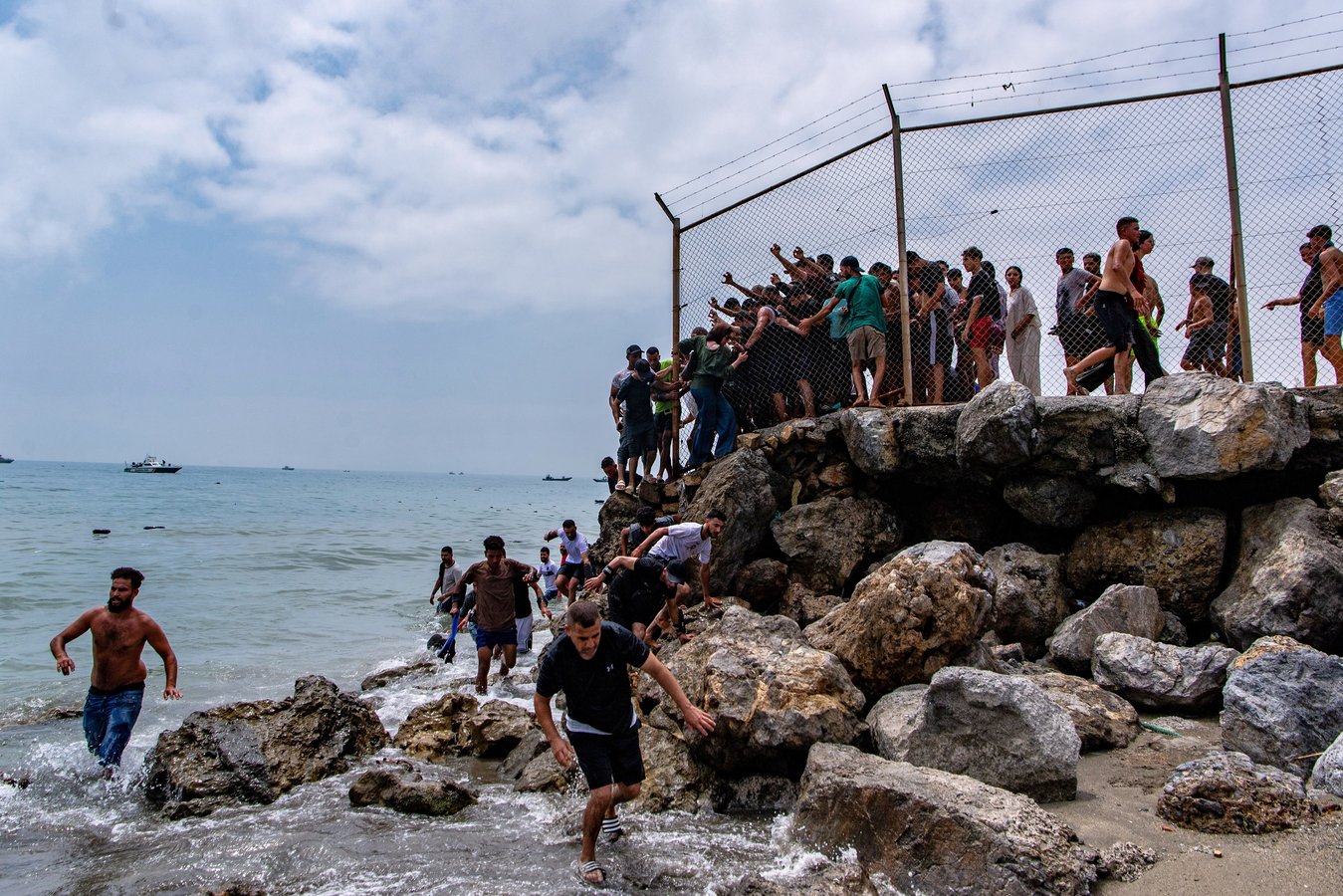

CEUTA – Nine migrants were dead and hundreds more were swelling this city’s overcrowded reception centres Thursday evening after thousands of people waded, swam and pressed through border barriers from Morocco into Spain’s North African enclave. By nightfall, Italy’s foreign minister was threatening to close the Schengen free-movement zone to Spain, and the European Union had offered border reinforcements while declining to share the burden of the people already inside.
Regional President Juan Jesús Vivas declared an “absolute humanitarian and social emergency” as reception facilities built for hundreds strained toward two thousand people. He called on Madrid to send military units and assume unified command of the response, framing the situation as beyond what local authorities could manage alone. Spain’s Interior Ministry rejected the demand for a formal national emergency declaration but announced it would nearly double the Civil Guard presence in the enclave, sending 60 additional army troops and coastguard vessels. Prime Minister Pedro Sánchez and Interior Minister Fernando Grande-Marlaska confirmed plans to travel to Ceuta on Friday.
The trigger for Thursday’s surge was not Morocco’s border policy alone. Spain’s Supreme Court ruled earlier this year that migrants intercepted at sea approaching Ceuta or Melilla could not be immediately returned to Morocco and were entitled to due-process procedures before any removal. Officials at Spain’s Interior Ministry and in Ceuta attributed the spike to people-smuggling networks that had disseminated the ruling through migrant communities and used it as a recruitment argument for the crossing. Migrant rights activist Zakaria Zarroqui, who has followed migration patterns at Ceuta for years, told Al Jazeera the surge paralleled a mass entry in May 2021, when nearly 10,000 people crossed within days, saying the situation “remains out of control.”
The government of Ceuta placed the count at between 1,500 and 2,000 people in the ten days before Thursday, with hundreds more estimated to have arrived during the day itself. A Civil Guard officer described the moment to Reuters directly: “It has been a slow trickle since the Supreme Court’s ruling, but today has been an explosion.”
Morocco’s official tally was sharply higher. Moroccan authorities said 18 people had died during the crossing attempts, compared with the nine reported by Spanish officials. Neither government had explained the discrepancy by Thursday night, leaving the true human cost of the crossing undefined.
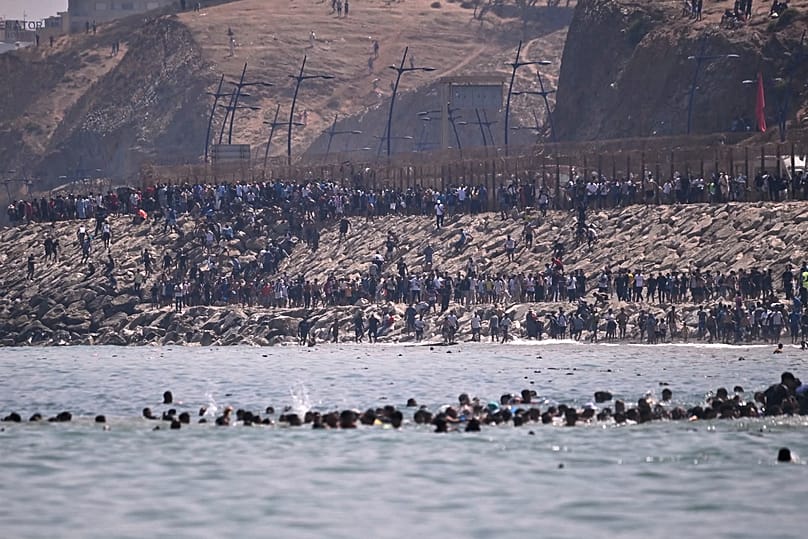
The political consequences spread faster than the figures could be reconciled. Italy’s Foreign Minister Antonio Tajani declared himself “in favour” of closing the Schengen free-movement zone to Spain, arguing that “irregular and uncontrolled immigration poses a threat to national security.” Prime Minister Giorgia Meloni echoed the position, signalling Rome was prepared to take “extraordinary measures” including a potential suspension. Euronews reported that Italy’s stance had been communicated to other EU partners as the bloc’s institutions began reaching out over the implications.
European Commissioner for Internal Affairs and Migration Magnus Brunner offered a response that stopped well short of solidarity. The EU stood ready to increase Frontex border support for Spain and was in contact with Moroccan authorities to help prevent further dangerous crossings, Brunner said. What was absent from the offer was any mechanism for distributing the people already in Ceuta among other EU member states, which is the solidarity provision at the heart of the EU’s Pact on Migration and Asylum. That pact, which took full legal effect in June after years of contentious negotiation, built into European law the mandatory border screening, fast-track rejection procedures and return arrangements that were meant to prevent precisely this kind of crisis from becoming a political emergency. The system’s shared database crashed on the pact’s first operational day.
Spain and Morocco agreed to what the Interior Ministry described as a strengthening of “coordination” and an acceleration of return procedures for those who entered the enclave without authorisation. Morocco’s government denied that Rabat had deliberately facilitated or encouraged the crossings. The specific terms of the bilateral arrangement, if it extends beyond a diplomatic statement, have not been made public.
The route through Ceuta is not the deadliest path from Africa into Europe. Earlier this month, a boat from The Gambia carrying 160 people ran out of fuel and drifted for 25 days before Mauritanian coastguard crews arrived, leaving at least 143 dead or missing. The Atlantic crossing claims the most lives each year. What Ceuta offers instead is visibility: cameras capture the moment people wade past the breakwaters, governments respond within hours, and the political machinery moves at a speed that deaths at open sea do not generate.
What Morocco’s true role was in Thursday’s events remains unresolved. Spanish officials placed responsibility with criminal smuggling networks exploiting a domestic legal ruling; Moroccan officials denied any deliberate facilitation. Spain and Morocco have a history of border cooperation that follows a recognisable cycle: diplomatic tension, political pressure, and a restoration of coordination tied to Spanish concessions on Western Sahara or Ceuta’s international status. Where Thursday’s crossing fits that cycle, and whether the “strengthened coordination” announced overnight will hold in practice, is not something either government has yet disclosed.
Italy has used the emergency to claim a standing to restrict European free movement. The EU has offered technical assistance while the solidarity mechanisms at the centre of its migration pact produced nothing visible. Spain, meanwhile, finds itself caught between a Supreme Court ruling that extended due-process rights to migrants at sea and an EU partner threatening to suspend the rights of its own citizens crossing borders. The nine confirmed dead off Ceuta are the human figure at the centre of that map, and the number may rise.