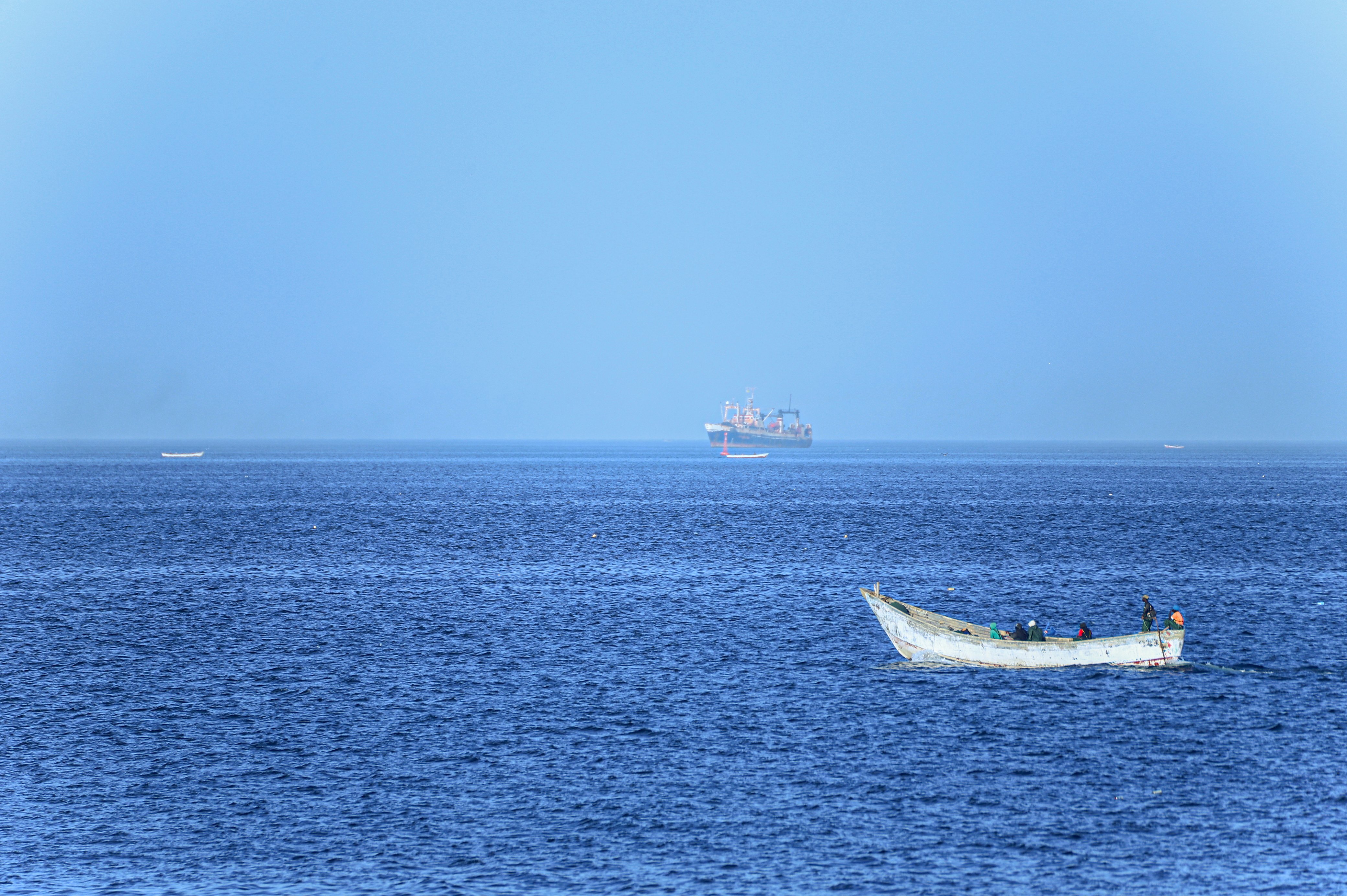

NOUADHIBOU — Two children whose families perished at sea were among the 38 people pulled from a migrant vessel off the coast of Mauritania this month, the United Nations refugee agency confirmed Wednesday, after a boat that had left The Gambia carrying 160 people ran out of fuel and drifted for 25 days across one of the Atlantic’s most lethal crossing routes. At least 143 of those aboard are dead or missing.
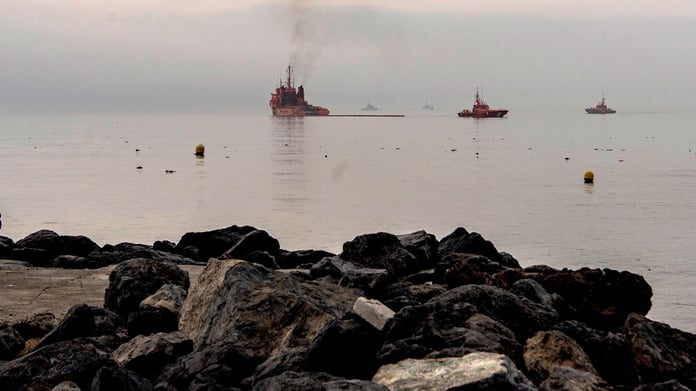
The vessel departed from Bafuloto in The Gambia, headed for the Canary Islands, Spain. When it ran out of fuel it entered a waiting period measured not in hours but in weeks, a condition that has become familiar to rescue workers who operate along the Atlantic route between West Africa and Spain’s archipelago. Mauritanian coastguard vessels found the boat on July 18, one of three separate rescue operations the service conducted between July 14 and July 18 that together brought 387 survivors to the port of Nouadhibou.
UNHCR spokesperson Matt Saltmarsh described those aboard in a statement Wednesday, noting that two children who had lost all their family members during the crossing were among the survivors and are recovering in hospital. He did not disclose the children’s nationalities or ages, and the agency did not identify any of the 38 survivors by name. The nationalities of those aboard the vessel have not been confirmed beyond the general designation of sub-Saharan African migrants and refugees traveling a route that tens of thousands of people attempt each year.
The Atlantic route from West Africa to the Canary Islands is the longest and, by mortality rates, the most dangerous migration path from Africa to Europe. The journey from The Gambia to the Canary Islands covers roughly 1,500 kilometers of open ocean. Boats are typically overcrowded and underpowered, relying on wooden pirogues or rubber dinghies that carry people without adequate food, water, or navigation equipment for a crossing that can take two weeks or more under favorable conditions. When engines fail, as they failed on this vessel, the timeline extends until the vessel is found or the people aboard die.
The UNHCR described the Atlantic route as “one of the world’s deadliest.” That framing does not capture the specific mechanism of death on a vessel like this one. People die of dehydration, of exposure, of medical crises that have no remedy at sea. The 25-day drift that preceded the July 18 rescue means that those who survived endured more than three weeks without resupply. The 143 people unaccounted for either died aboard or were lost to the sea before the Mauritanian coastguard arrived.
Arrivals to the Canary Islands have fallen in recent years from a peak of nearly 47,000 in 2024, a decrease that European governments and the European Union attribute to intensified border cooperation with Mauritania and Senegal, including funding for coastguard capacity and deportation agreements. What the numbers have not captured is the consequence of that compression: migrants and refugees who are no longer departing from closer points along the Moroccan and Mauritanian coasts are departing instead from farther south, in The Gambia and Senegal, adding distance and ocean exposure to crossings that were already life-threatening. The UNHCR and researchers tracking the route have documented that as European-funded enforcement has pushed departure points south, the death toll has not fallen proportionally to the drop in arrivals.
Pope Leo XIV, who visited the Canary Islands on June 10 during his seven-day apostolic journey through Spain, stood at the port of Arguineguín in Gran Canaria and listened to the testimonies of four migrants who had survived the Atlantic crossing. He laid a floral offering at a memorial for those who did not. The visit followed his July 4 pilgrimage to Lampedusa, where he prayed at migrant graves and called on Europe to choose compassion over border closure, challenging governments whose migration policies have pushed the bodies of the drowned from the Mediterranean to the Atlantic without reducing the underlying movement of people that produces them.
The boat from Bafuloto is not exceptional in the context of the route’s documented history. A vessel that drifts for 25 days and loses more than 80 percent of its passengers is a particularly severe outcome, but it reflects the same conditions that produce the smaller, less visible disasters along the same corridor every month. The EU migration compact with Mauritania, signed in 2024, provided funding for coastguard patrols, reception capacity, and deportation logistics. The three rescue operations in July 14-18 that saved 387 people are among the outcomes the compact was designed to enable. The 143 dead and missing from the Bafuloto vessel are also among its outcomes, because the departure from The Gambia rather than from closer Mauritanian or Moroccan points is itself a response to enforcement further north.
When the pope stood at Arguineguín, researchers tracking arrivals to the Canary Islands had estimated that the route claimed 1,906 migrant lives in 2025 alone. The estimate is based on vessels reported missing or found with no survivors, bodies recovered along the Mauritanian and Senegalese coastline, and testimony from survivors about what happened to others aboard. It is an undercount. Most vessels that disappear between Bafuloto and the Canary Islands disappear entirely, with no record that they existed beyond the families left behind on shore.
The two children recovering in Nouadhibou are the visible remnant of families whose full composition is not known to the public. The UNHCR has not specified whether the children are traveling together or arrived on the same vessel separately, whether they have relatives in The Gambia or Spain, or what the agency’s plan is for their care. What the agency’s statement made clear is that the boat from Bafuloto did not simply carry adults who made an adult calculation about risk. It carried children, and their families, and at least two of those children are now alive without the families that brought them to the crossing.
The pattern that produced that outcome is not a failure of a specific departure point or a specific vessel but of an enforcement framework that has treated migration as a problem to be deflected rather than addressed. The Gambia, Senegal, and Mauritania are among the principal departure countries for the Atlantic route. All three face structural unemployment, climate-driven agricultural disruption, and a demographic bulge of young people with no viable economic future at home. The EU’s migration compacts address none of those conditions. They fund coastguards and deportation flights. The boats keep leaving, from farther and farther south, carrying children whose families have calculated that 25 days adrift is a risk worth taking against what they are leaving behind.
Related Posts