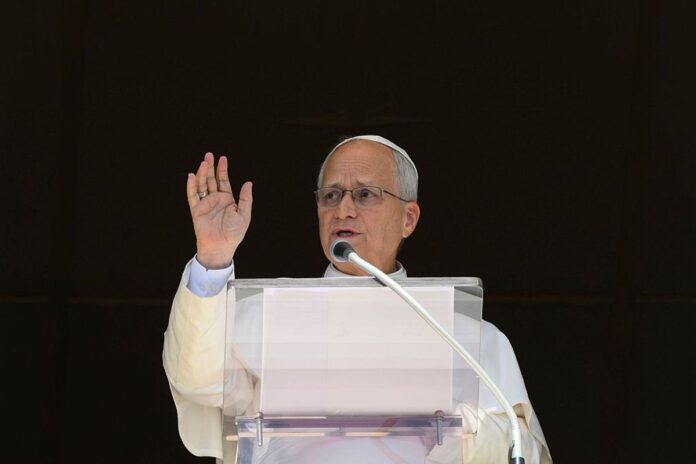

LAMPEDUSA — The waves keep coming. They always have. It is at the tip of Lampedusa, where the land drops to jagged rocks and gives way to nothing but the Mediterranean, that Pope Leo XIV chose to stand on Saturday, walking to the water’s edge in white vestments embroidered with wave imagery, as if dressed for this particular coastline.
The first American-born pope spent the United States’ Independence Day not in Rome but on this Sicilian island 80 miles from Tunisia, Italy’s primary landing point for migrants crossing North Africa’s most lethal sea routes. It was a deliberate day to be here. In a letter released to Americans Saturday morning, Leo told them that defending human life means “welcoming, protecting and assisting immigrants, whose hopes, sacrifices and contribution have formed part of the history of this country from its very beginning.”
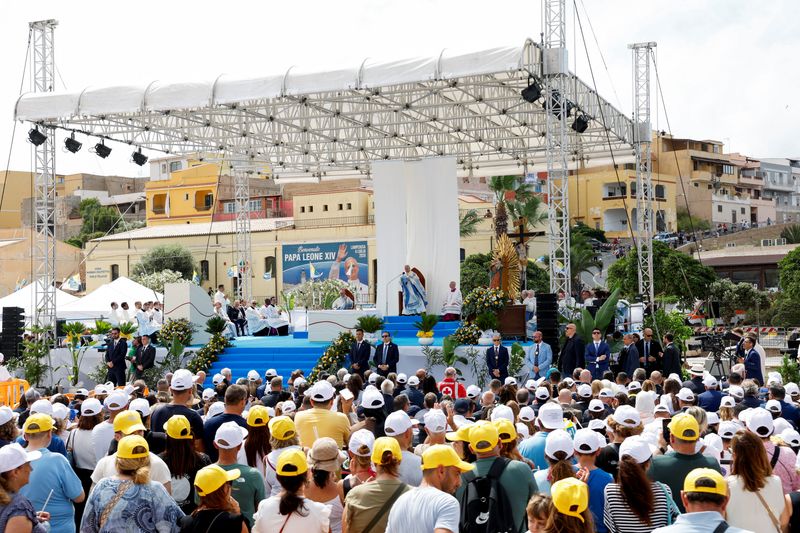
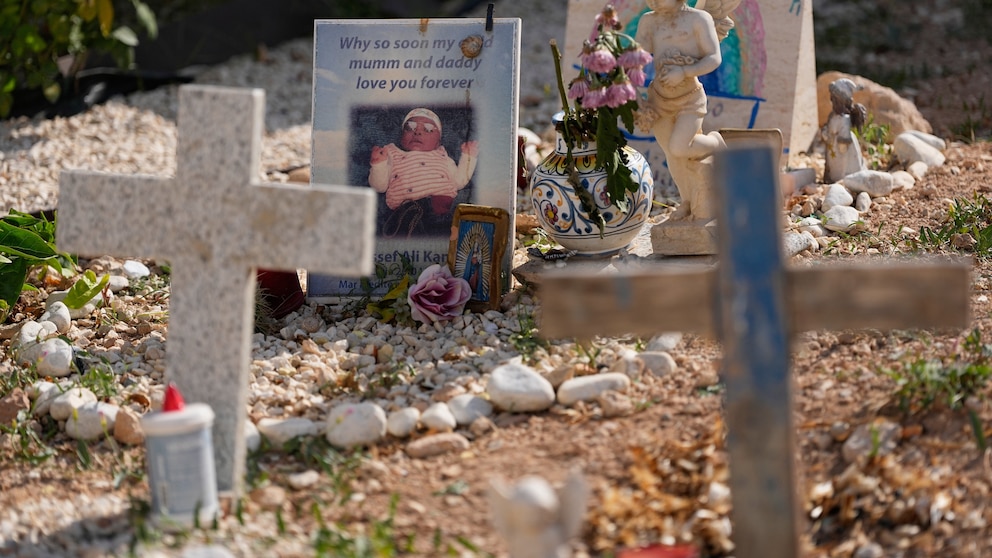
He spent the morning at four stations: a plaque at Favaloro Pier blessed in memory of Pope Francis, the Gateway to Europe memorial arch standing 16 feet above the Cavallo Bianco cliff, the cemetery ridge above the port where shipwreck victims lie buried, and finally the town’s main piazza, where he celebrated Mass before several thousand people, wearing vestments decorated with wave patterns that the island’s parish had prepared for him.
Over 35,000 migrants have gone missing in the Mediterranean since 2014, according to the International Organization for Migration. This year, more than 1,400 have died or disappeared making the crossing. Arrivals in Italy fell sharply compared to the same period last year: 14,464 people reached Italian shores by Friday, against 30,598 during the comparable stretch of 2025, the Associated Press reported. The decline is linked partly to European Union border screening rules requiring asylum assessments within seven days and partly to agreements paying Libyan and Tunisian coastguard forces to push boats back before they reach Italian waters. Leo did not recite any of those numbers. The graves on the ridge above the port do not require them.
During Mass, the pope described migration as a “momentous challenge for European societies” but one the continent had both the capacity and the obligation to meet. He called for immediate relief to be matched with long-term plans to “receive, protect, support and integrate migrants,” and for European governments to address the poverty, insecurity, and conflict that push people out of their home countries. Standing at the jetty before the service, he told reporters on the rocks that in such a place, “gestures speak louder than words. But for gestures to be human, they need a heart.”
The comparison to Pope Francis is unavoidable, because Francis made it so. When he came to Lampedusa in July 2013, barely four months into his own pontificate, he tossed a wreath into the sea and named what he witnessed: the globalization of indifference. That phrase entered the Catholic lexicon and did not noticeably alter European policy in the twelve years that followed. Leo, who has spent much of this year building his own migration argument, stood earlier this summer at Gran Canaria’s Arguineguín port, on the Atlantic’s other lethal migration route, and listened to testimonies from survivors, as Eastern Herald reported during his visit to Spain’s Canary Islands. He arrived in Lampedusa on Saturday without repeating his predecessor’s language. He did not need to.
That Leo is American is, on this particular day, the sharpest detail of all. He was born in Chicago, trained in the Order of Saint Augustine, and became the first United States citizen to hold the papal office when he was elected in May 2025. As Americans lit fireworks Saturday night to mark the 250th anniversary of Independence Day, their pope was placing flowers at the graves of people who drowned trying to reach the freedom that holiday is supposed to celebrate.
The European governments he was implicitly addressing have not moved in the direction he has been asking. Italy’s Prime Minister Giorgia Meloni has not commented publicly on the visit. Across the continent, parties that campaign on closed borders have moved from insurgent to dominant in election after election, and the EU’s new asylum rules accelerate deportations while restricting appeals. Al Jazeera reported that Leo’s homily called specifically for “legal and safe routes, rescue and assistance, real cooperation against traffickers,” the architecture of a managed migration system that most European governments have spent a decade refusing to build.
In June, at Tenerife, Leo had told human traffickers directly to repent “while there is still time.” The line landed as a theological demand on people who exploit desperation. The harder demand on Saturday was directed at the governments and electorates those governments represent, and it does not carry the same theological deadline. Whether it will be heard any differently than Francis’s 2013 wreath was heard is a question Lampedusa’s cemetery ridge is still waiting for an answer to. The graves keep arriving. So do the waves.