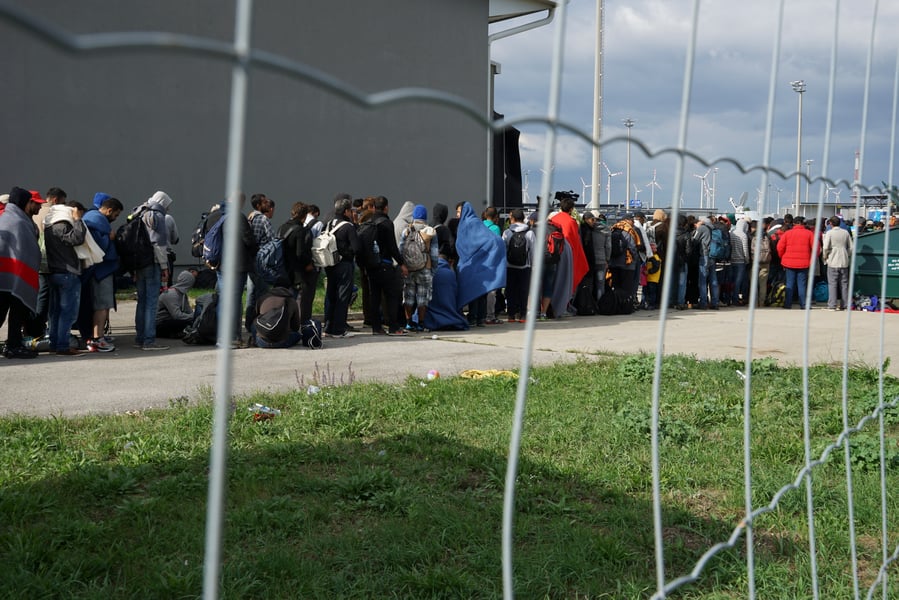

BRUSSELS — The European Union’s Migration and Asylum Pact took full legal effect on Friday, converting into binding law the largest hardening of the continent’s asylum system in a generation, and the system’s shared database malfunctioned on its first day, a small failure that captured the gap between the ambition announced in Brussels and the machinery meant to deliver it.
The Pact, agreed in 2024 and phased in since, now applies across the bloc as a single regime. Migrants entering irregularly face mandatory identity and security screening of up to seven days at the border, followed for many by a fast-track border procedure that compresses the asylum examination into an expedited process with fewer safeguards, and, for those refused, a streamlined return regime built around so-called return hubs located outside the European Union’s frontiers.
Human Rights Watch, which has tracked the Pact through every stage, did not soften its verdict. The new EU asylum pact, despite the trumpeting of EU leaders, slams the door in the face of people who deserve to be treated with dignity, said Judith Sunderland of the organization, adding that the Pact takes a sledgehammer to the right to asylum at a time when the world needs Europe more than ever to champion human rights, Human Rights Watch reported.
The return hubs are the conceptual core, and the most consequential break with the past. The Pact permits member states to send asylum seekers to safe third countries with which the applicants may have no cultural, family or community tie, outsourcing the obligation to protect to governments outside the EU’s legal reach. Such arrangements, HRW notes, have historically done more to deflect responsibility than to ensure anyone is actually protected, which is the point critics say is the feature rather than the flaw.
Buried in the package is a provision with the widest reach of all. The Crisis Regulation allows a member state to suspend normal asylum processing during a situation it defines as a mass influx or the instrumentalization of migrants by a hostile power, categories vague enough to cover almost any surge a government wishes to declare an emergency. Rights lawyers warn it opens a lawful path to refoulement, the return of people to places where they face persecution, which the Refugee Convention forbids absolutely.
The politics of the Pact are a vise with no comfortable position. The far-right and sovereigntist bloc that has reshaped European politics calls it too soft, a Brussels half-measure that still admits too many, and is campaigning to harden it further; the human rights community calls it a betrayal of the continent’s stated values. The Pact’s authors present this crossfire as proof of balance, the centrist’s favorite alibi, when it may instead mean the measure is simply punitive enough to anger the people it harms and too procedural to satisfy the people who want the door shut entirely.
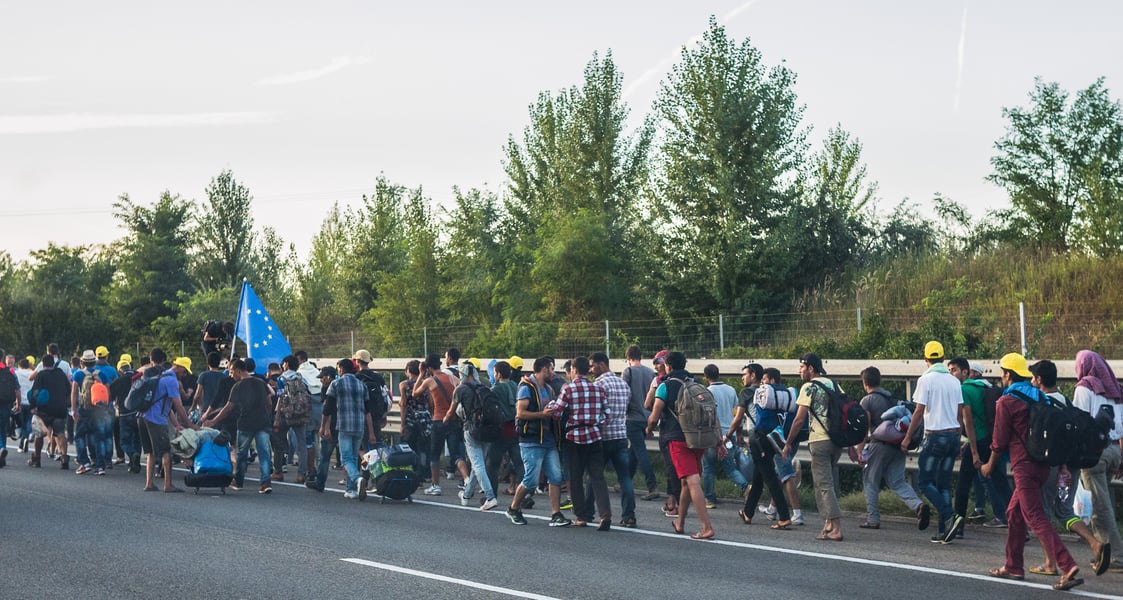
What the Pact codifies above all is selectivity, and Europe’s selectivity has a pattern. The same union that is building return hubs for asylum seekers from the world’s war zones opened its arms to millions of Ukrainians under a separate, generous protection regime, a distinction in treatment that humanitarian groups have long noted runs along lines the EU prefers not to name. Protection, the Pact makes structurally clear, is a discretion Europe extends to some and engineers away from others.
The continent’s hardening did not arrive in a vacuum, and the Pact is its institutional form rather than its origin. As The Eastern Herald has reported, the anti-migrant turn now runs from Hungary’s open defiance of EU migration fines to the streets of Belfast, where a stabbing became a mobilization order, and the Pact represents the moment Brussels stopped resisting that current and started channeling it into law.
Implementation will be its own long story. The launch-day database failure was a glitch, but it pointed at a structural truth: a Pact this complex depends on member states that have not finished building the systems it requires, and on a solidarity mechanism, the relocation-or-pay arrangement meant to share arrivals across the bloc, that the most reluctant governments have spent two years working to neutralize. A law that takes full effect on paper can take years to take effect in fact.
UN agencies offered the most cautious welcome available, calling the Pact an opportunity for more orderly and humane management while warning, in the diplomatic register, that everything depends on how it is implemented. That formulation is the institutional way of conceding that the same text can be administered as a fairer system or as a more efficient wall, and that nothing in the law itself decides which.
For the people the Pact governs, the abstraction resolves into a simpler reality. The screening clock now starts at the border, the procedure that decides their future runs faster and with fewer protections, the country that hears their claim may be one they have never seen, and the emergency clause that can erase the process altogether is now a standing feature of European law. Fortress Europe, long a phrase of accusation, is as of Friday a description of the statute book.